
I have stated many times on this blog, It Does Not Add Up, that our biggest national problem by far is the exploding national debt, now sitting at $36 trillion, and growing at the rate of almost $2 trillion per year ( $1.85 trillion for FY 2024).
My last post stated that President Trump’s greatest challenge will be keeping inflation under control. The Federal Reserve is doing its part by keeping short-term interest rates elevated. But large spending deficits put upward pressure on inflation, and only the President and Congress can reduce federal spending.
Here are several major ways in which to shrink our annual deficits:
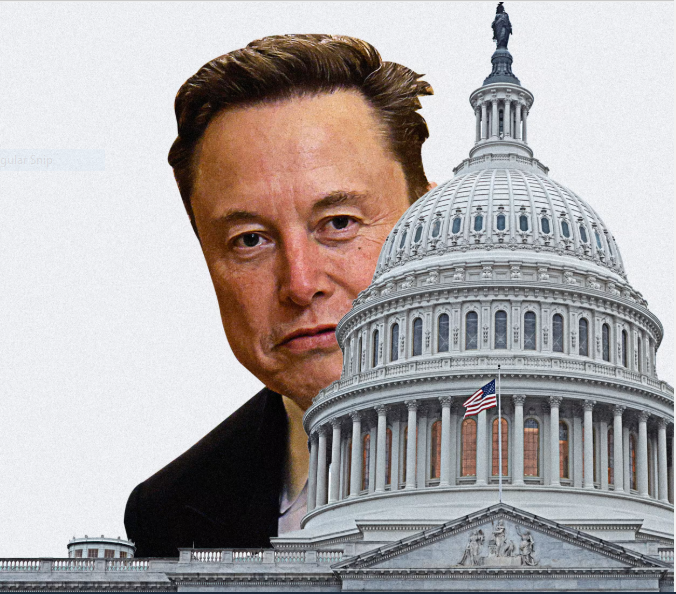
- Implementing DOGE (Department of Government Efficiency). Setting Elon Musk and Vivek Ramaswamy loose on the inefficiencies of the federal government will help a lot. For example, simply requiring federal employees to work in the office will likely lead to hundreds of thousands of resignations, thus saving tens of billions of dollars per year. Brian Riedl, of the Manhattan Institute, thinks that several hundred billion dollars per year can be saved with increased efficiency.
- Requiring welfare recipients to work. Requiring all able-bodied welfare recipients (and without dependents) to work would also save tens of billions of dollars per year.

- Reducing tax expenditures. https://www.wsj.com/opinion/gop-takes-control-headed-for-a-fiscal-cliff-policy-economy-550653a5 Consider tax expenditures, which consist of various exclusions, deductions, credits, and preferences, otherwise known as tax loopholes. According to the Joint Committee on Taxation, these expenditures annually cost $1.8 trillion in lost revenue and have grown in number from 53 in 1970 to more than 200 today. Many need to be eliminated.
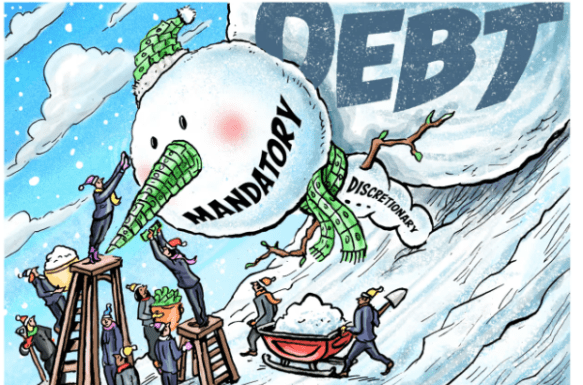
- Entitlement reform. Of course, reforming both Social Security and Medicare is badly needed. These are valuable programs for retired people and need to become fiscally sustainable to survive for the long run. The federal government is subsidizing them at the rate of $600 billion a year (and rising), which cannot last much longer.

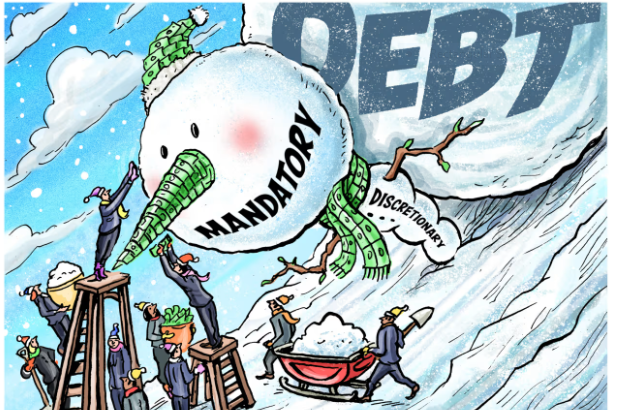
Conclusion. There are several ways in which big savings can be achieved in the federal budget. The important thing is to get started doing this soon, with either one or a combination of these methods. The survival of our great nation depends on it.
For my Email Newsletter
Follow me on Facebook
Follow me on Twitter
 It Does Not Add Up