
On this blog, I address major national issues, especially on fiscal and economic matters. This often involves discussing congressional and presidential policies, both successes and failures.
Last week, I discussed how to achieve economic success in America. This week, I extend that discussion by talking about what is involved in achieving income mobility, i.e. by moving up the income ladder. Consider:
- First of all, the essentials for economic success are a good educational background and, also, acquiring some useful skills, either vocational or academic.

- For income mobility, what is needed is both human capital (having adults that children can count on) as well as the opportunity to get a good education.

- The problem in the U.S. is that K-12 educational performance has been deteriorating since about 2013, well before the beginning of the pandemic. See here, and here.
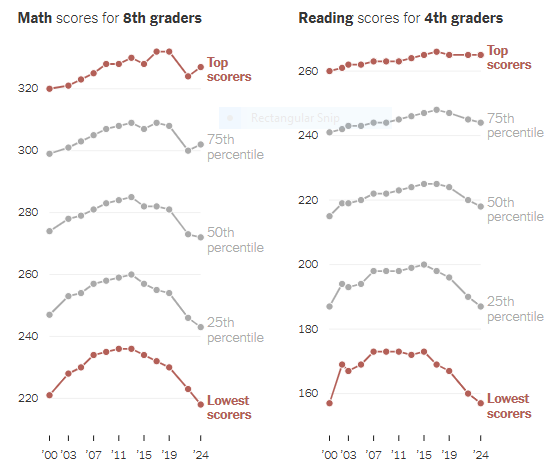
- Unfortunately, educational reform is often not really occurring in the U.S. The best way to improve K-12 education, school choice, is flourishing in the red states and failing in the blue states. Public education is doing especially poorly in serving low-income kids in the inner city. This means that the Democratic Party is, in effect, increasing educational inequality between the middle class and the lower middle class. Obviously, this sets back income mobility amongst the poor, where it is most needed.
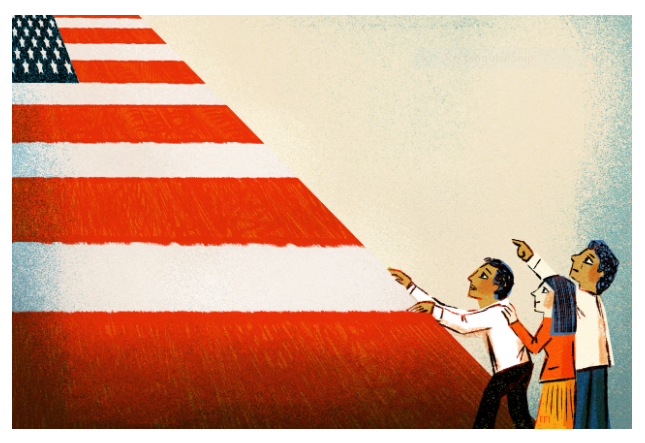
Conclusion. The opportunity for everyone to achieve economic success in America is one of the great strengths of our country. Income mobility, moving up the income ladder, is harder for kids who start at or near the bottom. Human capital is often the luck of the draw, but educational resources, provided by the state, can be improved by enlightened public policy.
 It Does Not Add Up