The World Now Needs U.S. Leadership More Than Ever

Ever since the end of WWII, the world has enjoyed the relative peace provided by the unipolar U.S.-led world order.  The attack on Israel by the terrorist organization Hamas in Gaza now threatens world peace.  Only the U.S. has the diplomatic clout to resolve this crisis without the outbreak of a wider war.  As I said last week, the U.S. must mitigate its own internal problems to be well-prepared for the leadership role that is now needed.  The largest internal problem we face is our looming debt crisis which may get even worse as the cost of responding to global tensions grows.

Here is the strategy the U.S. should follow in the coming months:

  • The threat to Israel. Israel is the only democracy in the Middle East and is a strong U.S. ally.  Of course, it must remove Hamas from Gaza, but this by itself will not be enough to restore peace in Israel.  Justice for ordinary Palestinians should be pursued but is not possible until the Hamas virus is eliminated.  Furthermore, Iran is the main sponsor of terror in the Middle East, and must stop being appeased by the U.S.  Iran’s biggest weakness is the discontent of its citizens, who don’t understand why its resources are being wasted on terror campaigns against Israel.
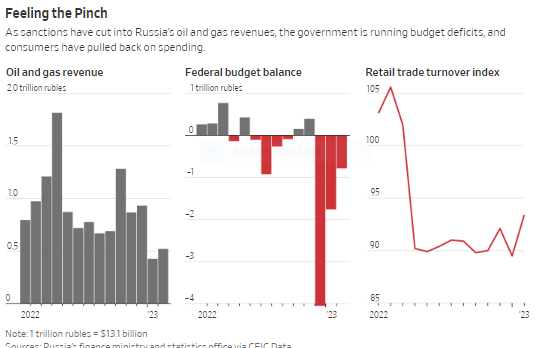
  • It is imperative that we continue to help Ukraine defend itself from the Russian invasion.  Ukraine wants to be free and independent and brave Ukrainians are willing to fight and die to achieve this.  Furthermore, Russia is one of our autocratic adversaries and its economy is badly hurt by Western economic sanctions.
  • China is our main autocratic adversary and has the second-largest economy after us.  But China has major problems of its own, and is not likely to surpass the U.S. in economic or military strength anytime soon.  China wants to control Taiwan but is unlikely to invade Taiwan with military force.  Taiwan, like Ukraine, will defend itself if attacked.  And the U.S. will help, with weapons and supplies, just as it is helping Ukraine.

Conclusion.  Israel will respond to the attack by Hamas by destroying this terrorist organization in Gaza.  The U.S. supports Israel but also wants to prevent the outbreak of a wider war.  The hard part will be to put sufficient pressure on Iran to dissuade it from continuing to terrorize Israel.  The U.S., with the help of its many democratic allies, is strong enough to prevail in the increasingly complex struggle for worldwide dominance, but it will be a major challenge going forward to achieve this goal.

For my Email Newsletter
Follow me on Facebook
Follow me on Twitter

The U.S. Needs to Get Its House in Order So That It Can Continue to Provide Effective World Leadership

As I have said many times, I am optimistic about the future of the United States.  We are the strongest and one of the freest countries in the world, and are doing many things right.  We are not in decline in any fundamental sense!  Nevertheless, we do have serious problems which urgently need to be addressed.  In fact, one can describe our current political situation as borderline chaotic.  Consider:

  • At over $33 trillion, our national debt is out of control.  At a time of strong economic growth, annual spending deficits should be reduced, not increased!  Instead, they are way too large, for example, in the amount of $1.7 trillion for FY 2023 which just ended.  Inflation, kicked off by the $5 trillion in Covid stimulus spending, is still too high and persistent.  This has forced the Federal Reserve to raise interest rates substantially, which, in turn, has caused interest payments on the debt to soar.  The solution is clearly to reduce annual spending deficits as quickly as possible.  The President could get this done if he wanted to!
  • Open Southern Border.  There are now so many immigrants entering the U.S. illegally along the southern border that the Biden Administration has decided to extend the wall construction, after waiting 2 ½ years, begun during the Trump Administration, but not yet completed.
  • Violent crime surge in big cities. Violent crime is surging in big cities across the country because progressive prosecutors are not willing to crack down on hardened criminals.
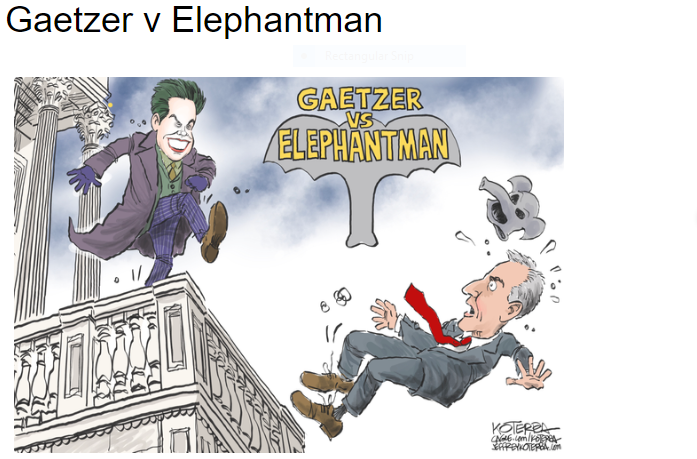
  • Kevin McCarthy is ousted as House Speaker. Led by Rep. Matt Gaetz, Republicans have removed Kevin McCarthy as Speaker of the House.  McCarthy was doing an excellent job, and tried to give the Freedom Caucus the spending cuts and border security measures it wanted.  The Freedom Caucus refused to take yes for an answer and ousted McCarthy instead, handing a victory to big-spending Democrats.

Conclusion.  Too many of our national leaders are acting like children.  They need to grow up and address the problems, such as debt, border security, violent crime, and the need for sensible leadership that the American people of all races, creeds, and political parties want them to do!

For my Email Newsletter
Follow me on Facebook
Follow me on Twitter

My Overall Point of View and Why It Matters

In our free and open society, we have vast sources of information, with varying degrees of credibility.  With the rise of artificial intelligence, we now also have to worry about computer-generated misinformation.  How do we decide what is more or less true, or even false?  The only way to do this in any coherent way is to have an overall point of view about the world.  Here is my latest attempt to describe my own personal framework.

  • Democracy is the best form of government. Democracy simply means that leaders at all levels are chosen by free and fair elections.  Democratic methods may involve many twists and turns, but will lead to more stable government in the long run.  For example, President Trump tried to overthrow the results of the 2020 presidential election but with absolutely no success.  This was a stress test for democracy, which survived with flying colors.
  • The U.S. Constitution was a brilliant achievement by our founding fathers. The Constitution was ratified by the 13 original colonies in 1787, meaning our country has survived for 236 years, by far the longest-lasting democracy in the world.
  • The U.S. greatly benefits from being a republic as well as a democracy. We are a collection of states, each with many areas of responsibility under the Tenth Amendment to the Constitution.  This decentralized nature of government is one of our country’s great strengths.  The electoral college gives a slight advantage to the smaller states in the election of a president, which is appropriate to counterbalance the stronger overall influence of the larger states.  States are free to try to improve services on their own initiative.  For example, because of dissatisfaction with public education, ten states have, just in the past few years, established some degree of universal educational choice for K-12 students.
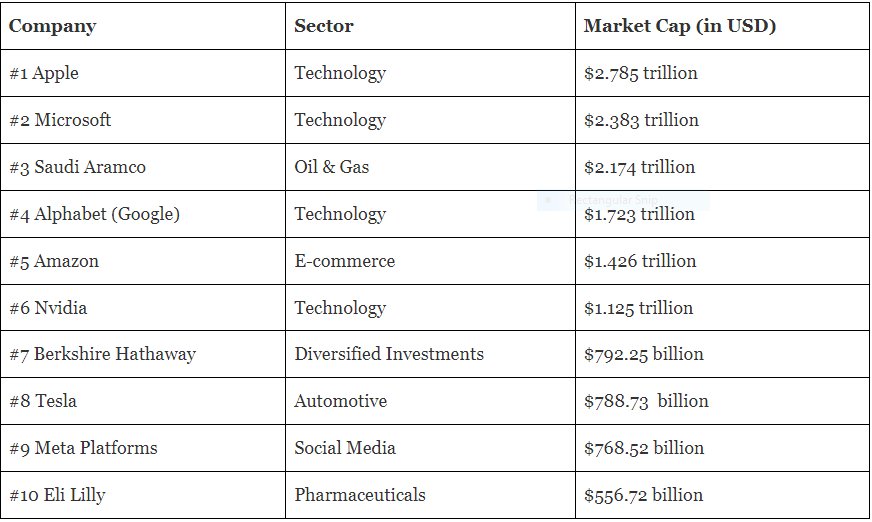
  • Free enterprise is the best form of economics. Capitalism completely outstrips socialism in generating prosperity.  Individual entrepreneurship leads to the greatest commercial advances.  Of the ten largest companies in the world in 2023, nine are American.  This proves the superiority of the American economic system.  Business success in turn, leads to higher wages for American workers.
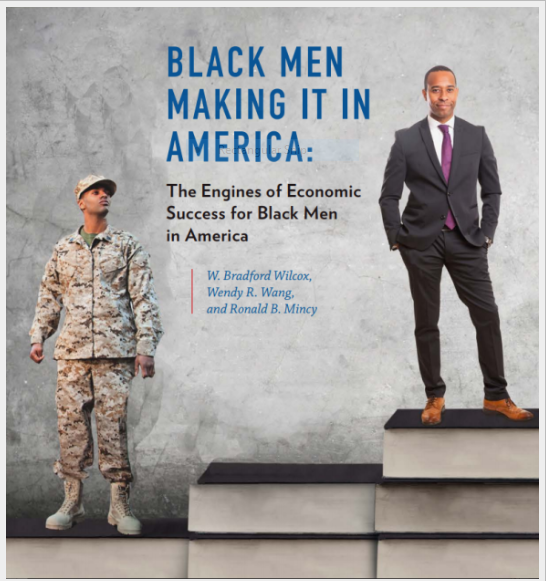
  • Economic growth leads to social advancement.  For example, African/Americans are moving up the economic and social ladder in greater numbers all the time.  
  • We need a strong defense to make sure that democracy continues to prevail.  Democracy is not inevitable and we must be prepared to defend it.  In particular, it is right for us to continue helping Ukraine to resist its invasion by Russia.  This is the best way to deter China from attempting to take over Taiwan.
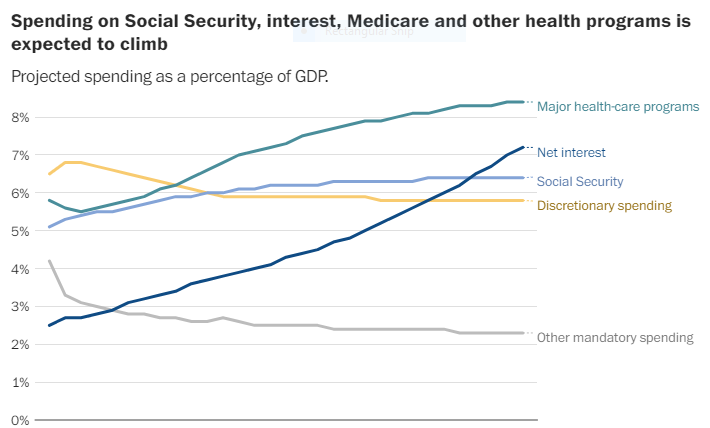
  • Fiscal responsibility is critical.  Our national debt is now over $33 trillion and out of control.  The biggest problem is entitlement spending such as Social Security and Medicare. These programs must be reformed (not cut!) to make them sustainable for the long term.

Conclusion.  Based on this description of my outlook on American government and society, it should be clear that I am a strong believer in the American way.  Of course, we are far from perfect, but we have improved in many ways since our founding in 1787, and will continue to do so.  We should be confident, but never take for granted, that we have the good fortune to live in the strongest, and one of the freest, countries the world has ever known.  It is our responsibility to preserve this blessing; and pass it on in the best possible shape to our descendants.

For my Email Newsletter
Follow me on Facebook
Follow me on Twitter

The United States Is Not in Decline!

Over and over again, on this blog, I say that I am optimistic about the future of our country.  There is a lot of pessimism out there, but I think it is misplaced.  Consider:

  • Democracy is thriving. Our two major political parties compete vigorously for votes.  The decentralized nature of our republican form of government is our best guarantee of free and fair elections.  There are 3143 counties in the U.S., and it is at the state and county levels where elections are regulated and conducted.  This ensures that any election fraud, unlikely to begin with, will be isolated and widely dispersed.  The claims of election fraud by President Trump, after the 2020 election, were totally rejected by other elected officials and the courts.  In other words, democracy has just had a stress test and passed with flying colors.
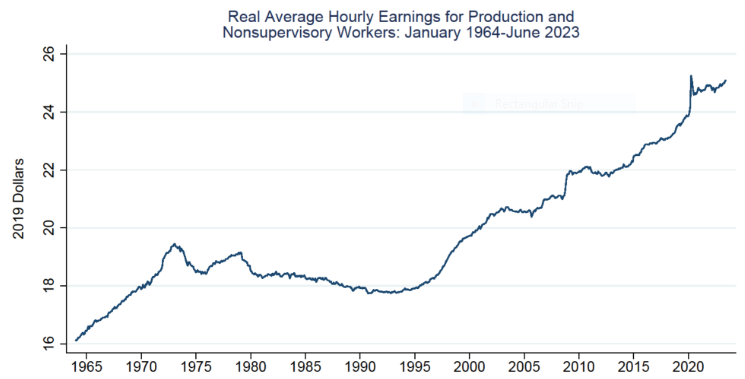
  • Our economy is strong. Our free enterprise economic system has made us the strongest country in the world.  Real average hourly earnings for production and nonsupervisory workers are on a long-term upward trajectory (see chart).  Yes, they are down in the last two and a half years because of inflation, but the Federal Reserve will eventually bring inflation back to the desired 2% level, as painful and dragged out as this process may prove to be.
  • Social progress. Our free and open society is leading to continued social progress by minorities.  In particular, blacks are moving steadily into the middle class.
  • Our main adversaries have bigger problems than we do.  Our autocratic adversaries, especially China and Russia, want to bring us down. But they have much bigger problems than we do.  Of course, we can never afford to become complacent about the superiority of our democratic and free-enterprise system.  But, at the same time, we should be confident that we can continue to stay ahead of our adversaries by continuing to make our own society better and better.
  • But the national debt is still a huge problem!  With spending deficits growing fast and now approaching $2 trillion per year, our rapidly accumulating national debt is an ever more alarming problem.   My overall optimism depends on our solving this problem before it leads to a new crisis!
  • Conclusion.  Americans are fortunate to live in one of (if not the) strongest and freest societies ever to have existed in human history.  We are far from perfect but our dynamic political and economic system gives us a huge advantage in keeping ahead of our main rivals, China and Russia.  We should be confident that, by solving our debt problem, we will continue to predominate, and provide critical world leadership, for many years to come.

For my Email Newsletter
Follow me on Facebook
Follow me on Twitter

Our Adversaries Have Much Bigger Problems Than We Do

As I often say on this blog, I am optimistic about the future of America.  But, of course, we do have big problems that must be overcome for us to continue to be the strongest country in the world.  Consider:

  • It appears more and more likely that the 2024 Presidential election will be between Joe Biden and Donald Trump, two of the poorest Presidents in American history. I say this because neither of them is willing to take our exploding national debt problem seriously.
  • I voted for Clinton in 2016, because of the Trump sleaze factor, but for President Trump in 2020 because I thought he did well in his first term (tax reform, deregulation, good judicial appointments). But his election denialism about 2020 has made him a huge liability to the Republican party.  Trump’s many poor endorsements in 2022 cost Republicans control of the Senate in the current Congress.
  • President Biden has done some good things in foreign policy like supporting Ukraine and improving relationships with our Asian allies to make us better able to contain China. But Bidenomics is a disaster, see here and here.  The Biden Democrats not only tripped off inflation with the $1.9 trillion American Rescue Plan in March 2021; but now are prolonging inflation with continuing huge annual spending deficits ($1.4 in FY 2022 and $1.7 trillion in FY 2023, as projected by CBO).
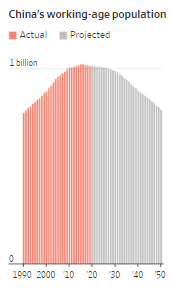
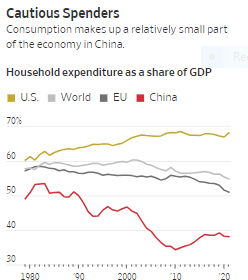
  • Our biggest adversary, China, is stumbling badly with its economy. Its working-age population is beginning to fall dramatically because of its (now-discontinued) policy of one child per family.  It also needs a faster transition to a consumer-led economy, such as the U.S. has, to make growth more sustainable in the long run.
  • Because of Russia’s disastrous invasion of Ukraine in February 2022, its economy is now in decline, as pointed out by Evan Gershkovich in his now-famous WSJ article (which is likely why he is now in Russian jail).

Conclusion.  We may be in store for five more years of poor presidential leadership.  But our free and open democratic system is so superior to China’s and Russia’s that we should be able, nonetheless, to continue our upward trajectory of growth and progress.  China and Russia have autocratic political systems and so for them, poor leadership does great damage to their societies (because it is almost impossible to challenge from within).

For my Email Newsletter
Follow me on Facebook
Follow me on Twitter
The Qualities I Am Looking for in the Next President

As we approach the 2024 Presidential election and the contenders present themselves to the voters, I assess the candidates, just like everyone else.  I have previously stated one essential quality I am looking for in a President: fiscal responsibility.  But, of course, there are other important attributes as well.  Here is my first attempt to describe these essential qualities in a coherent way.  Three of the most important:

  • An optimistic vision for the future of America. We are the strongest and freest country in the world for many reasons.  We aspire to equal opportunity for everyone and work hard to achieve this ambitious goal.  When we fall short, for example, with poor educational outcomes, educational choice springs up in the form of charter schools and/or private school vouchers.  We put a strong emphasis on economic growth and opportunity.  It is no accident that we are a highly innovative society because our economic system encourages growth and development.
  • Fiscal responsibility. One of the major themes on this blog is the urgent need for fiscal responsibility from national leaders.  Our huge and rapidly growing national debt is unsustainable.  The $5 trillion pandemic spending blowout tripped off inflation starting in early 2021, which has forced the Federal Reserve to raise short-term interest rates to 5.25% so far and perhaps higher.  This enormously increases interest payments on the debt that, in turn, makes our deficits and accumulated debt much worse.  The debt problem cannot be fully addressed without major reforms in entitlement spending.
  • A hawkish view of national security. Although we are the strongest nation in the world, we have two major rivals for predominance, China and Russia.  It is critical that we continue to help Ukraine defend itself from the Russian invasion.  It is not only the morally right thing to do but also in our own best interest to defend freedom and democracy around the world.  Our help for Ukraine, for example, will likely deter China from trying to invade Taiwan.
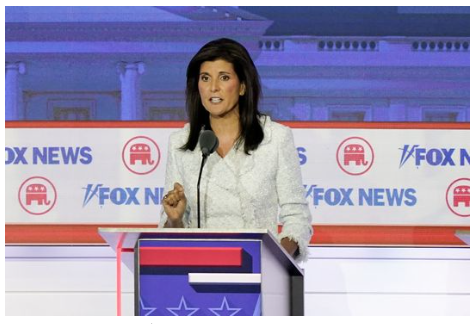
  • Republican presidential candidates. Based on her performance in the first presidential debate, see here and here, Nikki Haley is the only candidate in either party so far who meets all three of the above essential requirements to be President.  She has an inspiring personal story, she understands the seriousness of our debt problem, and she supports our defense of Ukraine.

Conclusion.  Being optimistic about the future of America, understanding the seriousness of our debt problem, and being committed to the strong defense of freedom and democracy around the world, are three very important qualities needed by our next President.  So far, Nikki Haley is the only candidate in either party who has demonstrated these essential qualities.  Much further discussion on this issue will follow as the campaign proceeds!

For my Email Newsletter
Follow me on Facebook
Follow me on Twitter

The Currently Perilous Fiscal Trap We Are In: Strong Economic Growth, Persistent Inflation, Huge Spending Deficits II. More Evidence

My last post pointed out that the currently strong economy, stimulated by huge deficit spending, is likely to keep inflation higher for a longer period of time.  This means higher interest rates which, in turn, means much higher interest payments on our rapidly exploding debt, leading to even higher annual deficits.  This is a vicious trap we have fallen into.  It is critical to take immediate steps to turn this perilous situation around.

Here is the latest data which reinforces this pessimistic view of our current situation.  Consider:

  • Interest rates and the Federal Reserve.  The CPI is up to 3.2% for July, “only” slightly higher than June’s 3.0%.  But core CPI, excluding food and energy prices, is still higher at 4.7%.  And the price of gas has risen significantly in the past few weeks.  In other words,  the Federal Reserve will likely decide to raise interest rates even higher later this year.  And, of course, this is in addition to the damage inflation is already causing by negating wage increases (see chart).

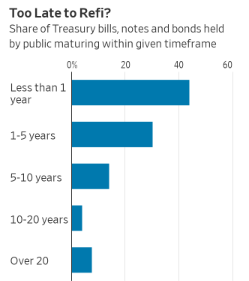
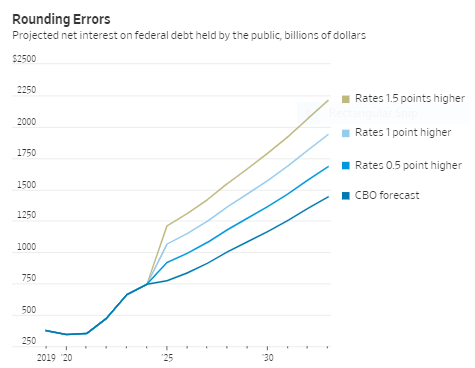
  • The likely rapid increase in interest payments on the debt. This is the scary part.  The first chart shows that over half of the U.S. treasury bonds financing our national debt come due within the next few years.  This means that they will soon be rolled over at much higher interest rates.  Based on the current 5.25% short-term interest rate, CBO projects that interest payments on the debt will reach $1 trillion per year by 2028.  If interest rates rise only .5% more, interest payments will reach $1 trillion by 2026.  And of course, interest payments continue to rise sharply after that.

  • In FY 2023 (this year), interest payments will be almost $700 billion out of a total debt of $1.7 trillion (as estimated by CBO). In other words, deficit spending, without including interest payments, is already hitting $1 trillion annually and rising.  Simple arithmetic shows that our total annual deficit could hit $2 trillion by 2026 as it continues upward.  This is scary!

Conclusion.  Inflation (with concurrent increases in interest rates by the Fed) is making our annual spending deficits grow much faster than otherwise.  This, in turn, overstimulates the economy which is already growing nicely.  Which, in turn, causes inflation to stay higher for longer.  We have created a vicious circle feeding on itself.  We need to break this harmful cycle as quickly as possible.  Significantly lowering annual deficit spending is the only way to do it!

For my Email Newsletter
Follow me on Facebook
Follow me on Twitter
The Currently Perilous Fiscal Trap We Are In: Strong Economy, Persistent Inflation, Huge Spending Deficits

I have long been saying on this blog that our most serious national problem is the huge national debt, now over $32.4 trillion.  And now, persistent inflation, coupled with a strong economy, is exacerbating this debt problem.  Consider:

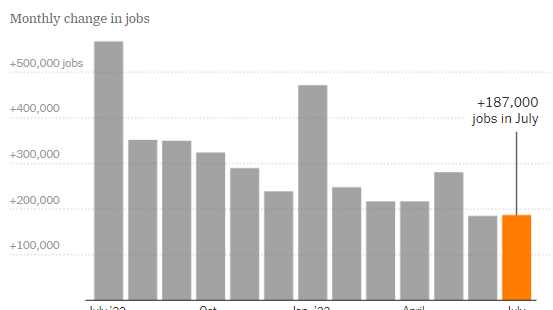
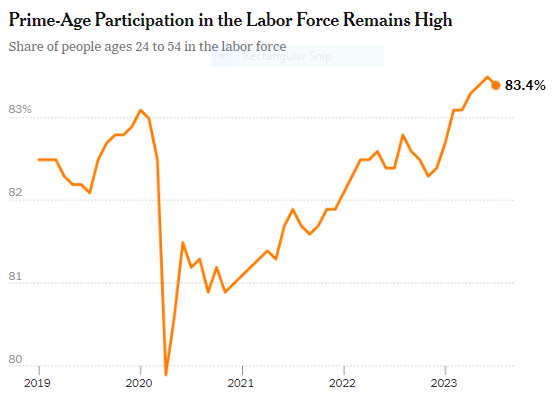
  • Strong Economy.  There were 187,000 new jobs created in July.  Wage gains are finally, after two years, exceeding the increase in inflation.  Job vacancies are high and exceed the number of unemployed.  Labor participation rates are also high.
  • Persistent Inflation.  Although the Consumer Price Index (CPI) grew only 3% in June, core inflation (excluding food and energy) was a significantly higher 4.8%.  And, of course, Fed imposed higher interest rates mean high mortgage rates, badly hurting the housing market.
  • Huge Annual Deficits.  The deficit for FY 2022 was $1.4 trillion.  CBO estimates the 2023 deficit will be $1.7 trillion.  And deficits are projected to keep rising in the future.

The problem in a nutshell.  The $5 trillion Covid pandemic stimulus set off an inflationary spiral, beginning in Spring 2021.  Belatedly the Federal Reserve has raised short-term interest rates to 5.25%.  This has slowed down inflation but not yet back to the desired level of 2%.  Either interest rates must go higher still, or the CPI will linger at a 3% or higher level.  In the meantime, the higher interest rates have raised interest rates on our $32.4+ trillion debt which has massively raised interest payments on the debt.  This greatly increases the annual deficits, which become part of the total debt.  And the increasingly high deficits continue to overstimulate the economy, which, in turn, puts upward pressure on inflation.

The solution is clear.  A strong economy does not need extra fiscal stimulus.  Annual deficit spending must be greatly reduced.  This may slow economic growth somewhat but, in turn, will make it easier for the Fed to bring inflation back down to the 2% level.  In other words, the key to curbing inflation, and getting economic growth back on a sustainable course, is to greatly reduce annual deficit spending.  This can be done if our national leaders are willing to spend the political capital to do it.

Conclusion.  Our current combination of a strong economy, persistent inflation, and high annual fiscal deficits puts our country in a dangerous trap that could easily spiral out of control if not reversed.  The key is to significantly reduce annual deficit spending, as described above.

For my Email Newsletter
Follow me on Facebook
Follow me on Twitter

The Big Picture on National Debt

Many things are going well in the U.S. We are a free and open democratic society.  Our two major political parties compete vigorously for votes.  We are the strongest country in the world, both economically and militarily.  Together with our many democratic allies, we are helping Ukraine defend itself against Russian aggression.

But we have a huge problem on the horizon that we are handling poorly: the national debt.  It is now over $32 trillion and growing rapidly.  The annual deficits, that collectively make up the debt, are now over $1.5 trillion each year and growing.  Let’s look at the big picture on our debt situation.

Consider:

  • Major healthcare programs are the largest single item in the federal budget at 24%. They are also the fastest-growing category of the federal budget (along with net interest).  The Washington Post has shown that it is possible to save almost $100 billion per year in Medicare costs alone by more effective management of the program.  The largest single component of this savings, $40 billion, comes from making Medicare Advantage more cost-effective.  Other big savings for Medicare would come from the more careful addition of new procedures.  Medicare is an important social program but must be reformed to remain sustainable.
  • Social Security. SS makes up 22% of federal spending and its spending is not growing as fast as healthcare programs.  Nevertheless, it also needs some relatively small tweaks to remain sustainable, such as raising the eligibility age, and making means adjustments for benefits (down for the wealthy but also up for low-income recipients).
  • Non-defense discretionary spending. This is only 15% of the total budget but still offers opportunities for big savings.  This is precisely what the House Republicans focus on in the current discussions about the FY 2024 budget.  As you can see from the attached chart, there is a $119 billion discrepancy between what the House Appropriations subcommittees have allocated for next year and what the corresponding Senate subcommittees have allocated.  These differences will be resolved in joint meetings between the House and the Senate.  Clearly, there is potential for large savings compared to what was enacted for FY 2023.

Conclusion.  We simply cannot continue our current path of annual spending deficits of $1.5 trillion and higher.  There is more and more public awareness of this simple arithmetic fact.  The current trend toward governmental decentralization will help.  But we also need major spending restraint at the federal level.

For my Email Newsletter
Follow me on Facebook
Follow me on Twitter

A Promising Social and Political Trend: Decentralization

As I often point out, a free and open society like ours always has big problems to address: a huge and rapidly growing national debt, for example.  Another problem is how to best relate to our major autocratic rivals, such as China, Russia, and Iran.  A third big problem is the extreme political polarization our country faces.  But as I also say, I am an optimist about the future of the U.S.  One reason for my optimism is the increasing trend of decentralization in American government and society in general

Consider:

  • Abortion law. The repeal of Roe vs. Wade by the Supreme Court a year ago was long overdue.  Clearly, the U.S. Constitution has no guarantee of abortion rights and, therefore, according to the 10th Amendment, it is an issue that needs to be resolved by the democratic process that, for practical purposes, means at the state level.  This is exactly what is now happening.
  • Educational choice. Eight states: Arizona, Arkansas, Florida, Indiana, Iowa, Oklahoma, Utah, and West Virginia, have recently adopted universal educational choice at the K-12 level in their states.  This has happened because of huge dissatisfaction with the public schools, exacerbated by excessively long school closings during the Covid pandemic.  School choice will be especially useful for low-income, often minority children in failing inner-city schools.   Better educational achievement is what African/American children most need for faster social and income mobility.  This is even more important now that the Supreme Court has struck down racial discrimination in college admissions.

  • Migration. After the 2020 census, Texas gained two congressional seats, and Florida and North Carolina each gained one.  Also, California, Illinois, and New York each lost one seat.  This corresponds to the significant business and personal migration which took place in 2021 because of unnecessary Covid lockdowns as well as much higher tax rates in the out-migration states (see chart below).  In other words, more attractive state policies on social and tax issues will draw people from the more oppressive states.

  • Fiscal responsibility and debt. The House Republicans are making a huge effort to cut discretionary spending in the FY 2024 budget.  Of course, this doesn’t solve our debt problem by itself (entitlement reforms are also badly needed at the federal level), but it could begin a valuable new trend.  Shifting major spending categories from the federal government to state governments would reduce federal deficits and save money overall because state governments have balanced budget requirements.

Conclusion.  As I have illustrated, there is a major trend developing of sending both social issues (abortion and education) and spending issues back to the states for resolution at the state and local levels.  This is a positive movement that could eventually lead to a less divisive resolution of major national issues.

For my Email Newsletter
Follow me on Facebook
Follow me on Twitter