
Trump’s Bark Is Worse than His Bite


The anti-Trump fervor seems to be slowly dying down as his appointees take hold of their agencies and begin to promulgate new policies. I have expected this to happen because of the excellent quality of many of the people he has appointed.
Here are a few recent developments:

  • Interior Secretary Ryan Zinke has said that “the border is complicated as far as building a physical wall” and there are all sorts of problems to be resolved before it can be done.
  • Reality is setting in with regard to Russia policy “given Russia’s continued provocations in terms of weapon’s deployments, overtures to Iran, cyber intrusions and intervention in Ukraine.”
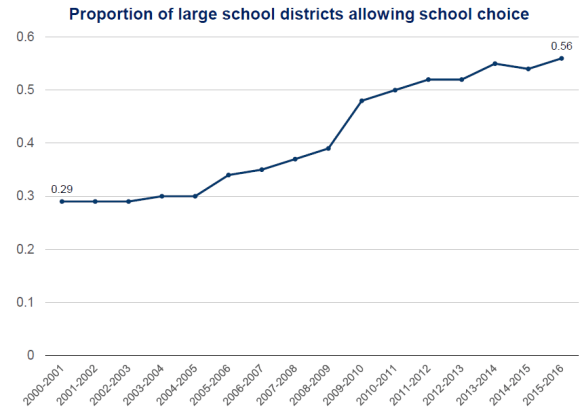
  • The Brookings Institution has just issued a new report showing that school choice options are increasing in the country’s largest school districts. This indicates that Education Secretary Betsy DeVos is in the mainstream by supporting more choice.
  • Coal jobs Trump vows to save no longer exist.  In other words, cancelation of the Obama Clean Power Plan will have little effect on the huge drop in coal use because coal has become so much more expensive than natural gas.
  • Of course, the Trump 2018 Budget Proposal will be heavily modified by Congress but it does contain some good ideas. Agriculture, Foreign Aid and Community Development Block Grants are all ripe for big cuts.
  • The biggest unknown with respect to administrative action concerns trade policy. The question here is what concessions he can get from China and Mexico without starting a disastrous trade war.

What is mainly lacking at this point is any significant action by Congress on the Trump agenda. What will happen with healthcare reform, tax reform and deficit reduction, for example?

Conclusion. Trump is doing fine so far but it is on relatively straightforward issues under his control. Hopefully he will be able to make progress on the bigger issues as well which require working with Congress.

Follow me on Twitter
Follow me on Facebook


How Not to Help Black Americans


“It is important and right that all privileges of the law be ours, but it is vastly more important that we be prepared for the exercise of these privileges.”                                                                  Booker T. Washington, 1856 – 1915

How do we lift up the black underclass, the school dropouts, gang members, and drug dealers who become criminals and spend their lives as a drag on society?  The Wall Street Journal’s (black) editorial writer, Jason Riley, addresses this question in today’s paper, “How Not to Help Black Americans”.  As he says “Upward mobility depends on work and family.  Government policies which undermine the work ethic – open-ended welfare benefits, for example – help keep poor people poor.  Why study hard in school if you will be held to a lower academic standard?  Why change antisocial behavior when people are willing to reward it or make excuses for it?”
A few days ago, Robert Balfanz, the Director of the Everyone Graduates Center at John Hopkins University in Baltimore, wrote in the New York Times, “Stop Holding Us Back”, that even though 80% of Americans now graduate from high school, 33% of the nation’s African-American and Latino young men will not graduate.  Half of these non-graduates go to a total of just 660 high schools out of a total of 12,600 high schools in the country.  He suggests the following:

  • Refocus such high-poverty high schools in order to identify by the middle of ninth grade the students most likely to drop out.
  • Set up early warning systems so that adults can step in at the first sign that a student is in trouble.
  • Employ additional adults to support students who need daily nagging to succeed, especially during the key transitional years in sixth and ninth grade.

Capture Such a plan has been instituted in the Chicago Public Schools as described in “Preventable Failure”.  As the above chart shows, it has led to dramatic improvement in the on-track rate of at-risk ninth graders in CPS.
These two school programs, in Baltimore and Chicago, represent what we should be doing to help all minorities, especially blacks, succeed in life.  Resources provided for such programs will do much more to eliminate poverty than expanding conventional welfare.