America is a Beacon of Democracy for the Rest of the World

Any free country like the United States will always have serious problems to solve: mass shootings, political polarization, inflation, etc.  But our democratic system of government and versatile economy are very good at addressing new problems as they arise.  Many other countries around the world admire our achievements and would like to be as free and prosperous as we are.

Consider:

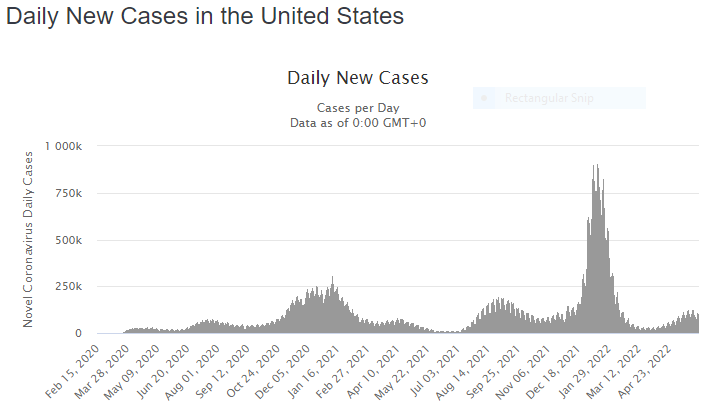
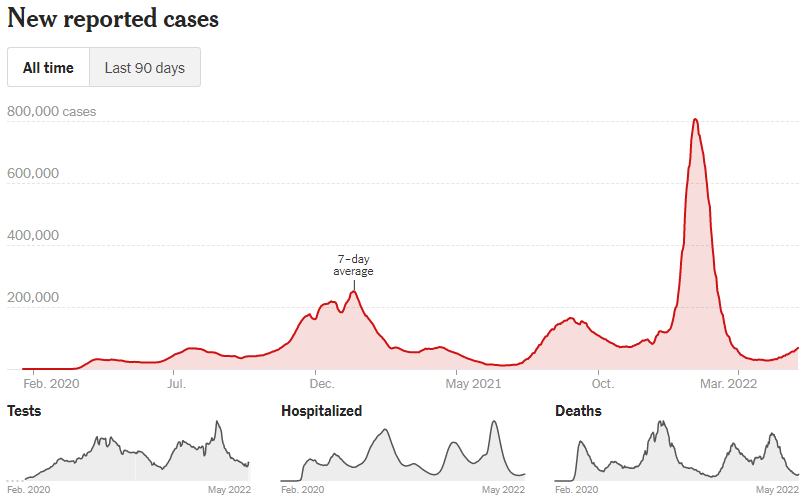
  • The Pandemic. We have now virtually defeated the world-wide pandemic by adopting a decentralized approach with the states in charge of requiring lockdowns, mask mandates and school closures.  It is American pharmaceutical companies, which developed the world’s most effective vaccines in record time, that have allowed the U.S. to essentially achieve herd immunity. The latest U.S. variant is already decreasing in the number of new daily infections.  Compare this with the Chinese zero-Covid approach which is floundering and badly hurting their economy.
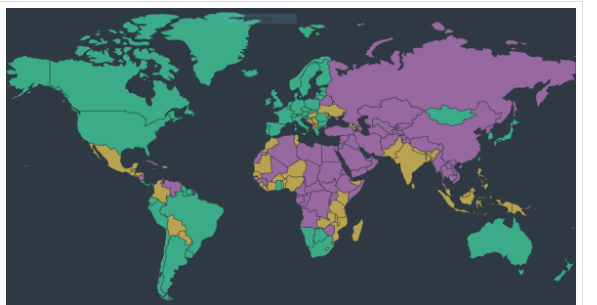
  • Democracy is flourishing around the world (see chart).  Democracy is fragile and hard to establish but it is also contagious because people everywhere have a yearning for the personal and political freedom which democracy provides.  More democracy means more peace in the world because democracies seldom go to war with each other.
  • The Ukraine War. Ukraine wants to be free and independent from Russia and the U.S. and its allies are rightly helping Ukraine defend itself.  Russia is a huge troublemaker all around the world and hopefully will be severely punished for starting this war.
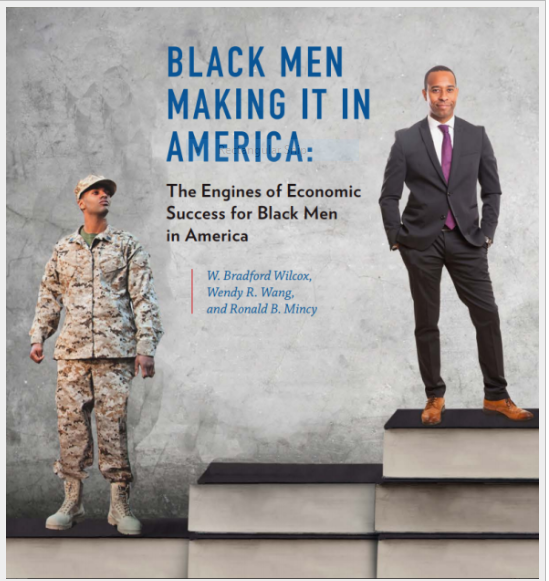
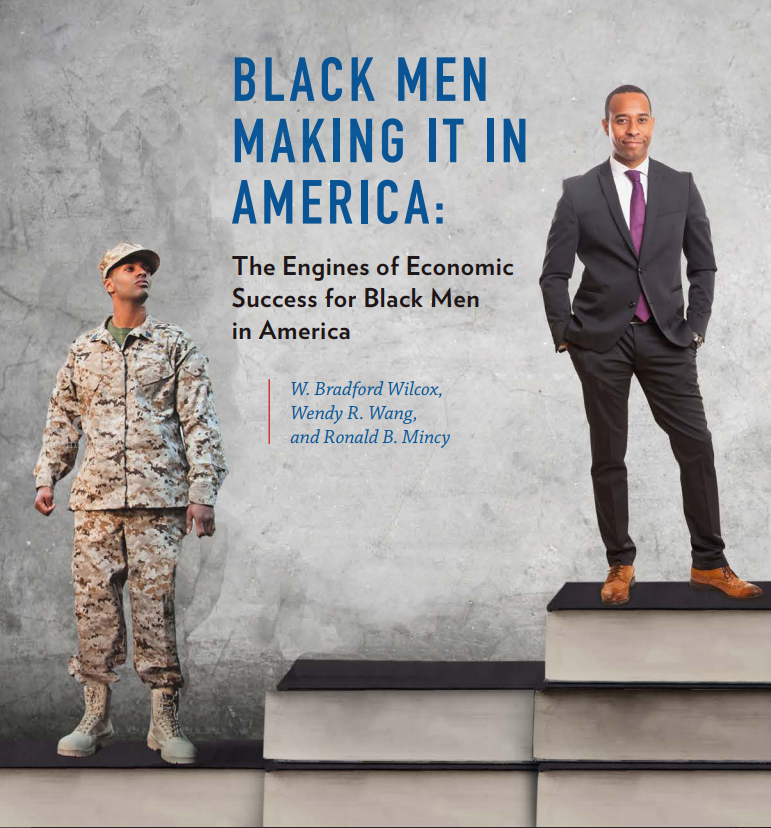
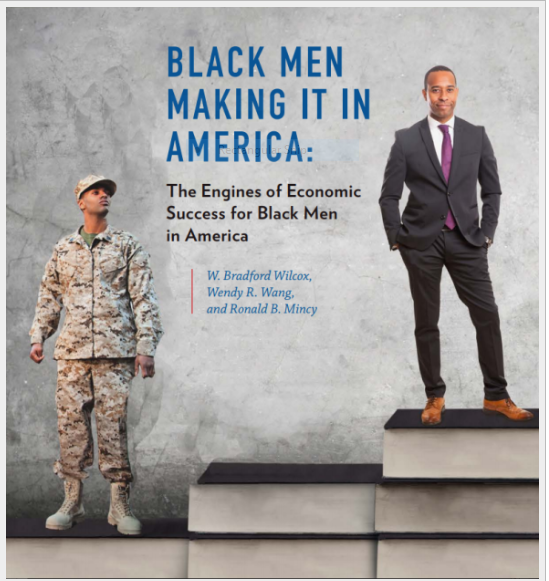
  • Economic and social progress in the U.  The U.S. not only has the highest median individual and household incomes in the world among major economies, but also African/Americans are making much economic and social progress as well.  American social and economic progress is highly visible to the whole world and this, of course, adds greatly to our stature among other nations.

Conclusion.  America is leading the world by example.  We’ve got the pandemic under control with American-made vaccines and a decentralized political system.  We’re demonstrating our commitment to democracy by defending Ukraine against the Russian invasion.  We are constantly demonstrating the superiority of our own political and economic system by steadily improving the lives of the vast majority of our citizens.  We’re doing the big things right and tackling new problems as they arise.  We should be optimistic about the future of our country and its crucial role in world affairs.

Sign-up for my Email Newsletter
Follow me on Facebook
Follow me on Twitter
The Solution to Polarization: Decentralize by Giving States More Responsibility

Politics in the United States is highly polarized.  We easily recognize this at the national level because the parties in Congress are constantly squabbling with each other.  But it is also true in state government as well.  In fact, of our 50 states, only two, Minnesota and Virginia, have split legislative chambers.  All of the other 48 states have both legislative houses either Republican (30 including Nebraska which is unicameral) or Democratic (18).   Also, notice how both individual Democrats and Republicans are becoming more ideological in their views. This, of course, increases the degree of polarization at all levels.


Politics is polarized because there is such a sharp division of opinion in the country on so many basic issues.  The answer is not to try to force unification, which won’t work anyway, but rather to let the states resolve more issues on their own. Consider:

  • The Electoral College. This brilliant invention by our founding fathers aims to elect presidents who represent the nation’s great diversity by obliging them to earn votes across many states and regions.  It can bestow a broad-based national mandate on a president who won only a plurality of the popular vote such as Lincoln in 1860, Nixon in 1968, and Clinton in 1992.  Election by popular national vote would encourage candidates to campaign only in large, voter-rich metropolitan areas and media markets.  A multiparty democracy would result, in which runoff elections would be necessary for the ultimate winner to achieve a majority vote.
  • The pandemic. The attached chart shows which ten states did the best job overall handling Covid, based on the three variables of the economy, education, and mortality, and which ten did the worst.  The best performers were largely small red states (Florida is a large red state) and the worst performers were mostly large blue states.  The leaders largely avoided lockdowns, mask mandates, and kept their schools open.  A national Covid policy, run by the bureaucracy-controlled CDC, would have been a disaster.  Note also the huge red and blue difference in attitudes about the seriousness of Covid.         
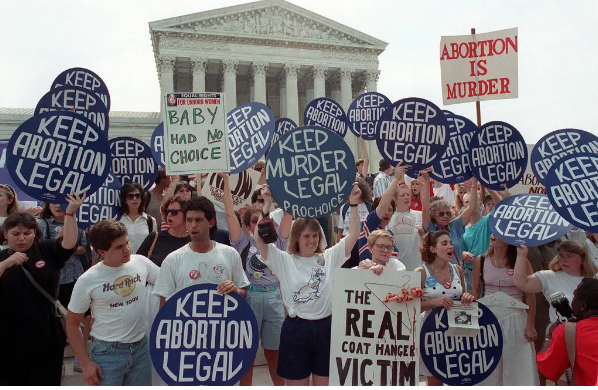
  • The likely overturn of Roe vs Wade. The 1973 Roe vs Wade decision by the Supreme Court was clearly unconstitutional.  The likely repeal will return abortion policy to the states (closer to the people) where it will be resolved on a state-by-state basis.
  • Gun Control. Notice the widening gap between Republicans and Democrats on the attitude towards gun possession.  Red states and blue states will decide gun control issues differently as their legislatures see fit.  This is how it should be done.

Conclusion There is huge polarization in our body politic at both the state and national levels.  This polarization exists because there is such a wide divergence of views on so many fundamental issues.  Our constitution has set up a strong central government to perform basic national functions such as providing for national defense, conducting foreign relations, and maintaining a common currency.  But we should adhere more closely to the Tenth Amendment which says that all powers not specifically assigned to the federal government are reserved for the states.  This would go a long way to decentralizing the way public issues are resolved and defusing much of the hostility now directed at the federal government.  Making government closer to the people in this way would go a long way towards depolarizing our nation.

Sign-up for my Email Newsletter
Follow me on Facebook
Follow me on Twitter

Why Omaha is such a Great Place to Live

I have been writing this blog for almost 10 years, beginning shortly after the 2012 national elections.  I have named the blog “It Does Not Add Up” because my main focus is the fiscal health of the United States.  Our national debt, now in the neighborhood of $30 trillion, is far too large and is growing in an unsustainable manner.

It will be very difficult to fix the debt problem.  In theory, we can do it by controlling the cost of entitlement spending.  But this will be very hard to accomplish in practice.  I now have adopted the more pessimistic view that it will take some sort of a “crisis” for our national leadership to effectively address this problem.  The current 8% annual rate of inflation could become such a crisis but more likely will be brought back down to a tolerable level by aggressive Fed action in raising short-term interest rates.

Nevertheless, I am still optimistic about the long-range future of the “American Project”  because we have a fundamentally sound free enterprise economic system as well as a stable system of democratic government respecting individual rights.

My optimism about America is backed up by my personal satisfaction of living in the mid-sized city of Omaha, located in the deep-red state of Nebraska.  Consider these fundamental advantages:

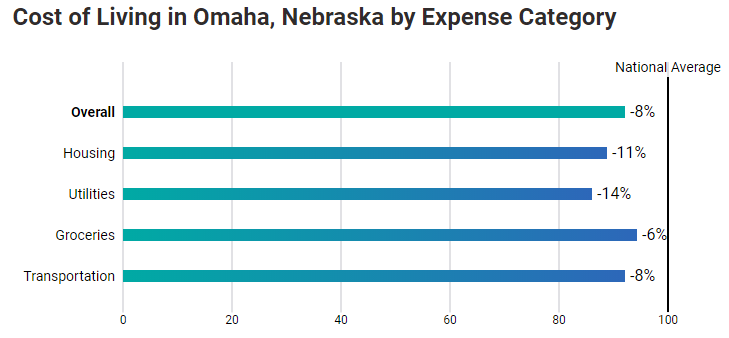
  • Low cost of living. The cost of living in Omaha is 8% less than the national average.

  • Low crime rate. Homicides in Omaha are way below the national rate.

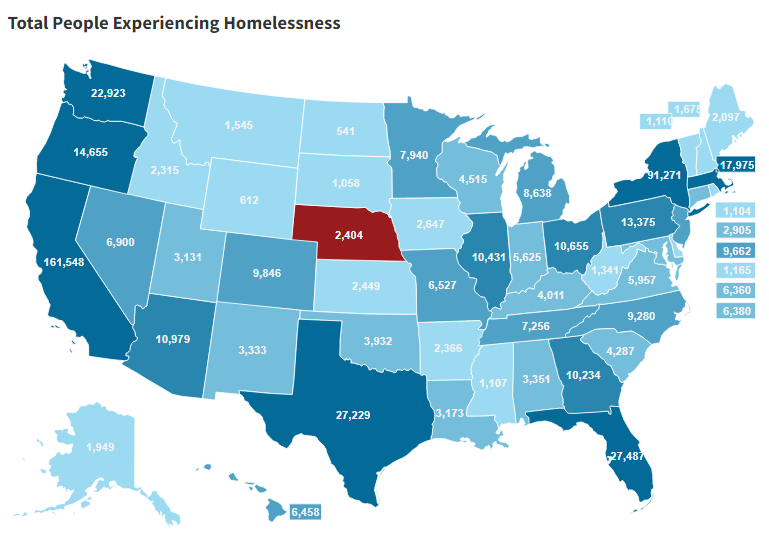
  • Low rate of homelessness. The entire state of Nebraska has “only” 2400 chronically homeless people, much less than most other states.

  • Income inequality. Income inequality in Nebraska is much lower than the national average, as is typical of red states in general.
  • Educational equity. The eleven school districts in metro Omaha comprise a Learning Community whose focus is on early childhood education to better prepare children from low-income families to succeed in school.

  • Unemployment rate. Nebraska’s current unemployment rate is 1.9%, the lowest in the U.S., and for Omaha, the unemployment rate is only 2.4%.

Conclusion.  While I no longer think that there is a simple or even relatively painless solution to fix our national debt problem, I am still optimistic about the long-term prospects for maintaining essential U.S. leadership in world affairs.  Perhaps my “rosy scenario” outlook is influenced by my own quality of life which is greatly enhanced by the favorable demographics of my city and state of residence.

Sign-up for my Email Newsletter
Follow me on Facebook
Follow me on Twitter
Americans are too Pessimistic about the Future II. Political Implications

In my last post, I gave several reasons why I think Americans are too pessimistic.  Others are saying similar things.

But the fact remains that Americans really are pessimistic at the present time and this will have implications for the November 2022 national elections.  Consider:

  • Foreign Policy is a plus for President Biden and the Democrats. Even though the Afghanistan withdrawal was handled poorly, Biden is now handling the Ukrainian situation very well.  Ukraine wants to be free and independent from Russia and we should do all we can to help them achieve this without getting directly involved in the war.  Furthermore, China’s current economic slowdown and failing Zero-Covid policy reflect poorly on its autocratic political system.
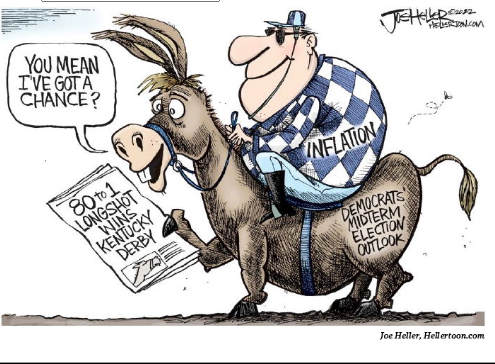
  • Inflation. This is, of course, the Democrat’s biggest problem by far.  Americans are reminded daily of the rapidly rising price of gasoline.  Even if the annual rate of inflation continues to taper off slowly (it dropped from an annual rate of 8.5% in March to 8.3% in April), it is likely to still be high in November.  In the meantime, the Fed will be raising interest rates aggressively to combat inflation and this will slow down the economy.  This will likely make the current low unemployment rate of 3.6% go up, even though there is now a huge number of open jobs (11 million) in the economy.  And even large current wage increases are not keeping up with inflation.

  • The likely repeal of Roe vs Wade. This will be a net wash politically.  Since state legislatures will now be in charge of setting abortion policy, both pro-lifers and pro-choicers will be working hard to boost voter turnout amongst their supporters.  Of course, more voting is very good for democracy in general.
  • The culture wars give a big advantage to the Republicans. Gender ideology (trans-gender encouragement) and critical race theory (white supremacy and systemic racism) are toxic to parents of young children.  Unnecessary school closings and mask mandates at the behest of teacher unions have also created animosity towards the education establishment.

Conclusion.  Joe Biden is doing well on foreign policy, but poorly on domestic issues, and his overall popularity is sinking.  In other words, domestic policy failures outweigh foreign policy successes for presidential popularity.  This bodes poorly for the Democrats in the November 2022 elections.

Sign-up for my Email Newsletter
Follow me on Facebook
Follow me on Twitter
Americans are Too Pessimistic about the Future

Maybe it’s just a combination of human nature and the way that the media emphasize negative news.  War, pandemic, inflation, this is what we hear about in the news and too many people are natural worriers.  Things sound pretty bad right now.  But I agree with Warren Buffett, the Oracle of Omaha, who says, “Never bet against America”.

Consider:

  • The Pandemic. According to the CDC, 94% of Americans ages 16 and up have Covid antibodies either through vaccination or prior infection.  Now, after the Omicron surge, half of us actually have infection-induced antibodies and these prior infections are helping to blunt the effect of new variants.  In other words, get vaccinated and exercise reasonable precautions.  If you do catch Covid, it is likely to be mild or even asymptomatic.

  • The Ukraine war.  Russia invaded Ukraine in February and brave Ukrainians are willing to fight and die to preserve their freedom and independence. The U.S. and its NATO allies are providing Ukraine with the military supplies it needs to drive the Russians out.  It is not only the right thing to do but also in our own best interest to defend democracy around the world as much as we reasonably can.
  • The end of Roe vs Wade? If Roe vs Wade is struck down by the Supreme Court, as now appears likely, then the issue of abortion restrictions returns to the states.  Especially in the red states which tend to be pro-life, this will inevitably boost voter turnout in future elections.   This is good for democracy!

  • Political polarization, dissension, and acrimony. Of course, we should try to disagree without being disagreeable, but democracy is inherently messy.  How much better it is to work out our differences under the rule of law than to risk violent insurrections.  This is one of the great virtues of our decentralized constitutional republic.
  • Inflation is now running at an annual rate of 8.5% (as of March 2022). The Fed has already raised short-term interest rates by .75 % (to a total of 1%) but will have to do much more.  According to Richard Clarida, former Fed vice-chairman, if inflation is still as high as 3% a year from now, the Fed will need to raise interest rates to 4% in order to bring inflation down to the Fed’s goal of 2%.  Of course, to reach 3% a year from now, the inflation rate needs to level off real soon and then start dropping.  Let’s be optimistic and expect something like this will happen.  In the meantime, there will be the short-term pain of rising prices, but our underlying strong economy, and low unemployment rate, should carry us through the inevitable downturn.

Conclusion.  There are always serious issues to confront in a democracy, but the U.S. is in good shape overall.  The Pandemic is under control.  Ukraine is effectively resisting Russian invasion with our support.  The likely repeal of Roe vs Wade will result in a big increase in voter turnout.  The Fed should be able to get inflation under control with some temporary pain for the next year or two.  All-in-all, democracy is thriving at home and abroad!

Sign-up for my Email Newsletter
Follow me on Facebook
Follow me on Twitter

Why Calling the U.S. Systemically Racist is Harmful to Black Progress

Although my focus on this website is mostly on fiscal and economic issues, I discuss other basic national issues as well.  Lately, I have been giving much attention to the Russian invasion of Ukraine because the defense of democracy and freedom around the world is so fundamental to our own national security.


Another very serious socio/economic problem in the U.S. is the relatively slow progress of African/Americans in achieving social and economic equality with white Americans.  The legal scholar, Peter Schuck, has a valuable article on this subject in the latest issue of the National Affairs.  According to Mr. Schuck:

  • The claim of progressive advocacy groups that the U.S. is systemically racist distracts from, and undermines, a more compelling priority: the repair of so many broken black communities in low-income areas. The language of systemic racism does not equip younger black Americans with the tools to pursue the many genuinely equal opportunities that now exist.

  • Almost three generations after the civil rights movement of the 1960s, decades of affirmative action, and trillions of anti-poverty dollars later, many Americans of all races remain painfully aware of continuing racial injustice and embedded inequality.
  • But there are four basic reasons to doubt that the racism in America today is truly systemic.
  • First, the rates of racist beliefs among individual Americans have declined over time. Public polling about white-black intermarriage, residential proximity, and other interactions show dramatic increases in tolerant attitudes among whites since the 1960s.
  • Second, the cohort of the U.S. population that has been most likely to hold racist views is slowly but inexorably dying out.
  • Third, anti-racist protests and highly publicized punishments of racist incidents have made racism much more newsworthy than it was in decades past.
  • Fourth, impressive upward mobility of other non-white groups is occurring all the time. Furthermore, black immigrants’ economic mobility is much greater than that of blacks born in the U.S.

To say that ongoing systemic racism is the primary driver of current disparities between black and white Americans today distracts attention from what may actually be causing or worsening the problem:

  • The first social factor contributing to socioeconomic disparities between blacks and white in America is the fragility of the black family. Black men today are far less likely to get married than white men.  Economically prosperous black men are less likely than poor black men to have ever married at all.  The best predictor of low prospects for children, regardless of race, is growing up in a single parent household.
  • A second factor contributing to socioeconomic disparities is isolation. The digital divide deprives blacks of information and social connections.  Blacks tend to live in areas of low economic growth and high unemployment which limits their access to resources that contribute to upward mobility.
  • A third factor is schooling. Even though high school graduation for blacks has risen from 25% in 1965 to now around 88%, graduation statistics conceal large skill gaps that remain.  At the primary and secondary school levels, blacks are disproportionately cited for misconduct which leads to higher drop-out rates.  Unfortunately, blacks often suffer from an oppositional culture that manifests itself in less time spent on homework, high rates of truancy, and greater indiscipline.
  • A fourth factor contributing to socioeconomic disparities is Unfortunately, de-incarceration would have little impact on incarceration rates.  This is because nonviolent offenders, such as drug users, seldom go to prison today.  Also, recidivism rates are very high: two-thirds of those released from prison are arrested for a new crime within three years.
  • Finally, a fifth factor is that many people, black and otherwise, find themselves in an impoverished state because they have made poor personal choices, such as excessive gambling, the abuse of alcohol or tobacco, or illicit drugs.
  • The so-called success sequence: finishing high school, marrying after the age of 20, and doing both before having a child – reduces the risk of falling into poverty to 2%, while failure to follow this path raises it to 75%.

Conclusion.  “The challenge we confront today is to identify and overcome those obstacles to black Americans’ progress that were placed there not only by racist systems of the past and programmatic failures of the present, but also by behaviors over which they and their communities have some control today.”

Sign-up for my Email Newsletter
Follow me on Facebook
Follow me on Twitter

How is Joe Biden Doing as President?

Joe Biden’s poll ratings have been steadily dropping from the mid-fifties, when he became President, to now in the low forties.  Here is my evaluation of his performance:

  • Biden is handling the Ukrainian situation very well.  Ukraine wants to be free and independent from Russia and it is important for the U.S. and its allies to provide as much military support as possible to resist the Russian invasion without putting troops on the ground.  Many NATO countries, encouraged by Biden, are also providing military weapons and supplies.  Even though Ukraine is not a member, NATO is still heavily involved, and rightly so, in helping Ukraine defend itself.

  • Inflation is increasing at an annual rate of 8.5% (as of March 2022). Although there are several underlying causes of inflation (massive deficit spending by Congress, quantitative easing by the Fed), it is the $3 trillion excess spending under Biden ($1.9 trillion for the American Rescue Plan and $1.1 trillion for infrastructure) that has tripped off the current surge.  Other than holding back on additional unnecessary spending (unnatural and unlikely for Democrats), there really isn’t anything Biden can do about it.  The Fed will have to raise interest rates significantly to slow the economy in order to bring the inflation rate down.  Of course, this may set off a recession but that may be what it takes to stop inflation.  In the meantime, inflation is a significant burden on the working class.
  • Culture Wars.  The progressive left, with Biden’s at least tacit if not overt support, is pushing a radical K-12 education agenda of gender ideology and critical race theory.  There is huge grassroots opposition to these measures, as already apparent in the 2021 off-term elections around the country.
  • Southern Border. There are now over 200,000 immigrant apprehensions at our southern border each month.  Most of these illegal immigrants claim asylum and are given temporary visas to remain in the U.S. until their cases are adjudicated by an immigration judge.  There is much opposition to such lax immigration procedures, even from some Democratic members of Congress.

Conclusion.  On foreign policy, after a disastrous withdrawal from Afghanistan, Joe Biden is now doing well in responding to the Ukrainian invasion crisis.  Where ha has fallen down badly, as reflected in his steadily dropping poll numbers, is on domestic issues, especially concerning inflation.  The inflation rate will probably level off soon but is unlikely to drop very fast.  In other words, the price of gasoline, for example, is likely to keep on rising indefinitely.  This reminds everyone on a daily basis of how bad inflation is.  The culture wars and “open” southern border are also damaging Mr. Biden’s support.  All of these factors will be reflected in the November 2022 midterm election results.

Sign-up for my Email Newsletter
Follow me on Facebook
Follow me on Twitter

Democracy is Thriving at Home and Abroad

Democracy is a tough concept.  It means personal freedom and political self-determination.  But how do you balance personal freedom with personal safety and security?  How do you achieve fairness in government when everyone has a voice in making decisions?  It is not easy to accomplish these goals which can often be in conflict with one another.  In fact, it is the political competition between different factions which leads over time to societal change and progress.

Freedom House divides the world into three categories: free, partly free, and not free (see map).  Ukraine is only partly free but identifies with the West and is becoming more democratic.  Russia wants to keep Ukraine under its autocratic thumb.  The U.S. and its allies are supporting the brave Ukrainian resistance with military aid.  There is a good chance that Ukraine will ultimately prevail.  If it does, then other countries presently under Russia’s domination (see second map) will also want to break loose.  In other words, there is momentum for democracy’s expansion around the world as there has been for the past hundred years.

Democracy is also thriving within the U.S.  Consider:

  • The 2020 Presidential election. The Trump organization filed 60+ lawsuits trying to overturn the election results in particular states.  None were overturned.  The January 6, 2021 capitol break-in, as disgraceful as it was, had no effect on the outcome of the election.  In other words, U.S. democracy has had a severe stress test and passed with flying colors.
  • Voting restrictions. There were numerous voting irregularities in 2020 due to the pandemic.  Many (especially red) states are tightening procedures for absentee and mail-in voting in order to preserve the strong American tradition of voting integrity.  Decentralization of governmental authority is one of the key strengths of our constitutional republic.  The states are in charge of election procedures and, not surprisingly, are taking this responsibility seriously.
  • The culture wars.  The culture wars represent democracy in action. There are huge differences of opinion in the U.S. about abortion rights, gender ideology and critical race theory.  These differences have to be worked out within our democratic system which is exactly what is now happening.  It’s a messy, contentious process but how could it be otherwise with such huge differences of opinion amongst the people?

  • Polarization.  Our current political climate is highly polarized, with all but two states (Minnesota and Virginia) having both legislative chambers controlled by the same party (Nebraska is unicameral with Republican control).  Again, polarization is simply a sign of our widely divergent views on many basic issues.  It is made worse by identity politics and should gradually fade away as minorities become more integrated into the American way of life.

Conclusion.  There is a worldwide struggle occurring between democracy (the U.S. and its allies) and autocracy (China and Russia).  The forces of democracy have many strengths, including economic and military superiority (see chart).  But the main strength is that so many people around the world prefer individual freedom and political self-determination when they have a realistic opportunity to achieve it.  Ukraine is willing to fight for the same freedoms that the U.S. (and its allies) have in great abundance.

Sign-up for my Email Newsletter
Follow me on Facebook
Follow me on Twitter

My Overall Political Outlook

I have been writing about the Ukraine crisis for several weeks.  I believe that it is very important for the U.S. and its allies to help Ukraine defend itself against the Russian invaders.  The rules-based international order, in effect since the end of the Cold War in the early 90s, depends on it.

But the Ukrainian crisis could last a long time and there are other important issues confronting the U.S.  Every once in a while I summarize my overall political outlook because it largely determines how I will come down on any particular issue.  The last time I did this was in December 2019 when I talked about U.S. strength, China, global warming, debt, and polarization. What I said then is still operative but there have been three big events in the meantime:

  • The coronavirus pandemic arrived in early 2020,
  • Joe Biden was elected president in November 2020, and
  • Russia invaded Ukraine in February 2022.

How do these three events in the past two years change the world situation?

The pandemic has largely run its course in the U.S. and is becoming endemic.  Just as most Americans get shots each fall to protect against the annual flu, future boosters for Covid-19 are likely to become an annual event, perhaps incorporated into our annual flu shots.  The rapid development of coronavirus vaccines by the American pharmaceutical industry is what saved us from a potentially much worse pandemic.

Joe Biden defeated Donald Trump for President in November 2020, largely because the pandemic had not yet been subdued by vaccines at that point.  After a disastrous withdrawal from Afghanistan, Biden has recovered somewhat by handling the Ukrainian situation well.  Where he, and the Democratic-controlled Congress, have stumbled is on the economy.  Unnecessary overspending on pandemic recovery and infrastructure ($3 trillion total) has set off inflation, at an annual rate of 7.9% in February, which will be very difficult for the Federal Reserve to harness without causing a recession.  I predict a strong red wave in the November 2022 elections, if for no other reason than the rapidly increasing price of gasoline.

We don’t yet know how the Ukrainian situation will play out.  The best response, for the U.S. and its democratic allies, is to give the brave Ukrainian resistance fighters all of the military supplies they need to defend their freedom and independence against the Russian invaders.  Maintaining world peace and international stability requires that the U.S. and its allies intervene to protect democracy around the world when it is threatened.

Conclusion.  The U.S. is still by far the strongest country in the world both economically and militarily.  Our free and democratic system has proven it superiority time and time again.  But we can never relax our guard.  The free world depends on our continuing leadership to keep moving towards a better world.

Sign-up for my Email Newsletter
Follow me on Facebook
Follow me on Twitter
Is Rules-Based International Order a Myth?

Much of the world is looking on in horror as Russia invades Ukraine to try to turn it into a puppet state.  We don’t yet know if Russia will get away with this aggression or how long, and to what extent, the brave Ukrainians are able to resist.  Some claim that even a Ukrainian victory is likely to be temporary because there is no such thing as international order.

Here is a more optimistic view by Joshua Muravchik in the Wall Street Journal:

  • The idea of a peaceful world resting on just rules as a practical program for statecraft began in 1914 with Woodrow Wilson’s Fourteen Points.  Wilson’s approach was unprecedented.  Never in history has so much potential power whetted so little imperial appetite.  But Wilson’s League of Nations failed disastrously and the second world war followed.
  • The United Nations, unlike its predecessor organization, has endured. But America’s newfound internationalism and dominant power are what have really created the first traces of global order.  America’s exertions were rewarded with victory in the Cold War, against Saddam Hussein in Kuwait, and against Slobodan Milosevic in Croatia and Bosnia.
  • Presidents Obama, Trump, and Biden have all appeared weak on the world stage. On February 4, 2022, Russia and China issued a manifesto hailing the “redistribution of power in the world” and the “transformation of the global governance architecture and world order.”
  • Then Russia invaded Ukraine, hoping to absorb it into a reconstituted world empire. Its success would clearly tempt China to make good on its longstanding threat to invade Taiwan.
  • But two things may be thwarting their plan. First, much of the world responded as if the rules-based order is real.  Germany is raising defense spending and beginning to wean itself from Russian energy.  Other NATO members have rushed arms to Ukraine.  Japan and Switzerland joined economic sanctions.  Second, the Ukrainians have defended their country gallantly and with an effectiveness confounding the experts.
  • The century-old American-created vision of world order now hangs in the balance. The outcome of the Ukrainian conflict will help determine the fate of world order.  If Russia is clearly defeated the vision of world order will become more real than ever.

Conclusion.  Right now the outcome of the Russian-Ukrainian struggle is unknown.  Is world order merely a pipe dream that too few others took seriously or is it real and still offering much hope for the future?  Only time will tell!

Sign-up for my Email Newsletter
Follow me on Facebook
Follow me on Twitter