
On this blog, I discuss important national issues, often involving economic and fiscal matters. Lately, I have been discussing the great strengths of the U.S., both economic and military, and why we are still in a unipolar world with the U.S. on top.
But there is a fly in the ointment, so to speak. Our national debt is now $40 trillion, and it is increasing at the rate of $2 trillion per year. Annual spending deficits of $2 trillion are totally unsustainable and must be greatly reduced. Consider:
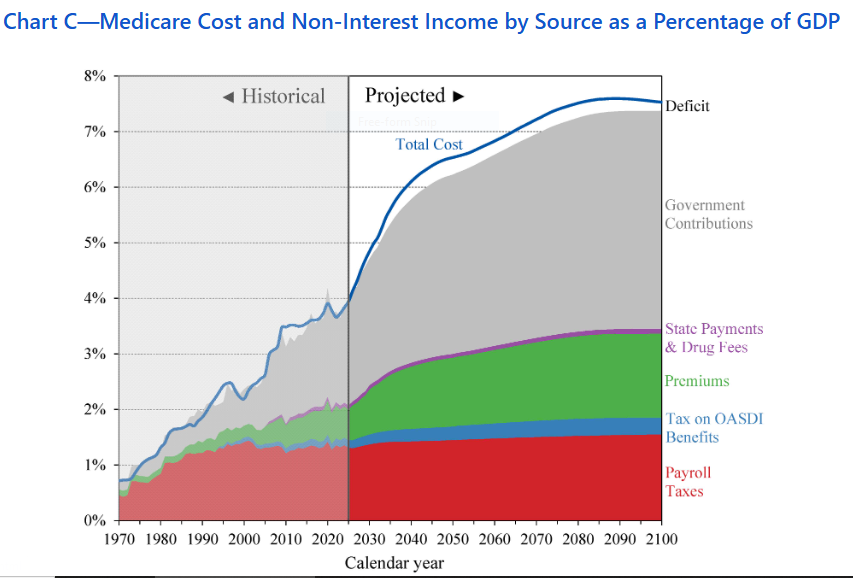
- Medicare Part B, provider expenses, are paid 25% by payroll taxes and 75% from general federal revenues. The general revenue subsidy is now 2% of overall GDP, or about $600 billion per year (see chart below), and this percentage is steadily increasing. Such excessive spending must be curtailed, perhaps by increasing the Medicare payroll tax on the working population.
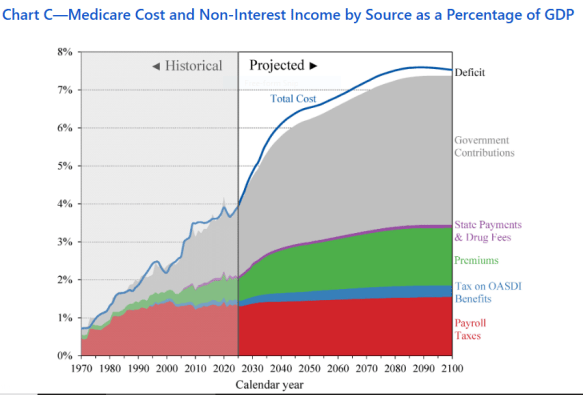
- Social Security. The Social Security Trust Fund is being depleted by approximately $200 billion per year (adding this much to the annual spending deficit) and will be exhausted by 2032. At this point, all SS benefits will be cut by about 27% per year unless reforms are instituted in the meantime, the sooner, the better. Reforms can be made in a variety of ways: extending the eligibility age or making benefits more means-adjusted, for example. But something needs to be done soon.
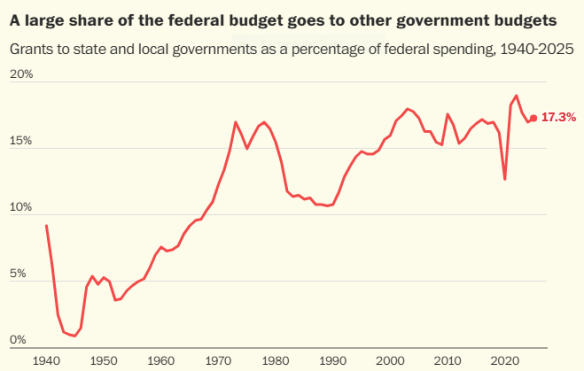
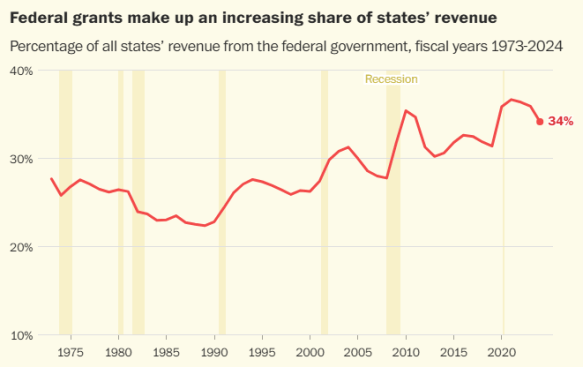
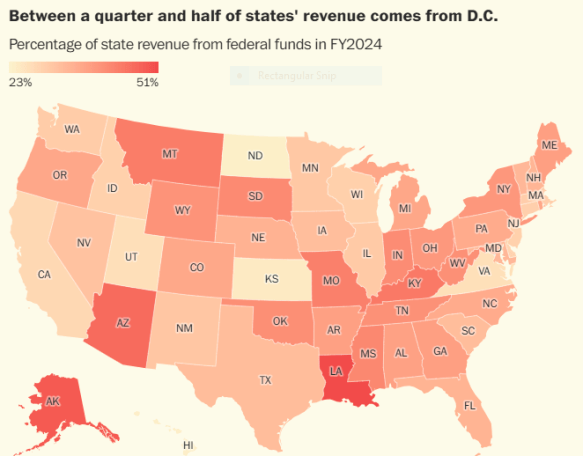
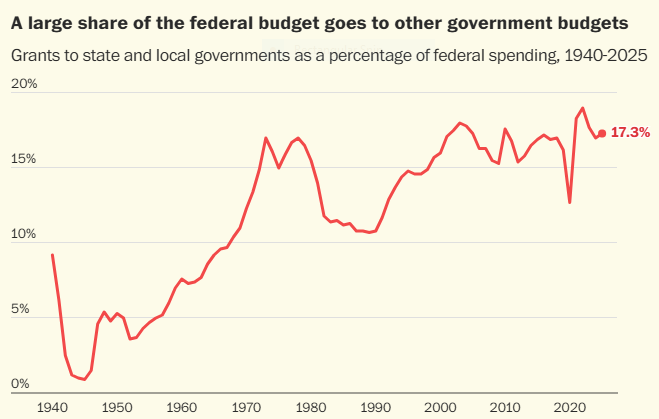
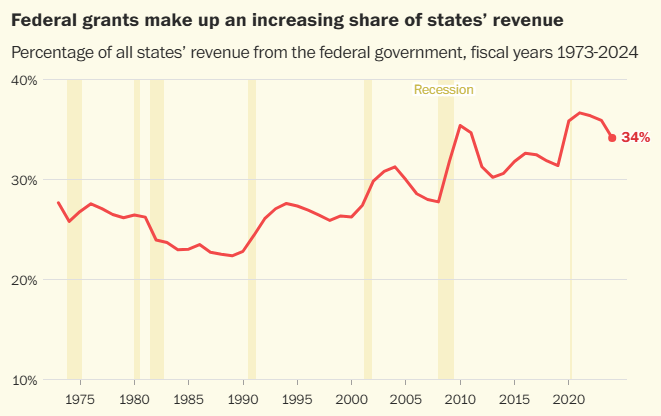
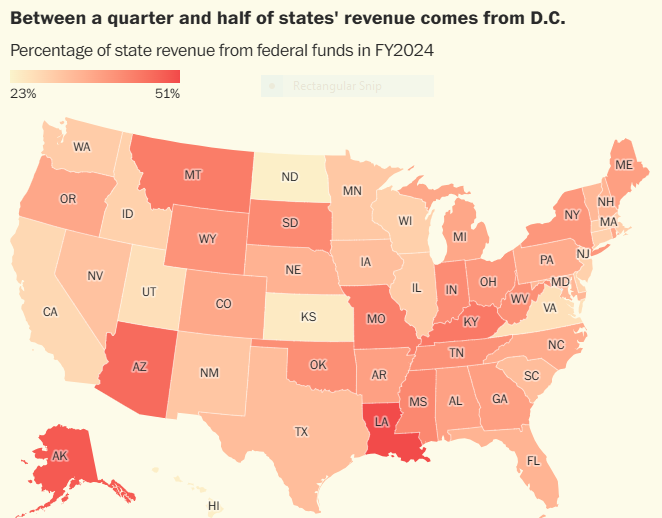
- States are relying too much on federal subsidies. (see charts below). For example, in 2025, 17.3% of state revenues came from the federal government. Federal spending is now making up 34% of state budgets. See also a state-by-state breakdown of this federal spending. In all, $1.2 trillion annually in federal spending is now going directly to the states. This huge subsidization of state budgets has got to be at least capped, if not curtailed.
- Medicaid, healthcare for the poor, operated by the states, is one example of federal subsidization of the states. States are reimbursed for this spending by the federal government on a percentage basis of their own spending. This creates an incentive for states to overspend on Medicaid. States should rather receive Medicaid funds on a block grant basis to encourage them to be more fiscally responsible.
Conclusion. Social Security. Medicare, Medicaid, and other federal grants to states are examples of big federal programs where reforms are badly needed to make them more fiscally responsible by cutting costs. Such reforms are necessary to shrink our annual federal spending deficits much below their present annual level of $2 trillion. Our country’s fiscal health, and therefore our critical role in continued world leadership, demands that we do this.

