How Do We Chart a Course Back to Sound Money and Long-term Prosperity? II. Immediate Steps

The U.S. is in a rough patch at the present time.  The long-term steps needed to restore sound money and prosperity are clear.  But how do we get started?

  • First, reduce inflation. Yes, inflation dropped to 5% annually in March 2023 from 6% in February.  That is progress but the Federal Reserve’s remaining job will be difficult.  If it continues raising short-term interest rates, it risks causing more bank failures.  If it stops raising interest rates, inflation will subside much more slowly.
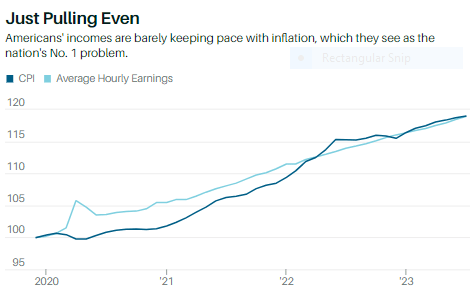
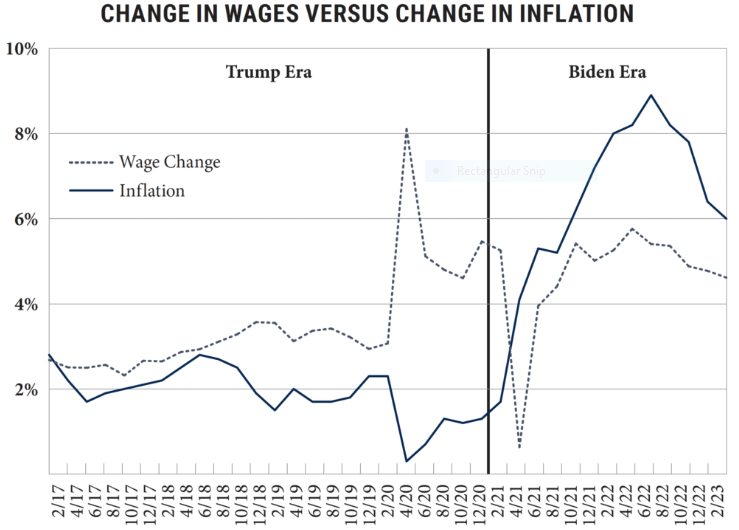
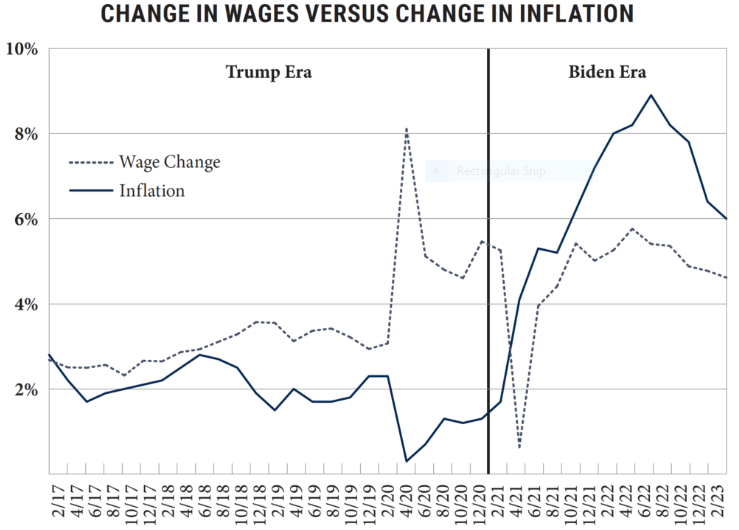
  • The analyst Andrew Puzder has a good discussion of what it will take to get back to strong economic growth.  Most basically, coming out of the pandemic, two things were clear. First, we knew that people had accumulated a lot of money.  The federal government handed out over $5 trillion during the pandemic and people had little opportunity to spend.  The second thing we knew was that fewer people were working.  These two factors combined to produce excess demand and less supply than normal.  In fact, the $1.9 trillion American Rescue Plan of March 2021 tripped off the ensuing inflation (see chart below).
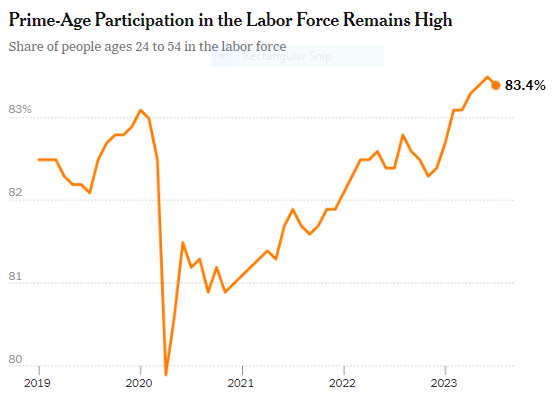
  • Believe it or not, we are still paying too many Americans not to work. A study from December 2022 shows that in 24 states unemployment benefits and ACA subsidies for a family of four with both parents not working are still the annualized equivalent of at least the national median household income.  Moreover, in 14 states (shown below), unemployment benefits and ACA subsidies are equivalent to a head of household earning $80,000 or more in salary, plus health insurance benefits.             

Conclusion.  The Federal Reserve has more work to do to bring down inflation to the desired 2% level.  And the recent banking crisis is making its job harder.  But the current labor shortage, which contributes to inflation by reducing supply, is unnecessarily worsened by paying too many people not to return to work.

For my Email Newsletter
Follow me on Facebook

How Do We Chart a Course Back Toward Sound Money and Long-term Prosperity?

Last week I discussed the rough patch that our country is now in with still 6% inflation, out-of-control national debt, and fraught presidential politics.  But it is possible to turn things around; this has been done so far in American history.  Consider:

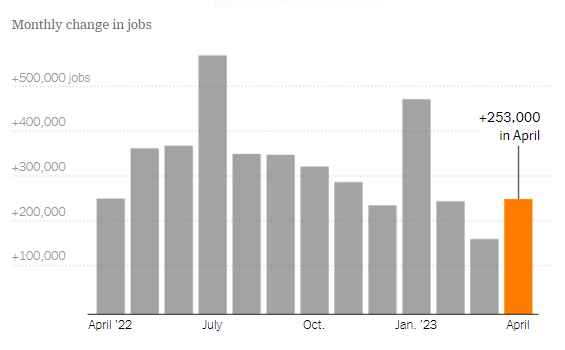
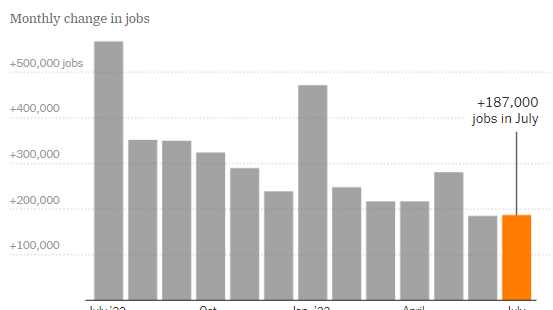
  • Where we are right now.  Nonfarm payrolls increased by 236,000 in March and the unemployment rate dropped from 3.6% to 3.5%. There are still almost 10,000,000 job vacancies nationally.  Such a tight jobs market means that the March CPI (inflation) index is likely to be only slightly lower than February’s 6%.  Therefore the Fed will likely raise rates again when it meets in early May.  In other words, bringing inflation down to the desired 2% level will take longer than anticipated.  (Added on April 13: since the  latest inflation number,5%, is lower than I expected, I now expect that the Fed is less likely to raise rates in May.  This means that inflation may linger longer).
  • How do we get back to sound money and long-term prosperity? Paul Singer, the founder of Elliot Management and one of the world’s most successful hedge-fund proprietors, has predicted all of the financial crises in the last 15 years.  He warned about the dangers of subprime mortgages, the excesses of the Dodd-Frank Act of 2010, and the expansive monetary policy ever since.
    He is afraid that short-term declines in inflation will deceive policymakers and that they’ll quickly go back to their easy money playbook.  If so, inflation will likely come roaring back, and interest rates will have to go higher for longer.
    He worries that the current market trouble is only the beginning.  Likely is an extended time period of jagged moves as people come to grips with the excesses in the financial system.
    His optimistic scenario going forward “would entail pro-growth reforms across the board, including tax reductions, entitlement reforms, regulatory streamlining, encouraging energy development including hydrocarbons … cutting federal spending, and selling the asset holdings on central bank balance sheets.”
    In other words, let us assume that Jerome Powel’s Federal Reserve can get inflation subdued soon as Paul Volcker’s did in the 1970s and 1980s.  Then we will still need a president like Ronald Reagan to implement the pro-growth reforms referred to by Mr. Singer above.  This is what happened in the 1980s and, with some luck, it will happen again.

Conclusion.   We are in a rough patch, a fiscal, economic, and political mess.  Mr. Singer is right on track for how to turn things around.  If we are fortunate, American exceptionalism will assert itself and lead us back to the promised land of sound money and long-term prosperity.

For my Email Newsletter
Follow me on Facebook
Follow me on Twitter
We’ve Hit a Rough Patch but I’m Still Optimistic about Our Future

As I have said many times on this blog, I am optimistic about the long-term future of the U.S.  The U.S. is not only the strongest country in the world economically and militarily, but the strength of the U.S. and its democratic allies together far surpasses the combined strength of our major adversaries: China, Russia, Iran, and North Korea.

But we have now clearly hit a rough patch. Consider:

  • Inflation is still high at 6% (as of February 2023). The Federal Reserve is determined to bring it down by continuing to raise interest rates as high as necessary.  But now bank failure has become a problem precisely as a result of the rapid rise of interest rates.  If the Fed slows up on raising interest rates to save more banks, inflation will take much longer to subdue.
  • The national debt has reached $31.4 trillion and the House Republicans (rightly) insist on big budget cuts in return for agreeing to raise the debt ceiling.  Hopefully, the Biden Administration will come to agree that a strong emphasis on fiscal restraint is imperative in the fight against inflation.

  • Donald Trump has now been indicted for campaign finance violations dating back to 2016.  Since he is an announced candidate for reelection in 2024, this throws a wrench into the Republican primary process leading up to November 2024.  His indictment will probably unite Democrats and divide Republicans.  It makes Trump more likely to be nominated in 2024 and therefore more likely that President Biden will be reelected.
  • Joe Biden is a disaster for the economy, with his strong support of massive new, deficit-financed, spending initiatives in the past two years.  His reelection in 2024 would likely continue this reckless spending blowout and put the U.S. at risk for financial default.

  • Donald Trump and Joe Biden are both very poor choices for president. Trump had some policy victories in his previous term as president but he is too erratic and narcissistic to be a good choice for reelection.  Even though Joe Biden is doing a good job on Ukraine, he is economically incompetent and his reelection could easily lead to a new, and much worse, financial crisis.

  • The one major event which is going well for the democratic world right now is the war in Ukraine. Russia’s invasion of Ukraine in February 2022 was a major miscalculation and is badly damaging the Russian economy.  Saving Ukraine from Russian domination would be a major victory for the free world.  It will make it far less likely that China will invade Taiwan anytime soon.

Conclusion.  Right now the U.S. is undergoing a rough period with the increased danger of prolonged inflation, a spending blowout by the Biden Administration and a more volatile U.S. presidential campaign in the offing.  But the U.S. and its democratic allies are very strong economically and militarily, which should enable us to ride out the current rough patch and continue to thrive for many years to come.  It would greatly help if neither Trump nor Biden is reelected in 2024.

For my Email Newsletter
Follow me on Facebook
Follow me on Twitter

Getting U.S. Spending Under Control I. The Budget Process

“No money shall be drawn from the Treasury but in consequence of appropriations made by law”                                        U.S. Constitution, Article 1, Clause 9, Section 7

The U.S. national debt now stands at $31.4 trillion, after enormous increases during the pandemic. The new Republican House of Representatives insists on significant spending cuts in return for agreeing to raise the debt limit.

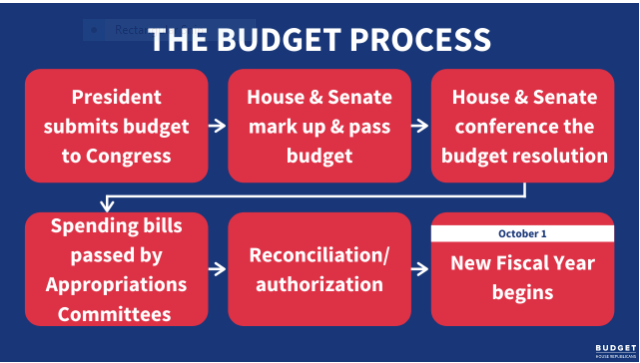
The President’s budget proposal will be unveiled on March 9, a month later than normal.  Then the House and Senate Budget Committees mark up the President’s budget, pass their own individual budgets, and then come to an overall agreement through joint conference. (https://budget.house.gov/budgets/)

Finally, the House and Senate Appropriations Committees take over in May and pass individual spending bills for each of the various federal agencies.  Below are listed the Appropriations Subcommittees which do this work in the House of Representatives.   Finally, the separate House and Senate Appropriations Committees meet in conference to agree on overall spending levels for the federal agencies.


Senator Joe Manchin (D, WV) is urging that Democrats work with Republicans on both short-term spending cuts for this year as well as a long-term plan to get entitlement spending under control.  This augers well for achieving real bipartisan cooperation.

Conclusion.  The U.S. has a very serious problem of huge spending deficits year after year.  The new Republican House has taken the lead n insisting that Congress return to traditional “regular order” in processing spending requests from each of the various federal agencies.  For now, it looks like our national leaders will be able to work together, across party lines, to begin a process to get the annual budgeting and appropriations processes under sustainable control.  A sound fiscal future depends on their success in doing so.

For my Email Newsletter
Follow me on Facebook
Follow me on Twitter
President Biden’s Risky Bet on the Economy III. Inflation is Proving Hard to Tame

Our biggest national problems at the present time are inflation and debt.  The annual rate of Inflation now appears to be stalled in the mid-6% range (6.5% in December and 6.4% in January) and our national debt is sitting at $31.4 trillion.  The Federal Reserve is determined to bring inflation back down to the 2% range.  Already short-term interest rates have been boosted by 4.25% and are likely to have to go up much further.  The problem is that the economy is not responding like it was expected to.  Consider:

  • The economy has been very strong in the past year.  The $5 trillion in Covid fiscal stimulus has a long tail. Years of low-interest rates have transformed debt dynamics for the overwhelming majority of U.S. households, leaving them largely shielded from the current high-interest rates.
  • The changing debt profile has allowed consumers, still cash rich from the flood of fiscal stimulus unleashed in the wake of the pandemic, to keep up their high levels of spending on services, especially as Americans have shifted away from the goods they had been buying during Covid shutdowns.
  • With over 10 million unfilled jobs in the economy, a hiring surge of 517,000 new employees in January 2023, and a very low 3.4% unemployment rate, wages are increasing rapidly.  An undersupply of housing, in combination with fresh federal investment in infrastructure, has kept the construction industry in business.
  • Some Covid spending programs, such as expanded nutrition aid, are only now winding down, while federal spending on green infrastructure initiatives, is just beginning to flow out.
  • This positive economic data has fueled hopes of a “no landing” scenario – rather than a hard or soft landing – in which the economy continues to expand. But a more realistic outlook is less benign: interest rates are likely to stay higher for longer to tamp down stubborn price growth, probably forcing at least a mild downturn along the way.
  • A no-landing scenario, in other words, is simply a delayed landing because the central bank will keep policy tight until inflation falls. And whether it will be a contractionary crash or a smooth glide back to 2% inflation remains to be seen.  Thus, even unprecedented economic strength so far isn’t enough to ensure that the Fed can avoid a painful outcome.

Conclusion.  The Federal Reserve is committed to reducing our current high rate of inflation back down to the normal 2% range.  But the Fed can’t fix inflation by itself.  It needs fiscal restraint from Congress and the President.  And it’s not getting it from the Biden Administration.  This is making the Fed’s job much harder and more likely to have painful side effects for the overall economy.

For my Email Newsletter
Follow me on Facebook
Follow me on Twitter

President Biden’s Risky Bet on the Economy II. The Spending Blowout

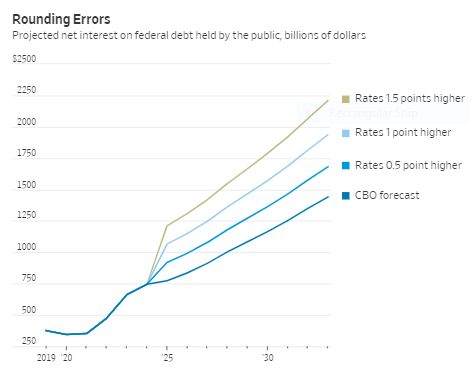
Last week I pointed out that President Biden is being fiscally irresponsible by downplaying our massive national debt, high rate of inflation and rapidly increasing interest payments on the debt (because of rising interest rates).  All of this, and more, has now been carefully documented by the Congressional Budget Office.

Consider:

  • The pandemic is over but federal spending in 2022 still rose to 24.8% of GDP from an average of 21% of GDP from 1973-2022. It is predicted by the CBO to continue to be 24.9% of GDP, ten years from now in 2033.

  • Although revenues were up to 19.6% of GDP last year, this still amounts to a deficit of 5.2% of GDP. Again, the CBO predicts an even higher deficit of 6.9% of GDP in 2033.
  • The inflation rate fell from 6.5% in December 2022 to 6.4% in January 2023, in other words, just barely. This means that the Federal Reserve will have to keep raising interest rates aggressively for much longer to get inflation back down to the desired level of 2%.
  • The higher the rate of inflation and the higher that interest rates must go to bring it down, the more likely the chance of a hard “recessionary” landing.
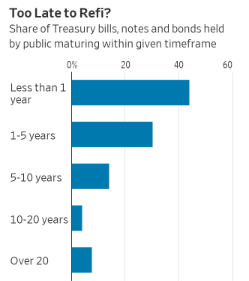
  • The Treasury has to roll over 30% of our $31 trillion of debt, more than $9 trillion, in the next 12 months at interest rates now approaching 5%. This, of course, makes the debt that much worse.

  • Amid the fiscal mess now being made worse by the Biden Administration, the Republican House wants the federal government to adopt a plan to reduce federal spending!  What could make more sense?
  • “The bottom line is that the President and the Democrats have built a much larger federal government that is taking nearly a quarter of all national income, up from about a fifth over the last fifty years.”

Conclusion.  In our dangerous fiscal climate of massive debt, high inflation, and rising interest rates, the Biden Administration has dramatically increased federal spending.  This is highly irresponsible and speeds up the inevitable day of fiscal reckoning which can’t be postponed forever.  It should be opposed as strenuously as possible.

For my Email Newsletter
Follow me on Facebook
Follow me on Twitter

President Biden’s Risky Bet on the Economy

The topic of the hour is inflation and debt and President Biden has now doubled down on a likely bad bet. The Federal Reserve is determined, as it should be, to bring inflation back down to the 2% level from its current level of 6.5% in December 2022.  How long will this take and will it require a hard landing – a painful recession – to accomplish?  Consider:

  • The most recent Labor Department report for January 2023 shows a surge in new employment of 517,000 and a fifty-year low of 3.4% in unemployment. Such strong economic data will likely require more aggressive action by the Fed.
  • The $1.9 trillion American Rescue Plan, passed right after Biden became President in January 2021, is what tripped off inflation in the first place and what led to the $2.7 trillion deficit in FY 2021.

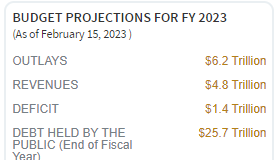
  • In his 2023 State of the Union speech, Biden claimed that he reduced the deficit by $1.7 trillion in FY 2022 but it was still a whopping $1.4 trillion.
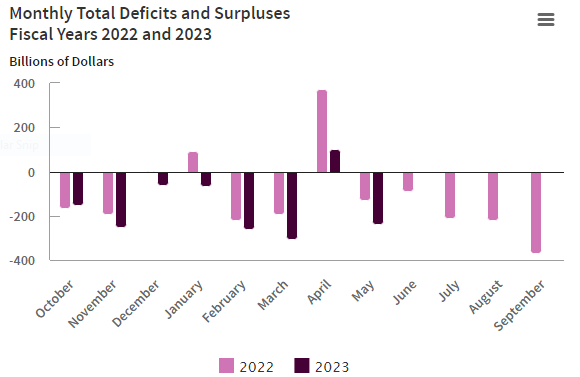
  • The deficit in the first four months of FY 2023 increased from $259 billion in the same period last year to $522 billion this year. And President Biden claims to be fiscally responsible!
  • The House Republicans want to establish a serious plan for deficit reduction in return for agreeing to raise the current debt limit which is $31.4 trillion. For example, they want to return to “regular order” whereby standing committees in each chamber determine budget levels for each government agency.  President Biden insists on a “clean” debt ceiling increase with no strings attached.  Which side is more fiscally responsible?

  • It is apparent, from the attached chart on federal government finances, that spending got most out of whack beginning in 2009 from the financial crisis and then again beginning in 2020 from the pandemic. Of course, it is understood that crises require a government response.  But now that inflation has been tripped off, fiscal restraint is badly needed to help the Fed get it back down.

Conclusion.  The U.S. is currently faced with two fiscal crises, inflation and massive debt, at the same time.   By apparently refusing to work with the Republican House toward serious deficit reduction, President Biden is risking making debt and inflation much worse and more prolonged.  The success of his Presidency is riding in the balance.  If he is wrong, and the economy dips into a major recession, the American people are going to suffer a lot more pain than they have already and he will rightly be blamed for this.

For my Email Newsletter
Follow me on Facebook
Follow me on Twitter

House Republicans: Keep Up the Good Work on Debt Reduction

In my last post I praised House Speaker McCarthy and the Freedom Caucus for insisting on spending cuts before agreeing to raise our current debt limit of $31.4 trillion.  But how to accomplish this in a responsible way that keeps public opinion on your side?

Here is one possible approach:

  • Continue to emphasize your intention of returning to “regular order” whereby spending bills for each federal agency are developed by standing committees in a bipartisan manner with an overall spending limit established by the budget committee. Since this will take several months to accomplish, either offer to raise the debt limit by $1 trillion or so in the meantime (enough to get through the current fiscal year which ends on September 30, 2023) or perhaps suspend the debt ceiling until then.  Returning to regular order is a clearly sensible reform which has the potential to eliminate much wasted and unnecessary spending.
  • The Covid health emergency should be legislatively ended as soon as possible  and all unspent funds from the $6 trillion of pandemic stimulus be declared void. This would save $255 billion in 2023-24 alone.
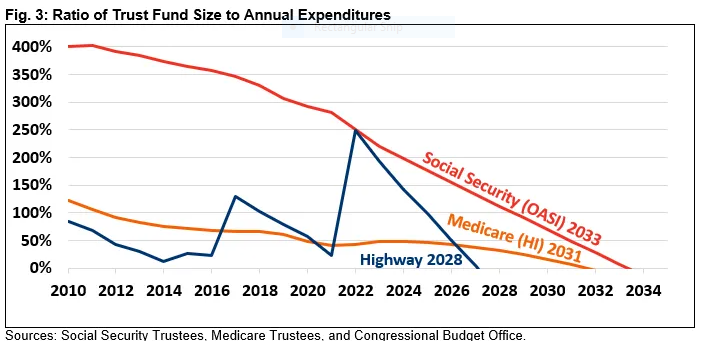
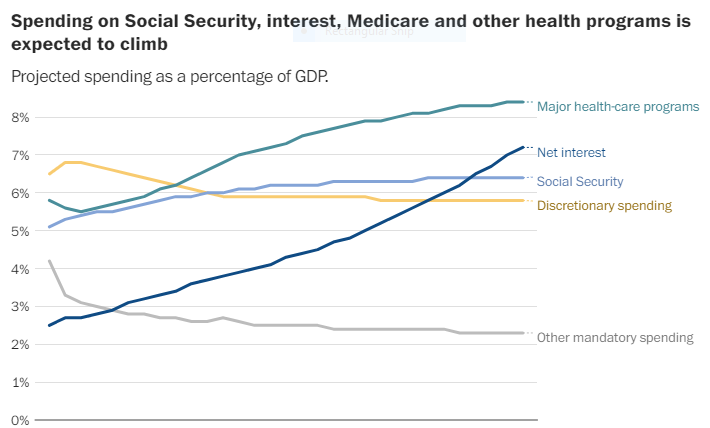
  • Although entitlements such as Social Security, Medicare and Medicaid make up 2/3 of long-term debt projections, the House has decided not to propose entitlement reforms during the current negotiations. This is a smart strategy. There are many good ideas, in particular, for the difficult job of reforming healthcare, and lowering its cost, but these will take longer and broader discussion to implement.

Conclusion.  The House is off to a good start in insisting on spending cuts in return for raising the debt limit.  The general public understands that we have a very serious debt problem.  By continuing to act in a responsible manner, and keeping public opinion on its side, the House is in a good position to win this important political battle.

For my Email Newsletter
Follow me on Facebook
Follow me on Twitter
Some Friendly Advice for Speaker McCarthy and the Freedom Caucus

Right now the new GOP House of Representatives is on the side of the angels!  Our national debt stands at over $31 trillion and is growing rapidly.  The deficit for Fiscal 2022 was $1.4 trillion.  Under President Biden in the last two years alone, the debt has increased by $3.7 trillion. This is the height of fiscal irresponsibility and the GOP House wants to stop it.  Absolutely excellent as far as it goes!  Just don’t forget that the $31.4 trillion debt limit will have to be raised before default occurs.

Please, Freedom Caucus, don’t squander this unique opportunity you now have to address the debt problem.  It is critical for you to keep the overwhelmingly favorable public opinion you now have on your side.  There are certain actions that will work and others that won’t.  For example:

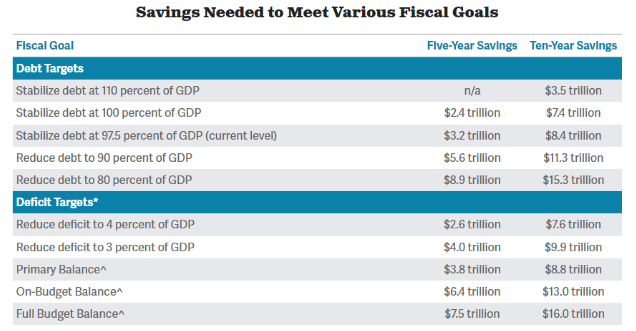
  • What won’t work.  Do not insist on balancing the budget over a ten-year period with just spending cuts.  Even including all spending categories (such as defense, entitlements, etc.) a 26% overall spending cut over ten years would be necessary.  Exempting defense and entitlements would require much steeper cuts in all other programs and this will be unacceptable to most Americans.

  • What will work. The best idea that the new GOP House has is to return to “regular order,” under which spending bills for the various federal government agencies are developed in a bipartisan fashion at the committee level, with overall spending limits determined by the budget committee.  This gives the various committees, each controlled by a Republican majority, an opportunity to carefully review the operations of each federal agency and whack off the unnecessary, bloated spending that has accumulated over the years.

  • Here’s another idea. The House needs to establish and maintain credibility with the public that it understands the necessity of raising the debt limit in the next few months.  How about passing a bill to raise the debt limit by $1 trillion (or enough to get through the current fiscal year ending on September 30, 2023)?  This would allow time for the House standing committees to prepare spending bills for FY 2023/24 and send them to the Senate before the end of the current fiscal year.  It would reinforce the needed credibility for the House Republicans, including reasonable overall spending limits.  This is what is so badly needed to start reducing annual deficits and put the U.S. on a credible path to solving the debt problem.

Conclusion.  More power to the new Republican House of Representatives!  With a debt limit staring us in the face, and the full attention of the voting public, you have a unique opportunity to address our horrendous national debt problem.   Don’t blow it.  There are very responsible and useful steps you can take to move the process forward (as described above).  Most Americans want you to succeed in getting this done!

For my Email Newsletter
Follow me on Facebook
Follow me on Twitter

My Goals for the New Congress: Support Ukraine and Cut Spending

As readers of this blog know, I am optimistic about the future of the U.S.  We have an amazingly resilient democratic form of government as well as great economic and military strength.  Believe it or not, I am also optimistic about the likely performance of the new Congress over the next two years.  There are two main things I want them to do:

  • Support Ukraine. Helping Ukraine defend itself against the Russian invasion is by far our biggest foreign policy challenge at the present time.  Defending democracy and freedom around the world, against autocracy and repression, is not only the right thing to do, but it’s also in our own best interest because it enhances our national security.  Judging by the Omnibus Spending Bill (including $45 billion in new spending for Ukraine) approved by the last Congress, the Biden Administration and the Senate strongly support continuing to support Ukraine.

  • Cut overall spending. One of the outcomes of the supposedly “chaotic” process of electing a Speaker for the new House of Representatives, will be the return to “regular order” in the House whereby standing committees will approve bills on individual topics.  This means that spending budgets for all bills will get the attention and oversight that they deserve.  This bodes well for the spending restraint that is so badly lacking and sorely needed in Congress.

  • Raising the debt limit. The current debt limit is $31.4 trillion which will be reached by midyear 2023.  Congress will need to raise the debt limit before this amount is hit.  There is overwhelming public support for Congress to reduce the debt in a bipartisan manner.  Hopefully, this means that the Ukraine supporters in the Senate and the deficit hawks in the House will be able to negotiate a compromise plan to raise the debt limit in return for strict spending controls as well as continued support for Ukraine.

Conclusion.  The stakes are high for the new Congress.  Biden Democrats support Ukraine.  Republican deficit hawks control the House.  The current debt limit will be reached by midyear.  I am optimistic that a sensible compromise can be achieved and I’m willing to go out on a limb to predict it!  We’ll soon see what happens.

for my Email Newsletter
Follow me on Facebook
Follow me on Twitter