
I keep close track of health care costs on this blog because the cost of public health care (Medicare, Medicaid, and the tax exemption for employer provided care) is the major driver of our national debt which is totally out of control.
Healthcare costs are also an increasing economic burden for families and individuals. Here is the latest bad news on this serious problem:
- Total health care spending in the U.S. increased 4.6% in 2018 to reach $3.6 trillion or $11,172 per person, with 33% going to hospitals care, 20% to doctors and clinical services and 9% to retail prescription drugs. For the federal government, spending growth on health care accelerated in 2018 by 5.6%, compared to an increase of 2.7% in 2017.
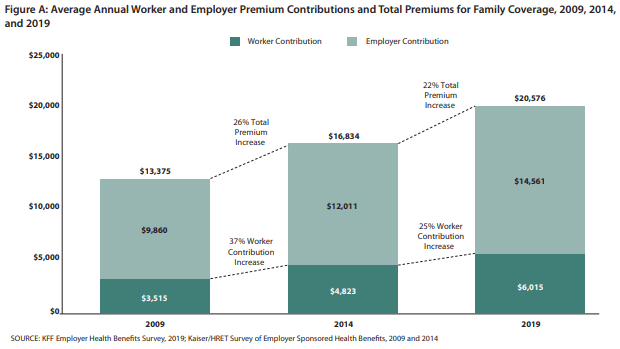
- The average annual premiums for employer-sponsored health insurance in 2019 are $7188 for single coverage and $20, 576 for family coverage. The average premium for family coverage has increased 22% over the last five years and 54% over the last ten years, significantly more than either worker’s wages or inflation (see chart).
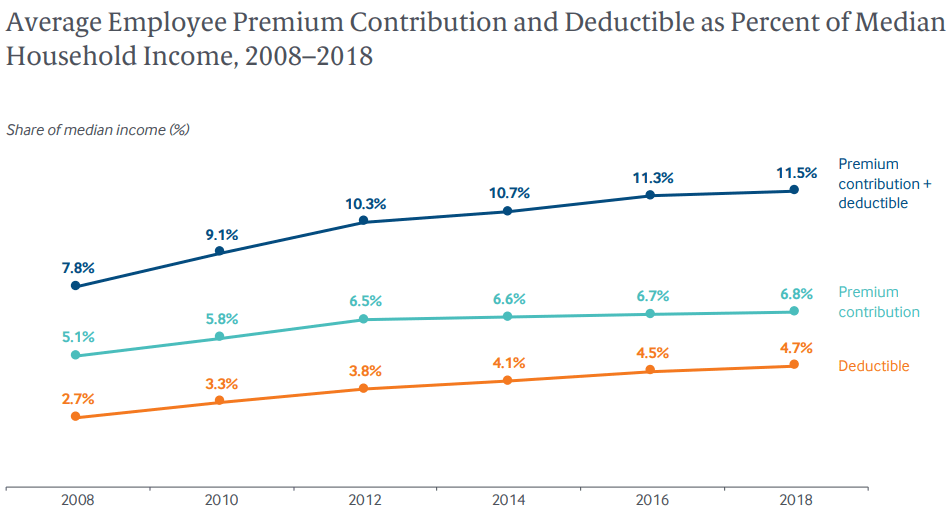
- The average employee premium contribution and deductible as a percent of median household income has gradually increased from 2008 to 2018 (see chart).
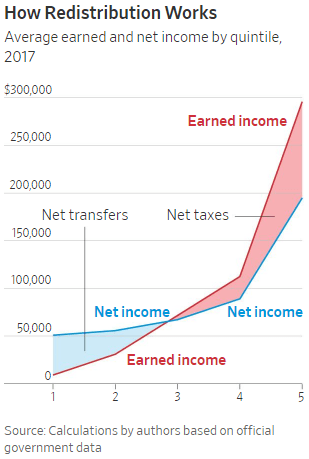
- It is very informative to look at American income growth when taxes and all cash and in-kind transfers are taken into account including Medicare, Medicaid and Employer Sponsored Insurance (see chart). Looking at it this way, the bottom quintile of income distribution has the greatest percentage gain since 1959 and the other quintiles show only small differences in growth. It is clear from this diagram that the common media story of stagnant incomes is untrue especially when costly health care benefits are taken into account.
See also here.
- “Where the Frauds are all legal.” One of my favorite experts on the problems with American health care is Elizabeth Rosenthal, who is both a physician and a medical journalist for Kaiser Permanente. Read her devastating report on hospital billing procedures.
Conclusion. The cost of American health care is growing rapidly and is a huge drain on society, both for workers with employer provided insurance (which greatly reduces their net income) and also for the government which pays for all of Medicaid and much of Medicare expenses. It is vital to the future prosperity and well being of our country to rein in the cost of health care.
Next: what are our options for doing this?










 It Does Not Add Up