
Why I Lean Republican


In the midst of a tumultuous presidential campaign season, it iscommon for partisans of the left and the right to question the integrity, motives and values of those on the other side of the political divide. For example, the rise of Donald Trump in the Republican primaries has led some observers to declare that the Republican Party has lost its way and no longer has any sort of basic, coherent and broadly acceptable political philosophy.
On the contrary, I think that Republicans do by and large share the following two general attitudes towards government which are favorite topics of discussion on this blog:

  • Economic growth in recent years has been much too slow and it should be a major goal of government to substantially speed it up.
  • Our national debt is much too high and Congress and the President should be making serious efforts to balance the budget on an annual basis.

The House Budget Committee has just made a big contribution towards the second goal with, “A Balanced Budget for a Stronger America. Fiscal Year 2017 Budget Resolution.”
Capture0Here are its basic components:

  • The federal budget will be brought into balance over a ten year period.
  • Devolving power back to the states.
  • Prioritizing the responsibilities of the federal government and concentrating on the most important.
  • Strengthening government functions that are critical to the health, retirement and economic security of millions of Americans.

Such a budget plan as this could make an excellent first step towards an eventual bipartisan agreement that would address some of our country’s biggest problems. Instead it is likely to be ridiculed or dismissed by the Democratic Party as mere political posturing by the Republican majority in Congress. What could be a beginning to real progress on urgent issues will probably just be washed down the drain.

Follow me on Twitter: https://twitter.com/jack_heidel
Follow me on Facebook: https://www.facebook.com/jack.heidel.3
It’s Dark Money, Not Money in General, That’s a Problem in Politics


I have written several posts recently advocating for a Balanced Budget Amendment to the U.S. Constitution.  A number of people have responded (on FaceBook) that we don’t really need a BBA, we just need to elect honest politicians who won’t be corrupted by money.  Candidates at all levels need money to run a campaign.  Candidates will inevitably be grateful to their contributors and, if elected, will want to return the favor.  If the donors are publicly identified, then the influence of their money can be kept track of.
CaptureIn fact it is dark money, not money in general, which is the big problem:

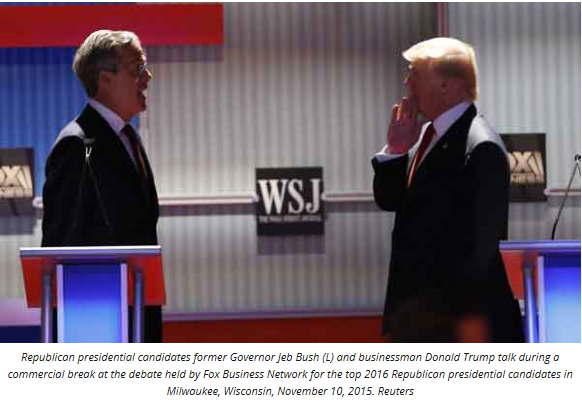
  • Jeb Bush, in single digits in the Republican polls, has raised far more money than any other candidate.  Donald Trump, far ahead in the polls, is near the bottom of the list in money raised. But Mr. Trump has enough money, and media attention, to get his message out.
  • Bernie Sanders, who is rapidly gaining on Hillary Clinton in most polls, has only raised two-thirds as much money as Ms. Clinton. Again, Mr. Sanders is getting his message out, which is what counts.
  • Where dark (i.e. individual donors are undisclosed) money has been so effective is in races for the U.S. Senate which are somewhat under the radar with regard to national exposure. For example, in 2014, in 10 closely contested Senate races,  eight of the winners were heavily supported with dark money.

It is often suggested that we need an amendment to the Constitution to overturn Citizens United, the Supreme Court decision that allows unlimited political contributions from outside groups. I think that such an amendment would be very difficult to either propose by a two-thirds vote or to be ratified by three-fourths of the states.  Congress itself could outlaw dark money by simply passing an appropriate law.
On the other hand, enacting a Balanced Budget Amendment is far more feasible.  In fact 27 states have already called for a Constitutional Convention to propose such an amendment.  Only 7 more states are needed to do this and we’ll be on the way!

Follow me on Twitter: https://twitter.com/jack_heidel
Follow me on Facebook: https://www.facebook.com/jack.heidel.3

Another Reason for a Balanced Budget Amendment


I have been writing a lot lately about the need for a Balanced Budget Amendment to the U.S. Constitution. Our public debt (on which we pay interest) is now over $13 trillion and amounts to 74% of GDP.  And this percentage, the highest since the end of WWII, is projected by the Congressional Budget Office to keep growing indefinitely.  Eventually this will lead to another financial crisis, likely much worse than the one we’re still getting over with.
CaptureHere is a vivid example of why it’s so hard for Congress to stop spending more each year than is collected in tax revenue.  Vice President Joe Biden wants to launch a cancer “moonshot”, in honor of his late son Beau who died from brain cancer in May 2015, by “increasing resources – both public and private – to fight cancer.”  This is an apparently attractive but actually poor idea for the following reasons:

  • The annual budget for the National Institutes of Health, which fund medical research, has already been increased by $2 billion for the current 2016 budget year.
  • Major advances in immunotherapy are enabling oncologists to target the surface of cancerous cells instead of using chemotherapy that affects the whole body. But these targeted therapies routinely cost over $100,000 a year per patient.
  • Mr. Biden’s medical advisors are recommending that Medicare start paying for gene sequencing (http://www.nytimes.com/2016/01/14/health/moonshot-to-cure-cancer-to-be-led-by-biden-relies-on-outmoded-view-of-disease.html) to help with these new immunotherapies.

Everyone would like to speed up the war on cancer. But we’re already spending billions of dollars a year on it and cancer researchers are making steady advances.  In other words, we should leave well enough alone on the cancer front and focus on a much more fundamental problem which is already severe.
I am referring, of course, to our excessively large and rapidly growing national debt.  Right now interest rates are at historic lows and so our debt is almost “free money”.  But this is already starting to change and soon interest payments on the debt will be eating us alive.  We’re already in a deep hole but at least we can stop making it any deeper than it already is.
This is exactly what a Balanced Budget Amendment will accomplish.

Follow me on Twitter: https://twitter.com/jack_heidel
Follow me on Facebook: https://www.facebook.com/jack.heidel.3

The Argument for a Balanced Budget Amendment: a Summary


Ever since the end of World War II the strength of the United States has guaranteed world order and stability. As Americans we are especially fortunate to live in such a strong, free and prosperous nation.  But our future wellbeing depends on the soundness of our economy and the integrity of our financial system.   This includes being able to pay our country’s debts in any circumstances.
The public debt (on which we pay interest) is now 74% of GDP, the highest it has been since the end of WWII.  The Congressional Budget Office, our most objective and nonpartisan source for fiscal and budget information, predicts that the debt will continue to rise indefinitely, presumably until we have another financial crisis, which is likely to be much worse than the Great Recession of 2008-09.
Capture0It is almost impossible for Congress to address our debt problem effectively.  Democrats want to spend more money while Republicans want to avoid raising taxes.  The wishes of both can be satisfied only by increasing deficit spending and therefore borrowing more money.  Right now this practice is pain free because interest rates are so low.
But this situation will not last forever and is, in fact, already starting to change.  The Federal Reserve raised short term interest rates by .25% in December 2015 which raises interest payments on the $13 trillion public debt by $33 billion per year.  Warding off inflation will require many more such rate increases in the future.
The only way to force Congress to act on this problem is with a Balanced Budget Amendment to the U.S. Constitution.  27 States (out of a required 34) have called for a Constitutional Convention to propose a BBA.  As more states are added to the list, Congress may decide to propose a BBA on its own.
I have discussed previously how to make a BBA both effective and flexible enough to handle emergencies.  It is likely that the proponents of a BBA would draft it carefully because it would have to be ratified by 38 states in order to take effect.
This is the best argument I can make for a BBA.  I will now move on to other topics!

Follow me on Twitter: https://twitter.com/jack_heidel
Follow me on Facebook: https://www.facebook.com/jack.heidel.3

After Two Years of Steady Job Growth, It’s Time to Bite the Bullet and Balance the Budget!


For the past two weeks I have been I have been complaining about Congress’s irresponsible budget for 2016 and that we should now be pushing hard for a Balanced Budget Amendment to the Constitution.  In my last post I make the case that a flexible BBA is compatible with economic growth and will, in fact, contribute to it once it goes into effect.
CaptureFriday’s job report for December strengthens this argument:

  • In 2015 there was an increase of 2.65 million new jobs only slightly less than 2014’s 3.15 million new jobs, the two best years for job growth since 2000.
  • The current unemployment rate of 5.0% is the best since the end of 2006.
  • Although wage growth at 2.4% for 2015 is not as strong as the early 2000’s, wages have now been climbing 2% faster than price inflation for the past three years.
  • The offsetting negatives are a still slow GDP growth estimated at 2.2% for 2015 and a still very low labor participation rate of 62.6%.

Conclusion:  At some point in the very near future the government needs to stop spending far in excess of tax revenue.  The sooner we recognize this the easier it will be to make the necessary correction.  Our economy is the strongest it has been since the end of the Great Recession in June of 2009.  Getting government spending in better sync with tax collections will be a big challenge and will not happen overnight.  In fact, if a BBA is required to get the job done it will take several years to implement this route to fiscal responsibility.
For all of these reasons now is the time to start moving on this gigantic and festering problem!

Is a Balanced Budget Amendment Compatible with Economic Growth?


I have devoted several recent posts to discussing the desirability of a Balanced Budget Amendment to the U.S. Constitution as well as the specifics of how to set it up in an effective yet flexible manner.
CaptureThe Wall Street Journal’s Greg Ip has a pertinent article along this line in today’s paper, “Don’t Celebrate the End of Austerity” in which he argues that the recent congressional deal for the current 2016 budget year, which I and many others have criticized as being fiscally irresponsible, will finally contribute to economic growth after five years of overly “austere” budgets.
This raises the critical question: is it possible to speed up economic growth without the stimulus of deficit spending?  Would a BBA create a stranglehold on spending which would slow down the economy? I feel very strongly that fiscal responsibility and economic growth are compatible and, in fact, contribute to each other in the long run.  Here is what we should do:

  • First of all, either through Congressional action or with a Constitutional Convention, a BBA needs to be proposed, and then ratified, to put our fiscal house in order before our rapidly growing debt rises to ruinous levels. A flexible BBA would include a five year phase in period, after ratification, to give Congress time to prepare for it. There will be some pain in achieving this initial balance but it needs to be done and the sooner the better.
  • Secondly, a flexible BBA would also allow for a 2/3 majority of each House to override strict balance. This feature could be used not only for a wartime emergency, for example, but also for occasional recessionary periods where stimulus is needed.
  • Finally, keep in mind that the real goal is not a BBA per se, but rather to put our debt on a downward path over time as a percentage of GDP. This is what a flexible BBA will accomplish.

Once initial balance is achieved, it will be relatively easy to hold new debt down to manageable levels. Our current fiscal problem will then be largely solved and we can continue building a stronger, freer and more prosperous future for our country.

Follow me on Twitter: https://twitter.com/jack_heidel
Follow me on Facebook: https://www.facebook.com/jack.heidel.3
Setting Up a Balanced Budget Amendment to the U.S. Constitution


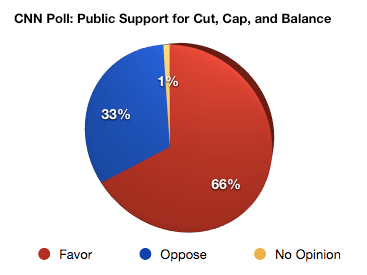
I have made the case in several recent posts, herehere, and here, as to why we need a Balanced Budget Amendment to the U.S. Constitution.  This is a very timely issue since 27 states (out of the 34 required) have now called for a Constitutional Convention to propose such an amendment.
Many people have pointed out the difficulty of creating such an amendment which would be both effective enough to get the job done as well as flexible enough to allow for any emergencies which might arise.
CaptureHere are some suggestions for the main features which are needed:

  • Prior to the beginning of each fiscal year, the President is required to submit a proposed budget for the U.S. Government in which total outlays do not exceed total receipts.
  • Congress need not adopt the President’s proposed budget but is likewise required to adopt a balanced budget for the coming fiscal year.
  • A two-thirds vote of each House of Congress is required to approve an excess of outlays over receipts, either for the entire budget or for supplemental spending once the fiscal year has begun. (Many proposed amendments require only three-fifths majorities for override but I think that this is insufficient.)
  • Congress may pass appropriate legislation to implement and enforce this amendment. For example, official estimates of receipts and outlays could be provided by the Congressional Budget Office.
  • The BBA amendment takes effect beginning with the fifth fiscal year following its ratification. (The idea here is to provide Congress with a sufficient time window to whittle down our current deficit spending, approximately $450 billion, to a more manageable amount, before the strict limits of the BBA take effect.)

Keep in mind that the real purpose of a BBA is not to establish exact numerical balance for the budget but to put our national debt on an overall downward course as a percentage of GDP. Occasional spending overrides during the budget year, as long as they are reasonable, will not detract from this goal.  A two-thirds majority vote for balance overrides should be sufficient to accomplish this.

Follow me on Twitter: https://twitter.com/jack_heidel
Follow me on Facebook: https://www.facebook.com/jack.heidel.3
 

The Wider Value of a Balanced Budget Amendment


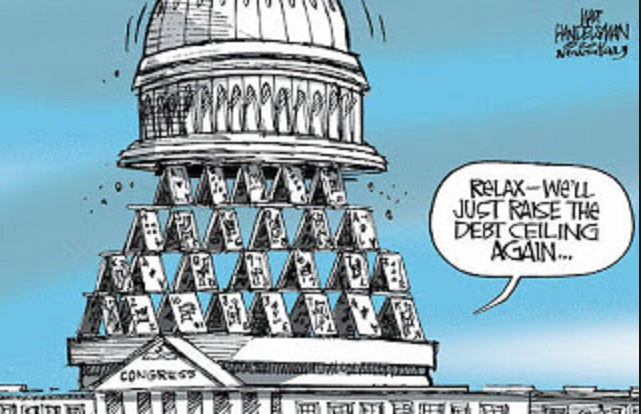
Several recent posts, especially here and here, have advocated for a BBA to the U.S. Constitution and pointed out that 27 states (out of a required 34) have now called for a Constitutional Convention to propose a BBA. I pay careful attention to the responses I receive to my posts.  Several folks have said that while they support a balanced budget, there are other higher priorities for them, such as ending wasteful and inefficient programs or focusing more on the needs of people rather than being overly worried about budgetary matters.
CaptureI contend that a carefully formulated BBA would do far more than just solve our debt problem, as important as this is.  For example:

  • An essential component of a BBA would require the President to submit a balanced budget to Congress each year. So it starts out by forcing the Administration to set priorities. If a new program is advocated, fine, but then it has to be offset by cutting back on existing programs, or else raising taxes. Congress need not accept the President’s priorities but then it has to set its own.
  • It would become a huge priority for both Congress and the President to carefully examine all programs to ferret out waste and inefficiency. There would be an incentive for programs to be shifted to the states, with the flexibility to make them more effective, in return for cost savings.
  • The best way to raise stagnant wages for the middle class is to make the economy grow faster. The best way to grow the economy faster is broad-based tax reform, with lower tax rates across the board, paid for by closing loopholes and shrinking deductions. But faster economic growth will also bring in more tax revenue, therefore making it easier to shrink the deficit and balance the budget.

Conclusion: A Balanced Budget Amendment to the U.S. Constitution would have many benefits, beyond “mere” fiscal responsibility. Next question: how should a BBA be formulated to insure that it is both effective and flexible enough to allow response to emergencies?

Follow me on Twitter: https://twitter.com/jack_heidel
Follow me on Facebook: https://www.facebook.com/jack.heidel.3

Good Riddance to 2015


This has been a bad year for the U.S. and the Western World. Peace, prosperity and progress have suffered major setbacks.
CaptureHere are the three worst disasters of 2015:

  • The European refugee crisis. Chaos in the Middle East, especially in Syria, Iraq and Libya, has caused over a million refugees to flee their homelands and overrun Europe. This is not only a humanitarian crisis but also a severe strain on the resources of our friends and allies in the European Union, already weakened by huge debt resulting from the financial crisis.
  • The rise of Donald Trump. He appeals to the worst instincts of many Republican voters: nativist, protectionist and isolationist. Granted he has created more interest in the 2016 presidential campaign but at what cost to future economic and social progress? He is too crude, prejudiced and unprepared to possibly be elected president. His nomination by the Republican Party will lead to electoral disaster and therefore continued economic stagnation and an even faster increase in debt.
  • The collapse of fiscal common sense. The Republican Congress started out 2015 by adopting a ten year plan to achieve a balanced budget by 2025. But this plan fell by the wayside as a 2016 budget was hammered out, leading to an increase in the projected 2016 deficit alone of $158 billion. Such fiscal irresponsibility has created new interest in holding a Constitutional Convention to propose a Balanced Budget Amendment.  Of the 34 states needed to force Congress to call a Con-Con for a BBA, 27 states have already formally applied.

Always the optimist, I have ended on a hopeful note. The world depends on the U.S. for leadership and it isn’t too late for us to get back on track.  But it won’t be easy!

Follow me on Twitter: https://twitter.com/jack_heidel
Follow me on Facebook: https://www.facebook.com/jack.heidel.3

Passing a Balanced Budget Amendment to the Constitution


My last three posts have discussed the long term damage that will be caused by excessive spending in the recently passed 2016 federal budget and what should be done about it.
CaptureThere is at least one way to force Congress to act in a responsible manner, namely, by putting into effect a Balanced Budget Amendment to the Constitution.  Here is a brief history of recent efforts to do exactly this:

  • In the 1995-96 session of Congress, the House of Representatives passed (by a 2/3 vote) a BBA but it was defeated in the Senate by one vote.
  • Application by 34 states requires Congress to call a Constitutional Convention to propose an amendment. At the end of 2009, 16 states had so applied. Each year since one or more new states have also applied and now there are a total of 27. An additional 13 states are actively considering applications for a BBA at the present time.
  • As the number of applying states gets close to the required 34, it becomes more and more likely that Congress will act on its own in order to preempt a “Con-Con.” This would avoid the messiness and uncertainties of such a convention, none of which have yet occurred in our nation’s history.
  • Once 34 states have applied, however, Congress must call a convention. Any fear of a runaway convention, exceeding a limited mission, should be alleviated by the fact that any proposed amendment(s) have to be ratified by 38 states.
  • In my opinion a proposed amendment should have no restrictions on how a balanced budget will be obtained. There will be far more political pressure to cut spending than to raise taxes. Let Congress hash out the proportion of each.

Fiscal responsibility does not require the budget to be exactly balanced each year. In fact, temporary deficits can be useful as a stimulus in time of recession.  However, deficit spending has gotten so far out of control in recent years that Congress must be forced to modify its behavior.

Follow me on Twitter: https://twitter.com/jack_heidel
Follow me on Facebook: https://www.facebook.com/jack.heidel.3