
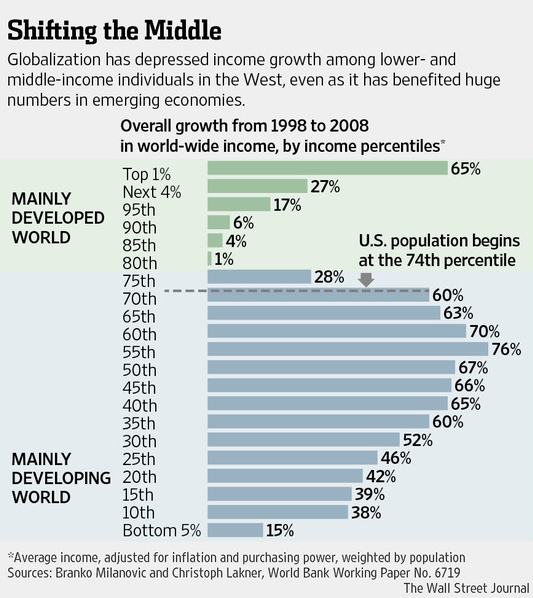
This is a big week in the U.S. Pope Francis is coming here and the UN will convene a conference in NYC to endorse international development goals for the next 15 years. As I explained in a recent post, “The Dung of the Devil,” the Pope should pay more attention to the recent accomplishments of free enterprise in decreasing the amount of poverty and economic inequality around the world.
In an article just a few days ago in the Wall Street Journal, Bjorn Lomborg, the Director of the Copenhagen Consensus Center, explains that the U.N. is likely to endorse 169 targets for global investment for the next 15 years. Mr. Lomborg demonstrates with cost-benefit analysis that focusing on just 19 of these goals would accomplish far more than adopting everything on the U.N.’s much longer list.
 Here are a few of Mr. Lomborg’s items:
- Completing the World Trade Organization’s Doha agreement would return $2000 for every dollar spent to retrain and compensate displaced workers.
- The elimination of fossil fuel subsidies would be worth $15 for every dollar spent in direct support of the very poor who are unable to afford higher fuel prices. By contrast, trying to drastically increase the production of renewable energy would return less than a dollar for every dollar spent because renewable forms of energy remain so expensive.
- Tripling access to preschool in sub-Saharan Africa would have benefits worth more than $30 for every dollar spent because of improved future earnings. On the other hand, efforts to improve exams and teacher accountability are much harder to achieve and the benefits would only amount to $5 for every dollar spent.
- Other actions: boosting agricultural yields, cutting indoor air pollution with clean cook stoves, increasing access to family planning, fighting malaria and combatting malnutrition are other examples where investment would lead to big dollar returns.
Conclusion: Free enterprise economics has done much in recent years to eliminate poverty and inequality around the world. Additional public and private investment, focusing on just a relatively few major goals, can accomplish even more.

 It Does Not Add Up