
Why Faster Economic Growth Is So Important


The main topic of this blog is addressing America’s two biggest problems which are:

  • Slow economic growth, averaging 2.1% since the end of the Great Recession in June 2009, and
  • Massive public (on which we pay interest) debt, now 74% of GDP and growing, the highest it has been since right after WWII.

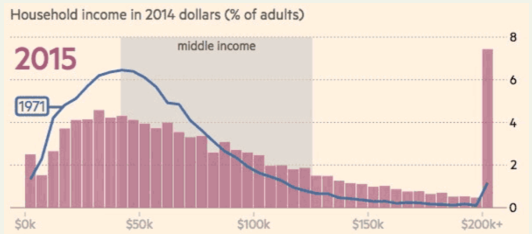
In a recent post, “Is America’s Middle Class Really Shrinking?” I showed that middle-income households did very well from 1971 – 2001, while our economy was growing on average at a rate of 3.5% per year.  Middle-income households then stood still from 2001 – 2008, and have lost ground since.
Capture2A vivid example of what has happened in the last 15 years is provided in the article, “My Secret Shame” in the current issue of the Atlantic magazine.  The author describes his own financial hardships supplemented with pertinent data from several sources:

  • In 2013, 47% of Americans responded to a survey that they would have great difficulty coming up with $400 to handle an emergency.
  • The inflation-adjusted net worth of a typical (median level) household in 2003 was $87,992. By 2013 it had declined to $54,500, a 38% drop.
  • A family headed by someone of prime working age, between 24 and 55 years old, and with an income of $50,000, could continue to self-fund its current consumption, if the family were to lose its current income, presuming the liquidation of all financial assets except home equity, for only six days!

As this data clearly shows, many Americans are in a precarious financial situation! The solution to this very serious problem is to speed up the growth of the American economy.  I have discussed how to do this over and over again in previous posts, i.e. here and here.
It is both surprising and disturbing that the presidential candidates are either ignoring this problem or making unserious proposals for how to solve it.

Follow me on Twitter: https://twitter.com/jack_heidel
Follow me on Facebook: https://www.facebook.com/jack.heidel.3
Can She Fix It?


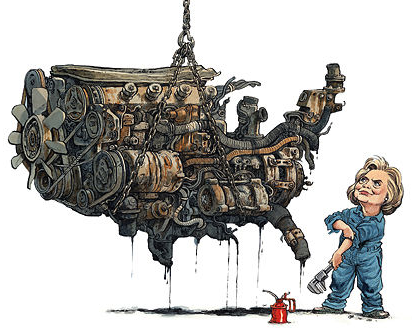
As I have recently pointed out, Hillary Clinton is now likely to be our next president.  In my last post I provided vivid evidence that middle class income grew dramatically between 1971 and 2001 and has been either stagnant or declining since then.  The fact is that the years from 1971 – 2001 were a time of rapid economic growth, about 3.5% per year.
Capture2So it is obvious what needs to be done to fix America’s economic woes: grow the economy faster!  In its latest issue, the Economist asks, “Can she fix it?” The tentative answer suggested by the Economist is no, based on Mrs. Clinton’s tepid policy proposals to date:

  • She wants to make college more affordable, grant paid leave to parents, raise the national minimum wage to $12 per hour, and increase infrastructure spending. These are nice sounding proposals but will have only minor effects on growth or add greatly to the national debt (infrastructure spending).
  • She proposes a tax-credit for companies to encourage profit-sharing schemes. This would just make the tax code more complicated.
  • She wants an extra tax on the debt of big banks but simply increasing capital requirements on big banks would be more effective.
  • She wants to raise the top tax individual tax rate to 45% but shrinking deductions and closing loopholes would be a more efficient way to make the tax code more progressive.
  • She wants to abandon the Trans Pacific Trade Partnership rather than figuring out how to help those workers who lose from expanded trade with such measures as wage insurance or better job retraining.

As the Economist concludes, “A bigger plan to help American workers would start by boosting competition, both by slashing unnecessary regulations for small businesses, and by ensuring that big firms no longer operate in protected markets.”
If we are going to end up with another Clinton presidency, we certainly don’t want four more years of Obama-type economic stagnation!

Follow me on Twitter: https://twitter.com/jack_heidel
Follow me on Facebook: https://www.facebook.com/jack.heidel.3

Is America’s Middle Class Really Shrinking?


For several years now Americans have been having a lively debate about income inequality and the supposedly shrinking middle class. The American Enterprise Institute scholar, Mark Perry, has an enlightening new post on this topic.
Capture0The AEI has produced a vivid graphic showing that the American Middle Class (defined as the middle 50% of Americans by household income) has dramatically increased in income from 1971 through 2001 but has been stagnant since the Great Recession in 2008-2009.
Capture1He has other charts showing that both the Low-Income group and the Middle-Income group have been shrinking since 1971 precisely because the High-Income group (defined to be households with $100,000 or more in income in constant 2014 dollars) has been growing so rapidly. Isn’t it obvious what we need to do to restore confidence to the Middle Class?  Clearly we need to speed up economic growth.  For example we could:

  • Implement broad-based tax reform. Lower the rates for both individual and corporate taxes, paid for by closing loopholes and limiting deductions. Better yet, shift from taxing income to taxing consumption.
  • Remove roadblocks to innovation by making it easier to start new businesses.
  • Improve K-12 education, especially for low-income kids who need extra help. Enhanced early childhood education, more emphasis on career (vocational) education, and charter schools in big cities are the way to get this done.
  • Make attending college more affordable. There are many good schools around the country which are not expensive to attend (the University of Nebraska at Omaha where I teach is one of them). College students and their families should make it a top priority to avoid huge debt. Attending a prestigious (and expensive) institution is simply not necessary to get a good education.

There are other more controversial ways to speed up economic growth such as increasing international trade and reforming our broken immigration system. But just the measures above will go a long way and shouldn’t be that difficult to implement.

Follow me on Twitter: https://twitter.com/jack_heidel
Follow me on Facebook: https://www.facebook.com/jack.heidel.3

Five Ways to Destroy the U.S. Economy


For seven years following the end of the Great Recession in June 2009 our economy has been plodding along at an average growth rate of 2.1% per year, much more slowly than after a typical recession. Instead of talking about how to fix the mess we are in, most of the presidential candidates are proposing measures which will make things even worse.
Capture0The economists Glenn Hubbard and Tim Kane, writing in the Weekly Standard, take a novel approach.  Rather than suggesting ways of speeding up economic growth, which may no longer be of interest to voters in primary elections, they list their “Top Five Ways to Destroy the U.S. Economy” which are to:

  • Restrict Trade. Free exchange is the cornerstone of a growing economy. Raising tariffs will restrict imports, cause inflation and harm American consumers. Killing the Trans Pacific Partnership, stopping the Keystone Pipeline, and curtailing legal immigration would just be a start.
  • Make Work Illegal. Raising the minimum wage to $15 per hour will do lasting harm to underprivileged teenagers who are denied a first job. In the U.S. today over 30% of jobs require a government license compared to only 5% in the 1950s. This creeping need for permission keeps untold millions out of the labor force.
  • Tax People More Unequally. Why should the tax code be riddled with exemptions, deductions and credits which primarily benefit the wealthy? Why do we insist on taxing corporations at 35% when all other advanced economies are competing to lower their corporate taxes? This simply drives jobs overseas.
  • Stop Innovation. Why does Washington continue to favor big banks and bail out old established industries? A generation ago 1 in 6 companies were startups: today 1 in 12 are.
  • Increase the Debt. Debt has more than doubled in the past decade, yet interest payments in 2015 were the same as in 2006, because rates are artificially low. How long can this last? A sure path to a slow growth future is this kind of fiscal profligacy. Just call it investment and hope that most people will ignore the problem.

As Mr. Hubbard and Mr. Kane conclude, “The good news about this policy agenda is that it requires no sacrifices. If Washington just stays on course we will reap the whirlwind.”

Follow me on Twitter: https://twitter.com/jack_heidel
Follow me on Facebook: https://www.facebook.com/jack.heidel.3
Who is Responsible for the Rise of Donald Trump?


It is generally agreed that Donald Trump’s great success as a presidential candidate is his strong appeal to working class white voters, often described as white voters without a college degree. It is also widely agreed that Mr. Trump is unsuited to be president, based on his unstable temperament as well as a poor understanding of many basic issues.
Capture0As I have described in a previous post, the quality of life for working class white men has been declining for many years. Nevertheless it has gotten even worse since the Great Recession of 2007-2009 and our slow recovery from it.
Steven Rattner, in yesterday’s New York Times, blames the Republican Congress for the rise of Mr. Trump because of Republican opposition to President Obama’s economic agenda as follows:

  • Opposition to the American Jobs Act of 2011 which proposed a $447 billion package of measures including payroll tax cuts and the creation of an infrastructure bank which would have created thousands of construction jobs.
  • Opposition to continuing federal emergency benefits for the large number of long-term unemployed.
  • Apparent opposition to a recent plan for wage insurance. Under this proposal a worker who lost a job and was forced to take a lower wage job which paid less than $50,000 per year, would receive half of the lost wages for two years, up to $10,000.

These aren’t necessarily bad ideas. In fact I think wage insurance is an excellent idea, as long as it is paid for and does not add to deficit spending.  The problem is that these measures do not generally address the basic problem of slow economic growth, averaging just 2.1% of GDP since the end of the recession in June 2009.  Only by speeding up economic growth, with fundamental tax reform, both individual and corporate, can our economy support both the new jobs and higher paying jobs that will create broad-based prosperity in the United States.
It is both detrimental and inaccurate for supporters of President Obama to blame political opposition for the plight of working class Americans.

Follow me on Twitter: https://twitter.com/jack_heidel
Follow me on Facebook: https://www.facebook.com/jack.heidel.3

What Might Fundamental Tax Reform Look Like?


All four of the major presidential candidates have tax plans. Hillary Clinton would make small tweaks in our current tax system.  Bernie Sanders would raise current taxes substantially.  Both Donald Trump and Ted Cruz would both radically reduce the size of the federal income tax but would also greatly add to the national debt over the next ten years.
I have been trying to make the case on this blog that fundamental tax reform is the best thing we can do to get the economy growing faster in order to create more and better paying jobs.  I have also discussed a specific way to accomplish fundamental reform, namely the so-called Competitive Tax Plan proposed by the tax law expert, Michael Graetz.  It is a progressive consumption tax, a so-called Value Added Tax.
Capture2As reviewed in yesterday’s Wall Street Journal by Reihan Salam, the editor of the National Review, the Graetz Plan has these features:

  • A broad-based VAT of about 14% on goods and services.
  • Families earning less than $100,000 per year are exempt from the income tax. The tax rate would be 15% for incomes between $100,000 and $250,000 and 25% above this level.
  • The payroll tax (supporting Social Security and Medicare) would be greatly reduced for all workers earning less than $40,000 per year.
  • The corporate tax rate would be lowered to 15%, making it among the lowest in the world.
  • The Graetz Plan is revenue neutral as verified by the Tax Policy Center.

Think of the incredible advantages of such a tax plan. Of the expected 145 million tax returns for this year, 120 million would no longer be necessary.  Extravagant deductions such as for mortgage interest would have much less political support. The low corporate tax rate would bring jobs back to the U.S. instead of sending them overseas.  The rampant cronyism involved in tax breaks being handed out by Congress would be greatly reduced.
What is not to like about the Graetz Plan?

Follow me on Twitter: https://twitter.com/jack_heidel
Follow me on Facebook: https://www.facebook.com/jack.heidel.3
Growing Employment, Shrinking Productivity: What Does It Mean?


I know that I occasionally repeat myself, but I can’t help it! In my opinion there are two major problems facing our country:

  • Slow economic growth which has averaged only an anemic 2.1% since the end of the Great Recession seven years ago.
  • Exploding national debt, now the highest it has been since the end of WWII. Unless we can quickly shrink our annual deficits down to zero, and therefore stop adding to the debt, interest payments on the debt will eventually rise to horrendous levels.


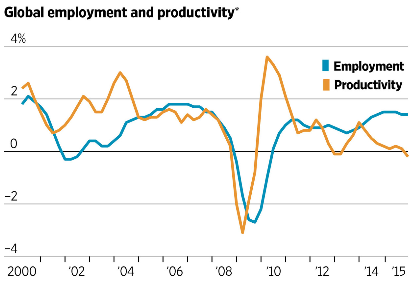
Two recent newspaper articles address the slow growth problem. Greg Ip, writing in the Wall Street Journal, points out that (worldwide) employment growth is up while productivity growth is down (see chart below).
Capture0Neil Irwin, writing in the New York Times, explains this dichotomy by pointing out that most job growth in the last decade has been in (low productivity) services rather than (high productivity) manufacturing. In other words, the U.S. economy is now producing lots of new temporary and contract jobs which do not add very much to the overall economic growth which produces higher wages and overall prosperity.
The economist John Cochrane has clearly described  why productivity growth, and therefore overall economic growth, has stagnated in recent years.  Here is a short summary:

  • Over-regulation. The Dodd-Frank Act and Affordable Care Act, for example, are hampering growth by strangling the financial and healthcare sectors of the economy.
  • Inefficient Taxation. Growth oriented taxation would have the lowest possible marginal rates paid for by shrinking deductions. Taxing consumption rather than income and savings would be even better.
  • Illegal Immigration. Solving our immigration problem would turn millions of illegals into productive citizens. An adequate Guest Worker program and e-Verify enforcement would solve this problem without the need for amnesty.

Conclusion: There are solutions to the severe economic problems facing our country. Does our political system have the flexibility to adopt these workable policies?

Follow me on Twitter: https://twitter.com/jack_heidel
Follow me on Facebook: https://www.facebook.com/jack.heidel.3


Another Way to View the Presidential Candidates

As regular readers of this blog well know, I constantly advocate for two major changes in government policy:

  • Speeding up economic growth, which has averaged an anemic 2.1% per year since the end of the Great Recession in June 2009. This will create the new and higher paying jobs that country so badly needs.
  • Shrinking annual deficits, ideally down to zero, so that our huge public debt (on which we pay interest) will begin to decrease as a percentage of GDP over time.

My last post compared the President’s proposed budget for 2017 with a proposal from the House Budget Committee. Basically the President’s budget increases both taxes and spending while the House budget keeps revenues at a steady 18.2% and leads to a balanced budget after ten years.
Capture2The non-partisan Committee for a Responsible Federal Budget has just produced an interesting report, ”How Much More Would Government Spend Under the Next President?” It compares the spending plans of the remaining five presidential candidates from both parties.  It finds that:

  • Only John Kasich would actually decrease spending over the next decade from 22.1% of GDP (under current law) to 21.5%.
  • The other four candidates would all increase spending: Hillary Clinton (to 22.5%), Donald Trump (to 22.7%), Ted Cruz (to 23.4) and Bernie Sanders (to 29.5%).

Mr. Kasich’s spending restraint would amount to a 2% decrease over current law while Ms. Clinton, for example, would increase spending by 2%.
As I showed a year ago,  reining in spending by 2% per year over current law is a major achievement and will lead to a balanced budget in ten years. In other words, Mr. Kasich’s spending plans are in sync with the latest House Budget Committee proposal.  Perhaps this should not be surprising since Mr. Kasich served as Chair of this House Committee in the 1990s!
Easy question: Which presidential candidate and which chamber of Congress are acting in the most fiscally responsible manner?

Follow me on Twitter: https://twitter.com/jack_heidel
Follow me on Facebook: https://www.facebook.com/jack.heidel.3

Solving America’s Most Basic Problems


My last two posts, here and here, argue that America’s two most critical problems are:

  • Speeding up economic growth in order to create more jobs and better paying jobs, especially for middle- and lower-income workers whose wages have been stagnant for the past 15 years.
  • Getting our large and rapidly growing national debt under control by shrinking annual deficit spending. This will put our debt on a downward path as a percentage of GDP.

Many Facebook comments on these posts inquire about how these goals will be accomplished. If tax reform is the best way to increase economic growth, how can this be done in a way that is fair to the non-wealthy. If spending cuts are necessary to balance the budget, what cuts should be made?  Here is a summary of my views on these questions:

  • Growing the economy with tax reform. The best way to spur investment and business expansion is with the lowest possible tax rates on owners and investors. Broad-based tax reform, with lower tax rates for all, paid for (i.e. in a revenue neutral way) by closing loopholes and shrinking deductions, will accomplish this. The 64% of taxpayers who do not itemize deductions will increase their income with tax rate cuts. Lower tax rates for the affluent will be offset by shrinking deductions and closing loopholes.
  • The corporate tax rate should also be cut to internationally competitive levels, again paid for by drastically shrinking, if not totally eliminating, all deductions. This way all corporations (including GE!) would pay the same tax rate. And American companies would have much less incentive to move overseas.
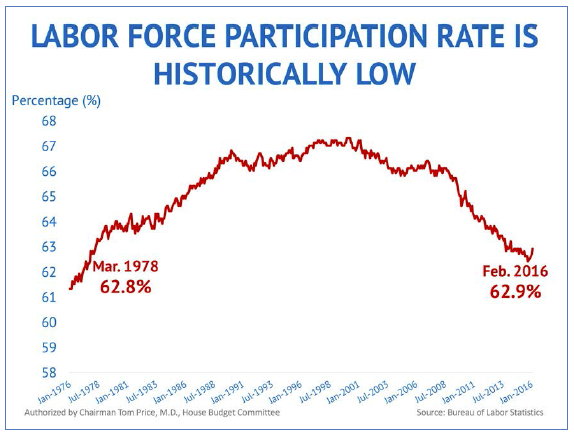
    Capture0
  • Reducing our national debt. We have got to drastically shrink our annual deficits (now running about $500 billion per year) in order to put our national debt on a downward course, as a percentage of GDP. The House Budget Committee has recently passed a plan to balance the budget within ten years. Not everyone will agree with the details, but at least it’s a starting point. An alternative approach is to adopt a Balanced Budget Amendment to the U.S. Constitution. This would require Congress to make tradeoffs annually between either restraining spending or raising taxes.  A BBA will force them to do what they should be doing anyway!

Follow me on Twitter: https://twitter.com/jack_heidel
Follow me on Facebook: https://www.facebook.com/jack.heidel.3
Why I Lean Republican II. Priorities for the Next President


In my last post, “Why I Lean Republican,” I endorse the ten year budget plan just released by the House Budget Committee which will lead to a balanced budget within ten years.  It represents an excellent starting point towards addressing one of our country’s most serious problems, our huge and rapidly growing national debt.
Capture1
Jim Vanderholm responded to this post by giving his own top priorities for the next President. They are:

  • Job Formation. All sorts of other problems would be addressed in the process. Record high numbers of unemployed and underemployed. Record numbers of people on 85 different welfare programs at a cost of over $1 trillion per year.
  • Highly targeted education/training of the workforce to fill the newly created jobs with American citizens.
  • Reducing annual deficits. Growing the economy by putting more people back to work will bring in more tax revenue. Along with slowing the growth of spending this will lead to lower annual deficits. Once the deficit is reduced by half or more of its current value (about $500 billion), then the debt as a percentage of GDP will begin to shrink.
  • Reduced focus on divisive social issues. The basic structural problems referred to above will not be solved by more gun control, higher carbon tax, shuttering the coal industry, free pre-school and college education, or discontinuing tax-payer funding to Planned Parenthood.

In other words, we need a new President who will focus on basic economic and fiscal issues and not be distracted by divisive social issues. In fact, an ideal division of labor would be for the House Budget Committee to take the lead in getting spending under control while the new President attempts to implement policies to get the economy growing faster. This would lead to real progress on both fronts!

Follow me on Twitter: https://twitter.com/jack_heidel
Follow me on Facebook: https://www.facebook.com/jack.heidel.3