Improving the Republican Tax Plan


The Republican tax plan has many good features and is now moving along in Congress. The best feature of all is reducing the top corporate rate from 35% to 20%.  This will make the U.S. internationally competitive and create a strong incentive for all multinational companies to conduct more business in the U.S. and for U.S. multinationals to bring their profits back home for reinvestment.
The Tax Foundation estimates that the Senate version of the Plan will lead to the creation of 925,000 new jobs and an after tax income gain of $2,598 for a middle-income family over a ten year period.
But there are several parts of the plan which could be significantly improved.  For example:

  • Revenue neutrality, at least on a dynamic basis (taking growth into account) is essential. Our national debt is way too large to ignore.

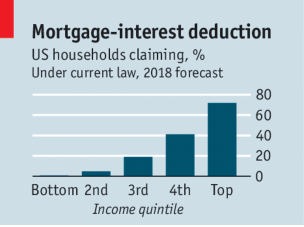
  • Shrinking more deductions, to achieve revenue neutrality. The mortgage interest deduction should be eliminated completely, not just limited to $500,000 mortgages. Same for the state and local tax deduction.
  • More progressivity. Keep the estate tax to bring in more tax revenue. Scrap the lower 25% rate for a pass-through business tax because it will be too easy to abuse.  The Congressional Budget Office has estimated that eliminating the individual mandate for the ACA will save $338 billion over ten years.  It will also save millions of Americans from having to pay a tax penalty of $695 or more for not having health insurance.
  • Emphasis on growth. Make expensing (i.e. immediate write-off) for new investment a permanent feature rather than limited to five years only.

Conclusion. There are lots of good features in the Tax Reform Plan. Several changes would make it even better.  As soon as it achieves stability in the legislative process, the CBO will analyze its fiscal and economic effects.  At this point revenue neutrality will be essential for achieving broad support.

Follow me on Twitter 
Follow me on Facebook 

Donald Trump and Isolationism, Protectionism and Nativism


Most of the time on this blog I write about the pros and cons of various policy measures, independently of which individuals or parties are supporting them. But, of course, the U.S. President is the most important single actor on the political stage so it does matter immensely what the President thinks on any particular issue.


The three biggest quagmires for Republican presidents are nativism, protectionism and isolationism. Where does President Trump come down on these major policy threads?

  • Isolationism. Mr. Trump is not an isolationist.  He is working with China and other Asian countries to contain North Korea. He is working with several Mideast powers to defeat ISIS. We have beefed up forces in Afghanistan to neutralize the Taliban. He has clearly backed down on his threat to withdraw from NATO.
  • Protectionism. Unfortunately, Mr. Trump is too much of a protectionist. He is not against trade per se but he wants to replace broad multilateral trade agreements with separate bilateral trade agreements with lots of different countries. This will simply create an “insanely complicated mishmash of rules.”  Instead he should focus on bargaining with China to get much better access for American products into Chinese markets.
  • Nativism. Again, Mr. Trump (and many of his supporters) apparently doesn’t appreciate the enormous contributions which immigrants make to the U.S. economy at both the high end (skilled workers and entrepreneurs) and the low end (willingness to provide hard physical labor in agriculture, meatpacking, construction and personal care). Especially with our currently low unemployment rate of 4.1% we should take the opportunity to solve our illegal immigration problem by expanding our guest worker visa program.

Conclusion. President Trump is clearly not an isolationist but smarter trade and immigration policies would help to speed up economic growth and create more jobs and higher wages for the blue-collar workers who are Mr. Trump’s main base of support.

Follow me on Twitter 
Follow me on Facebook 

How to Make America Stronger


Americans are very fortunate indeed to live in such a strong, prosperous and free society.  But not all of us share in this good fortune.  How can we help the less fortunate among us have a better chance to succeed in life?

Here are several things we can do, in rough order of importance:

  • Grow the economy faster than the 2.1% growth rate which has prevailed since the end of the Great Recession in June 2009. Faster growth means more new jobs are created and higher wages are paid for existing jobs. Success in life for most people includes earning an adequate income to live comfortably without major wants. Appropriate deregulation and tax reform are the best ways to speed up growth.
  • Improve basic education so that more people can qualify for rewarding jobs. Right now too many kids from minority and other low-income families are not graduating from high school with the skills they need to succeed in life. Two promising solutions to this problem are more charter schools and expanded early childhood education, both targeted at kids from low-income families.
  • Alleviate poverty in a productive manner by emphasizing work requirements for most, if not all, welfare programs. Higher work force participation and lower poverty rates are strongly correlated. Work not only provides income but also provides dignity and purpose in life.
  • Promote two parent families. Two parent families are much less likely to be poor than single parent families and also more likely to be supportive of their children’s education. Federal tax policy should always encourage child raising by two parent families for this reason.

Conclusion. America will become an even stronger country than it already is if more people, especially from low-income and minority families, have the education, work training and personal qualities to make a positive contribution to society.

Follow me on Twitter 
Follow me on Facebook 

Why Americans Are So Fortunate


Most of the time on this blog I discuss somewhat humdrum issues such as:

  • Slow economic growth, averaging just 2% since the end of the Great Recession in June 2009. Slowly our unemployment rate has shrunk to its current low level of 4.1% and finally median wages are beginning to rise. But faster growth would give a badly needed boost to millions of the unemployed and underemployed.
  • Massive debt, now 77% of GDP (for the public debt on which we pay interest), the highest since the end of WWII, and predicted by the Congressional Budget Office to keep getting steadily worse without major changes in spending policies. When interest rates rise, as they surely will before long, interest payments on our accumulated debt will skyrocket and cause huge pain.

These are serious and urgent problems upon which America’s national leaders need to focus. But my last few posts, here and here, discuss our great strengths as a nation and how to maintain them:

  • Being a free democratic society, is our greatest strength of all, because it allows most of us to reach our own maximum potential. Furthermore other democratic countries are our best friends and their number is increasing around the world.

    Capture173

  • America is a prosperous country which means that most Americans grow up in a loving and supportive environment which is critical for getting a good start in life.
  • America has an outstanding educational system, on the whole, which well serves most of us. Especially in today’s globally complex and highly competitive market place, the ability to adapt to new trends and developments is very important.

Conclusion. America has huge strengths which well serve most, but not all of us. One of our country’s great challenges going forward is to reach out to those members of society who have been left behind and help them share more fully in our prosperous society.  Stay tuned!

Follow me on Twitter 
Follow me on Facebook 

Is the World Getting Better and, if so, Why?


From a reader of my blog:

I admire your efforts to discuss issues. However, it seems your worldview is to defend the “status quo”, to say “things are pretty good”, to denigrate the critics, to downplay the negative. Perhaps this is one of the characteristics of a “conservative”.  I, and many others, on the other hand, look at the world and our country, and see many problems, much injustice, much that needs changed. … In addition, the “free market” is largely a myth. Finally, to the extent our country has many positive attributes, who do you think was responsible—those satisfied with the status quo or those who worked and struggled and protested and brought about change?

The above statement is an intelligent criticism of the point of view expressed on this blog. I will respond to it by more fully describing where I’m coming from.
First of all, I am a non-ideological (i.e. registered independent) fiscal conservative and social moderate. Furthermore, I have had much good fortune in my life. I am a citizen of a free and prosperous democratic country. I come from a loving and supportive family. I have received a good education and, in fact, have been a long time tenured university professor (now retired).
Secondly, perhaps as a result of my own good fortune, I tend to be optimistic. I believe that the world is getting better. Not in a straight line, of course, but slowly and surely, even if there are many twists and turns.
There is much objective evidence for overall optimism as I have previously demonstrated, see here and here.
To briefly summarize:

  • The good old days are now, referring to global wealth rising steeply from about 1800.
  • Freedom. In 1950 31% of the world lived in democracies. Today it is 64%.
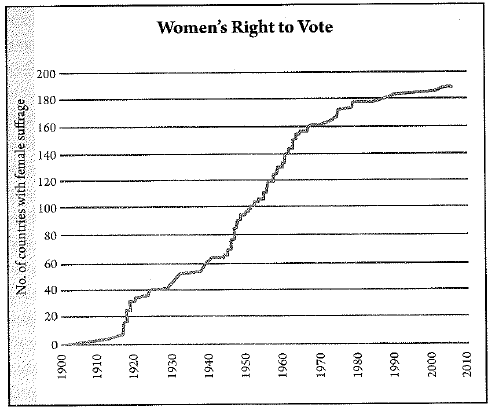
  • Equality. Minority rights, women’s rights and gay rights have all increased enormously in the last 100 years.

Conclusion. I am not Panglossian (i.e. this is not the “best of all possible worlds”) nor do I believe that progress just occurs on its own. But progress is relentless, nevertheless. Stay tuned!

Follow me on Twitter
Follow me on Facebook 

Walmart Saves You Money; Amazon Saves You Time


Like most Americans I am fascinated by modern technology as exemplified by the big five American technology companies: Amazon, Apple, Facebook, Google and Microsoft.
The allure of Apple (a telephone merged with a pocket-sized computer), Facebook (a vast social network) and Microsoft (windows operating system and the personal computer) are easy to understand.  Google has accomplished the amazing feat of organizing all human knowledge with its search engine.


Amazon is the most humdrum of the five giants.  It primarily does online retail.  But ecommerce is revolutionizing much of the business world and therefore all aspects of our lives.
Consider:

  • Retail in America accounts for one in nine jobs.
  • Total retail employment in the U.S. is growing since ecommerce has added far more jobs in the last two years than brick-and-mortar jobs have been lost. Furthermore, fulfillment center wages are 31% higher than for traditional retail in the same geographical area.
  • In 2016 Amazon accounted for more than half of the growth in online spending.
  • More than 1/3 of American households now pay $99 per year for Amazon Prime which provides free two day shipping on all orders.
  • Amazon’s own inventory now accounts for less than half of the sales on its site, i.e. ever more independent retailers use its giant warehouses.
  • Amazon earns more than 1/3 of its revenue from ecommerce outside of North America (but not much in China where Alibaba is king).
  • Amazon now pays sales taxes in every American state which has such a tax.

Conclusion. The giant retailer, Walmart, which has brought Americans low-cost goods from around the world, is now struggling to compete with online retailer Amazon. Walmart saves us money but Amazon saves us time as well as money.  Only a free market system like ours, which goes all out to encourage innovation, could lead to such progress.

Follow me on Twitter 
Follow me on Facebook 

Understanding Economic Growth


One of the major topics I discuss on this blog is:

  • Economic growth, in particular the fact that the U.S. economy has grown at the relatively slow rate of 2.1% per year since the end of the Great Recession in June 2009. It appears, however, that the economy may now be starting to pick up speed.

There are plenty of “experts” who say that it is unrealistic to expect economic growth to continue indefinitely at the same level (3% on average) which has prevailed since the end of WWII because:

  • Resources are limited. The earth is finite but it is also vast. It is unlikely that any mineral or even energy source such as fossil fuels will be depleted for hundreds, if not thousands, of years. If and when any particular resource becomes scarce, human ingenuity will be able to find a replacement.
  • Population growth is slowing down. It is likely that human population worldwide will level off this century somewhere between 9 and 10 billion. This is highly desirable but is unlikely to slow down economic growth. As income and education levels rise, productivity and GDP per person will also increase.
  • Growth tends to be debt financed which is unsustainable.  I agree with this reservation. This is the one problem, if not solved, which has the potential to derail continued steady progress.

The remarkable human progress of the last 200 years is likely to continue indefinitely.  In particular:

Conclusion. The world has enjoyed remarkable human progress in the last two hundred years, in the form of steady economic growth, and this progress is likely to continue indefinitely into the future.

Follow me on Twitter 
Follow me on Facebook 

Responding to Economic Trends


In my most recent posts I have been making the case that

  • The American economy is in basically good shape with a low unemployment rate of 4.2% and the likelihood of somewhat faster growth in the near future.
  • Income inequality and poverty are real problems, see here and here, but there are reasonable and effective ways to address them.
  • Rapidly accumulating debt is by far our most critical unsolved problem which is all the more frightening because our polarized political system does not seem capable of addressing it.

The Bureau of Labor Statistics has just released its projections of what the U.S. economy will look like in 2026.


The highlights are:

  • More dominated by the service sector amid the continuing erosion of manufacturing jobs (see two charts below).

  • More polarized in both earnings and geography (see top and bottom charts).

  • More tilted towards jobs which require at least a bachelor’s degree (see bottom chart).

The BLS report has several ramifications for public policy as follows:

  • Improved educational outcomes are needed all along the line: K-12 basic and vocational, training programs for the many skilled jobs going begging and also more low-cost college programs.
  • More low-skill immigrants, not fewer, are needed to take on the expanding number of low-wage jobs, such as caring for the growing numbers of elderly, which Americans are not willing to do.

Conclusion. These economic trends towards more earnings and geographical polarization could easily make our current political polarization even worse than it already is. This means it is all the more important to make sure that we keep speeding up economic growth, better address income inequality and poverty and get our gargantuan debt problem under control.

Follow me on Twitter 
Follow me on Facebook 


Which Is Worse: Republican Hypocrisy about Debt or Democratic Complacency about It?


My recent posts about the American Idea have argued that our country has a great future before it.  We have a strong and prosperous economy and are the world’s leading innovator.  Furthermore there are clear cut and effective ways to address the income inequality and poverty which hold back many Americans from fully sharing the benefits of our remarkably successful society.
But there is one huge problem our political system is ignoring which will lead to a major crisis if left unattended much longer.


I am referring, of course, to our gargantuan:

  • National Debt, now sitting at 77% of GDP (for the public part on which we pay interest), the largest it has been since the end of WWII. It is predicted by the Congressional Budget Office to keep steadily getting worse without major changes in current policy. Right now all of this debt is essentially “free money” because interest rates are so low.

Republicans are very good at deploring the debt but quick to forget about it, when it gets in the way of cutting taxes.  Note that:

  • Economic growth is created by tax cuts but only 10-20% of the lost revenue from tax cuts is offset by new growth.

Democrats, on the other hand, don’t take the debt seriously, except when arguing against Republican tax cuts. Debt deniers claim that the risk of government overspending is inflation, not bankruptcy. What they don’t understand is that

  • Interest rates will return to more normal (and much higher) historical levels eventually and, when this happens, interest payments on the debt will skyrocket by hundreds of billions of dollars every year. This will crowd out all sorts of spending on popular domestic programs. It is likely to lead to a new fiscal crisis, much worse than the Financial Crisis of 2008.

Conclusion. For all of our nation’s great strengths, we are in a very serious fiscal pickle, with no clear cut path of orderly resolution. Realistically our debt problem cannot be wound down without committed Presidential leadership and this is unlikely to happen anytime soon.

Follow me on Twitter 
Follow me on Facebook 

Addressing Poverty in a Free and Dynamic Society


With an unemployment rate now down to 4.2% and the average wage rising 3.1% in the past year, the U.S. is finally recovering from the Great Recession which ended in June 2009. My last several posts have described an optimistic scenario for the U.S. economy going forward.

  • The American idea is thriving.  The U.S. is the world’s most competitive large economy. Amazon, Apple, Facebook and Google are in the process of revolutionizing all aspects of life, all over the world. Productivity growth in the digital industries has grown at the annual rate of 2.7%, much faster than for physical industries. Democracy is mostly flourishing around the world.
  • Ecommerce is one example of a thriving industry.   Fulfillment center weekly wages are 31% higher on average than for brick and mortar retail in the same area. Total ecommerce related jobs have increased much faster in the last two years than have traditional retail jobs been lost.
  • Income inequality can be addressed effectively by speeding up economic growth (with tax and regulatory reform), improving educational (especially with early childhood) opportunities and with better training programs for the unemployed and underemployed to qualify them for the millions of skilled jobs going begging for lack of qualified applicants.

One additional feature needed is “A balanced and sensible anti-poverty program,”  to help many of the down and out get back on their feet.


The way to accomplish this is with:

  • Work requirements as a condition of public assistance. The work first approach has been shown to have better outcomes with regard to attachment to the labor force (see above chart) than even approaches which focus on training and education.

Conclusion. The U.S. economy is basically sound. We lead the world in many industries and especially in digital technology.  There are lots of good jobs going begging for lack of qualified applicants.  The best anti-poverty program is job training.

Follow me on Twitter 
Follow me on Facebook