As readers of this blog well know, I write about what I consider to be the biggest and most serious problems our country faces. And you probably also know what I consider to be the biggest problem of all: our national debt.
As bad as our debt problem is, the practical problem is what should we do about it? Of course, we need to restrain the growth of spending and/or raise taxes. But what is a reasonable way to get this done? I used to think that the best solution is to do a better job of controlling the growth of entitlement spending. This would still help a lot, of course, but such a strategy may not be enough because the problem is getting so much worse all the time. Starting with George W. Bush, the debt problem has accelerated with each successive president: Bush, Obama, Trump, and now Biden. It is discouraging and demoralizing to think that our debt problem is now so bad that it may be almost insolvable short of a huge crisis.

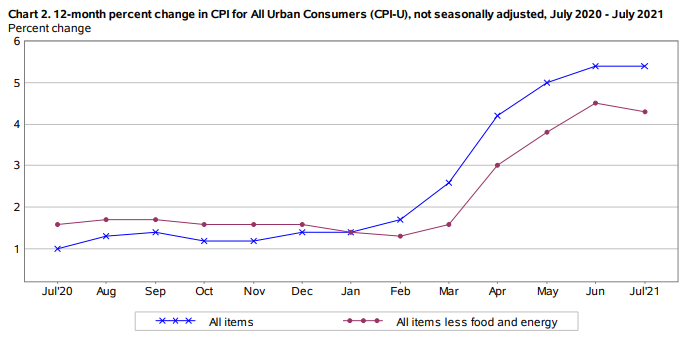
For all these reasons I am highly intrigued by an article in the current edition of National Affairs by Avik Roy, “Bitcoin and the U.S. Fiscal Reckoning.” Mr. Roy says that soon “policymakers will face a Solomonic choice: either protect Americans from inflation (by raising interest rates) or protect the government’s ability to engage in deficit spending (by continually printing more money). It will be impossible to do both. Over time, this compounding problem will escalate the importance of Bitcoin.”
Here is a brief summary of his argument:
- When viewed through the lens of human history, free-floating global exchange rates (like we have at present) remain an unprecedented economic experiment – with one fatal flaw. They enable deficit spending.
- There are several reasons to believe that America’s fiscal profligacy cannot go on forever. Most importantly is the unanimous judgment of history: in every country and in every era, runaway deficits and skyrocketing debt have ended in economic stagnation or ruin.
- Indications that investors are growing increasingly concerned about the U.S. fiscal and monetary picture – and are in turn assigning more risk to “risk-free” Treasury bonds – are on the rise. Between 2010 and 2020, the share of U.S. securities owned by foreign entities fell from 47% to 32%. As foreign investors reduce their purchase of U.S. government debt, the Fed is forced to increase its own bond purchases.

- Until and unless Congress reduces the trajectory of the federal debt, U.S. monetary policy has entered a vicious cycle from which there is no obvious escape.
- Satoshi Nakamoto, the creator of Bitcoin, wrote in 2009, “the root problem with conventional currency is all the trust that’s required to make it work. The central bank must be trusted not to debase the currency, but the history of fiat currencies is full of breaches of that trust.
- Bitcoin has the same five important qualities as gold has: it is unforgeable, divisible, durable, fungible, and scarce. Furthermore, bitcoin is rarer, more portable, and more secure than gold. And it cannot be censored (e.g. by China).
- Policymakers will be tempted to impose capital controls that restrict the ability of Americans to exchange dollars for bitcoin. This would be a huge mistake by confirming to the world that the United States no longer believes in the competitiveness of its currency.
- Instead, federal policymakers would do well to embrace the role of bitcoin as a geopolitically neutral reserve asset. In fact, the Treasury Department should consider replacing a fraction of its holdings – say 10% – with bitcoin, sending a positive signal to the innovative blockchain sector.
- Ideally, the rise of bitcoin will motivate the U.S. to mend its fiscal ways. But even if this doesn’t happen, ordinary Americans will have the opportunity to protect their savings from the federal government’s fiscal mismanagement.

Conclusion. Bitcoin represents an enormous strategic opportunity for individual Americans and the U.S. as a whole. The bitcoin currency and its underlying technology could become the next great driver of American growth. But in order for this to happen, the changeover from the current fiat currency must begin to take place before the economy is decimated by drastic inflation.
Sign-up for my Email Newsletter
Follow me on Facebook
Follow me on Twitter