Why the U.S. is so Strong; the Vibrancy of our Underlying Economy

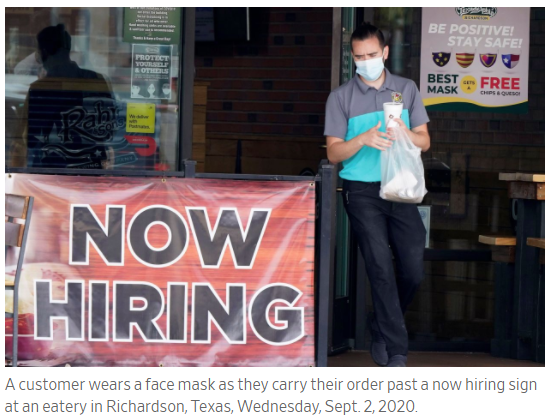
Good news for the U.S. economy.  The August 2020 unemployment rate is 8.4%, down from 10.2% in July.  This shows how well the U.S. economy is recovering from the coronavirus pandemic.

Of course, the pandemic is a hit to the economy but it is a temporary hit as our rapid recovery demonstrates.  The key factor is the underlying strength of American business.  A robust free enterprise system coupled with a free democratic political system.

Edward Conard from the American Enterprise Institute describes the power of the American economy in his recent book, “The Upside of Inequality.”  As Mr. Conard says:

  • U.S. employment has grown twice as fast as employment in Germany and France since 1980. America has achieved this employment growth at medium household incomes that are 15 to 30 points higher than other high wage economies such as Germany, France and Japan.
  • As the economy grows, it values innovation more. Successful innovators such as Jeff Bezos and Bill Gates, become wealthier than innovators have in the past.
  • Information technology has opened a window of new investment opportunities and increased the productivity of the most productive workers. Moreover, in today’s knowledge-based economy, companies can scale to economy-wide success with little need for capital.  Successful innovators need not share their success with investors.
  • Without much need for capital, start-ups become all-or-nothing lotteries. The chance for enormous payoffs attracts a larger number of more talented gamblers.  More gamblers produce more outsized winners and more innovation.
  • Their success provides American workers with more valuable on-the-job training, at companies like Google, Facebook and Apple, than they can get in other high-wage, but slower growing manufacturing-based jobs.

Conclusion.  The outsized success of America’s 1% has been the chief source of growth exerting upward pressure on domestic employment and wages.  The success of America’s top 1% is an asset, not a liability.

Next:  If the public mistakenly blames the success of the top 1% for the stagnant wages of the middle class, while leaving the true sources of slow-growing wages – trade, trade deficits and immigration – unaddressed, a dangerous feedback loop is likely to ensue.  More on this soon!

Sign-up for my Email Newsletter
Follow me on Facebook
Follow me on Twitter
Trumpism, After Trump

Donald Trump will leave office in either January 2021 or January 2025.  It is too soon to say when because the November 2020 election is too close to call.  As the Wall Street Journal says, “he has been better on policy than we feared but worse on personal behavior than we hoped.”

But, with or without Trump, Trumpism has taken over the Republican party.  Trumpism simply refers to the nationalist and populist policies designed to appeal to its expanded working-class base.

  • Nationalism. Put America first.  Crack down on foreign countries taking advantage of U.S. companies, workers, and markets.  The best example of this is the fight with China over trade deficits, intellectual property theft, and unequal market access.  This contrasts with the traditional Republican view that trade inevitably promotes prosperity for all and freedom around the world.  Rather trade must be fair so that American jobs and wage increases are protected. Furthermore, allies should pay more for their own defense and more troops should return home from longterm deployment.  The military should be deployed only when America’s interests are directly at stake.  For example, we should continue to remove American troops from both Afghanistan and Syria.
    Other nationalist related policies are promoting the domestic energy industry, and appointing originalist and textualist judges who will interpret the laws more strictly.
  • Populism. Trump’s base wants the wall built and the southern border secured.  Voters see illegal immigration, like foreign trade, as threatening their jobs and wages.  Immigration policies should benefit the U.S. economy – such as tying legal immigration quotas to workforce needs, as opposed to family reunification.  New immigrants should be expected to learn English and get a job.
    Other populist policies are defending religious liberty and gun rights and easing government regulations in order to increase employment.
    In general, keep the unemployment rate as low as possible to provide more economic opportunities for all low-wage workers, including minorities.

Conclusion.  Win or lose in November, Donald Trump has had a big effect on U.S. politics and government policy.  The Republican party has been transformed from the party of Wall Street to the party of Main Street.  This will keep it competitive in future elections.

Sign-up for my Email Newsletter
Follow me on Facebook
Follow me on Twitter

How Is the United States Doing Overall?

As the U.S. Presidential election approaches, every voter should think about how our country is doing overall.

Here is how I evaluate our country’s biggest problems, including what to do about them, as we approach the November election:

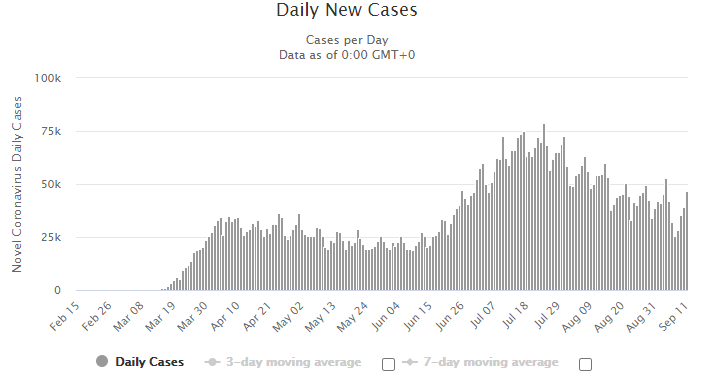
  • The Pandemic. After a big surge in July, the rate of new daily infections is now dropping back down.  Furthermore, the U.S. economic recovery from the pandemic recession is gaining steam even if other economies around the world are still sputtering.
  • The U.S. economy overall. As the rate of growth of GDP has unavoidably slowed down to about 2% annually in recent years, a very important statistic is the unemployment rate.  Before the pandemic took off, as recently as February 2020, the U.S. unemployment rate had dropped to 3.5%.  This meant that there were more jobs than job seekers and wage raises across the board.  This is exactly what all low-income wage earners, including many minorities, need to move up the income ladder.
  • The national debt. Uggh!
  • Racism still exists in the U.S. but its effects are diminishing as blacks do better economically.  The key is for blacks and other minorities to take more individual responsibility for their status in life rather than blaming white cultural supremacy for their lack of achievement.
  • The China Threat. The U.S. still enjoys unipolar status as the world’s strongest country, both economically and militarily.  The Chinese economy is now growing faster than ours but, for demographic reasons, is likely to peak at about 76% relative to the size of the U.S. economy by 2040.  Of course, we should cooperate with China on both environmental (e.g. global warming) and health (e.g. pandemic) issues but clearly understand that we are competing with China in many fundamental ways.

Conclusion.  The U.S. has problems to address but they are under control (except for the debt) in a general sense.  U.S. world dominance is likely to continue for many years to come and be a major contributing factor to continued world peace and prosperity.  But let’s not become complacent!  Eternal vigilance is the price of liberty!

Sign-up for my Email Newsletter
Follow me on Facebook
Follow me on Twitter

Social Progress Derives Mostly from Economic Progress

Here we are in Summer 2020 in a coronavirus pandemic with an accompanying severe recession as well as nationwide protests about racism.  In other words, we are at a low point in terms of social cohesion and optimism for the future.

Capture151

What we can do to return to a more normal trajectory of progress:

  • Reopen our economy as quickly as possible, with the governors in charge. Of course, the most vulnerable, those with underlying health conditions, need to be protected. But livelihoods are critically important for the average citizen, who will most likely recover if he or she gets sick.  The vulnerable simply need to wear a mask when they go out!

    Capture152

  • Racism still exists in the U.S. even though it is gradually decreasing. The best way to speed up racial progress is for minorities to develop a greater sense of personal agency.  In other words, stop blaming white cultural supremacy and instead take more personal responsibility for one’s own status in life.
  • Income and wealth inequality are an inevitable result of technological progress and globalization of commerce, both of which are beneficial to society as a whole. Address the victims of this progress through better education and training in order to create broader economic opportunity.
  • In general, adopt economic policies that maintain a low unemployment rate, ideally under 4%, as was the case as recently as February 2020, before the pandemic hit. This is highly effective in providing more job opportunities and higher pay for people with low incomes.

Conclusion.  Widespread economic prosperity, accompanied by individual freedom in a democratic society, is the American ideal and has made us the envy of the world.  Getting the economy back on track, after being hit hard by a pandemic, will restore the upward trajectory of social progress that we are used to enjoying.

Sign-up for my Email Newsletter
Follow me on Facebook
Follow me on Twitter

What the U.S. Needs is Broader Economic Opportunity rather than Less Inequality

My recent posts have been directed primarily to the issue of racism, real and perceived, in American society.  My conclusion is that black social advancement (and a decrease in racism) will be aided by faster black economic advancement.  This, in turn, depends on blacks developing a greater sense of personal agency, i.e. a better appreciation that they have control over their own destiny.

Capture148

But really, this argument applies much more generally than just to minority advancement.  I think the issue of economic inequality in the U.S. is vastly overhyped.  Consider, for example:

  • Jeff Bezos, CEO of Amazon, worth $180 billion, is the wealthiest person in the world.  But the social value of Amazon, which he created, is far greater than his own personal wealth.  Being able to have almost any product in the world shipped to one’s doorstep overnight at a low price is incredibly valuable.  Perhaps Amazon should be more tightly regulated as a monopoly but that’s a separate issue.
  • Warren Buffett, CEO of Berkshire-Hathaway, worth $70 billion, lives in Omaha NE where I also live. His great wealth has been an enormous benefit to Omaha over the years.

Income inequality is caused primarily by the growth of technology and the globalization of commerce.  Both of these trends, getting stronger all the time, are producing enormous societal wealth overall but people with education and technical skills benefit the most. 

The solution to this problem should be quite clear:

  • Provide more economic opportunity for those on the bottom by:
  • Keeping the unemployment rate as low as possible, ideally under 4%, to create more job openings, and
  • Improving educational outcomes at all levels: K-12 and above. Not everyone needs to go to college.  But everyone needs skills of some sort, whether technical or intellectual.

Conclusion:  What minorities and all low-income people need most is more economic opportunity.  Growing income and wealth inequality is a distracting bugaboo.  It needs to be recognized as an inevitable consequence of human progress, rather than a stumbling block to individual advancement.

Sign-up for my Email Newsletter
Follow me on Facebook
Follow me on Twitter


Combatting Racism in the Land of the Free

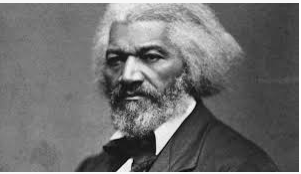
“People might not get all they work for in this world but they must certainly work for all they get.”
Frederick Douglass, 1818 – 1895

Capture146

Racism, real and perceived, has become a big issue in the U.S. after the brutal death of George Floyd in the custody of a Minneapolis police officer.

I do not believe there is structural racism in the U.S. today, but there certainly is latent racism exhibited by a substantial number of white people.

Some people say that racism is a result of white privilege and that the only way to combat it is to dismantle white cultural supremacy.  In other words, to lift black people up, it is necessary to pull white people down.  I reject this attitude.

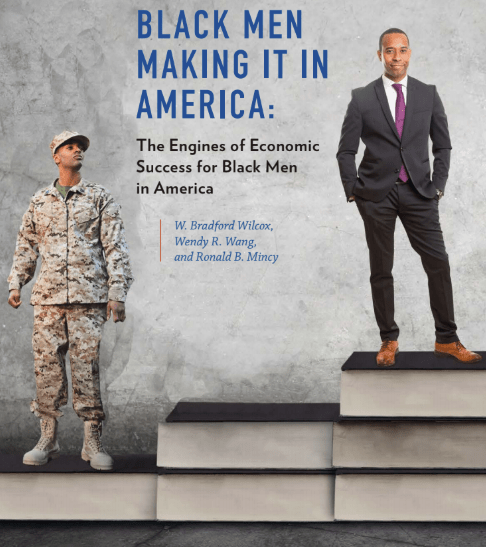
It is not sufficiently recognized how much progress blacks have been making in America, see here and here.  The key to this progress is “individual agency,” i.e. taking responsibility for the course of one’s own life.  The institutional engines of this progress for blacks are:

Capture147

  • College graduation
  • Full-time employment
  • Military service
  • The black church
  • Marriage

What do all of these institutions have in common?  They require and instill a sense of personal belonging and willingness to accept personal responsibility for one’s actions.

Unfortunately, “black culture today not only condones delinquency and thuggery but celebrates it. …  Hip hop music immortalizes drug dealers and murderers.”  Blacks who succeed often have to escape from this inner-city delinquent culture.

Conclusion.  Racism in America is not primarily the result of white privilege or perceived white cultural supremacy.  It is mainly the fault of destructive personal behavior by too many young blacks who are caught up in inner-city delinquincy, unable to escape from it into productive lifestyles, thereby creating a negative image of blacks.  It is not surprising that this turns off many people.

Sign-up for my Email Newsletter
Follow me on Facebook
Follow me on Twitter
What Blacks Need Are Better Economic Opportunities

Let’s agree that racism still exists in the U.S.  The disagreement is over how bad it is and what to do about it.  Naming white cultural supremacy as the villain is overkill and counter-productive, in my opinion.

Several prominent black scholars agree with me about this.  See, for example, Ward Connerly, John McWhorter, Ian Rowe, and Thomas Sowell.

What blacks need, most of all, are better economic opportunities so that more of them can move into the middle class or above.  Of course, this is already happening to a significant extent but more progress is readily doable.  Here is how:

  • Faster economic growth to push down the unemployment rate to 4% or less and keep it at this low level. This had already been accomplished before the pandemic hit and, hopefully, this high standard will soon be restored.
  • Better K-12 educational outcomes for all kids from low-income families. This can be done in at least two ways:
  • Early childhood education so that kids from low-income families are ready to succeed academically when they get to kindergarten and first grade.

    Capture144

  • Charter Schools in the large inner cities, see here and here. In many cases inner-city charter school students are outperforming their peers in the wealthiest and whitest suburban school districts in the country. Any honest assessment of the data shows that school choice is a boon for groups that have long been poorly served by the system.

Conclusion.  The most effective way to confront the latent racism that still exists in American society is by working to improve blacks economically rather than by claiming that white cultural supremacy excuses poor performance by blacks.  In short, we need to lift blacks up rather than tear whites down.

Sign-up for my Email Newsletter
Follow me on Facebook
Follow me on Twitter

Are White People Inherently Racist?

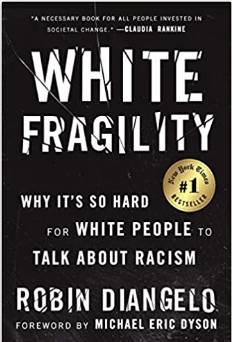
As most of my readers know, I live in Omaha NE.  There are 11 school districts in the Omaha metro area, and one of them, Millard Public Schools, the third-largest school district in Nebraska, has decided to require all 70 administrative personnel to read the book White Fragility by Ms. Robin Diangelo.

Capture143

In view of the current national climate of widespread racial protests, let’s take a look at what Diangelo is saying in her book.  The description below is mostly verbatim quotes  (largely from Chapter 2):

  • Racism is deeply embedded in the fabric of our society.
  • Racial disparity between whites and people of color continues to exist in every institution across society.
  • White privilege is the system of social advantages taken for granted by whites and that cannot be similarly enjoyed by people of color.
  • White fragility is the discomfort and anxiety exhibited by white people when challenged about their presumed superiority and entitlement.
  • White supremacy is the all-encompassing centrality and assumed superiority of people defined and perceived as white, and the practices based on this assumption.
  • The United States is a global power and the ideology of white supremacy is circulated globally, promoting the idea of whiteness as the ideal for humanity well beyond the West. White supremacy has shaped Western political thought for hundreds of years.
  • Naming white supremacy changes the conversation in two key ways: it makes the system visible and shifts the locus of change onto white people, where it belongs.

My summary of the book: White people benefit from a culture that perceives whiteness as the ideal.  Whites are defensive about discussing their racism (i.e. their overwhelming cultural advantages).  This system can only change if and when white people admit their responsibility and take the lead in dismantling our racist culture.

My response:  I agree that there is latent racism remaining in the U.S.  But the Diangelo description of our society is fundamentally misguided and damaging to all minorities, and especially to blacks, because it treats them as victims and implies that they are not responsible for their own behavior and status in life.

My solution to racism: coming next week.  Stay tuned!

Sign-up for my Email Newsletter
Follow me on Facebook
Follow me on Twitter
What is the Radical Left Really Complaining About?

America has some serious problems right now.  We are in the midst of a coronavirus pandemic which has caused a severe recession and high unemployment rate.  The brutal killing of George Floyd by a Minneapolis police officer has led to a nationwide outbreak of racial protests.  Although I believe that America is a great nation, and constantly getting better, I understand that many people have a different point of view.

Capture142

I have just come across an excellent essay, “Denying Progress is Key to the Left’s Rhetoric,” by Robert Doar from the American Enterprise Institute.  He points out that:

  • America has made much progress since 1960 and the work of the antiracist progressives is full of false comparisons of America’s present with its past especially in two important aspects of American life: civil rights and the fight to reduce poverty.
  • Black and minority legislators make up a significant portion of our federal and state legislatures, city governments, and public school boards. 57 current members of Congress are African American; in 1960 there were just 4.  African American college graduation rates have quadrupled over the past six decades.
  • Millions of black men have reached the upper-income bracket. Median black household income (adjusted for inflation) has risen 45% in the past 50 years.
  • What other country in the world can claim this kind of peaceful rise of a racial or ethnic minority? The U.S. remains the top destination of emigrating “people of color” as they escape the inadequacy of their own homelands.
  • Our nation’s war on poverty has been hugely successful. In both relative and absolute terms, there are fewer American children living in poverty than there were 40 years ago, despite a significant increase in population.
  • We spend $800 billion per year on anti-poverty programs that provide food, housing, and medical care for the needy. This spending is supplemented by billions more from charities and thousands of smaller efforts from churches, synagogues, and communities across the country.

Why are the radicals so effective at making it sound like all this progress is not true?  The answer to this question is one word: equality.  The equality promised by the Declaration of Independence and the Constitution is about equal treatment under the law, not equal outcomes in all aspects of life.  Individual outcomes in educational attainment, income, housing, and wealth still depend on individual effort and work.  The radical left is asking for far more than our limited system of government can, or should even try, to deliver.

Conclusion: The contest for the future of our country will be waged on this ground.  Our system of limited government is suited to achieve the goals of civil rights under law and the elimination of severe material hardship.  We have made huge progress in accomplishing these goals and will continue to do even more in the future.
Our system of government is not capable of producing guaranteed middle-class income for all, because this depends on individual effort.

Sign-up for my Email Newsletter
Follow me on Facebook
Follow me on Twitter
The Outlook on Independence Day 2020: More Positive than Negative!

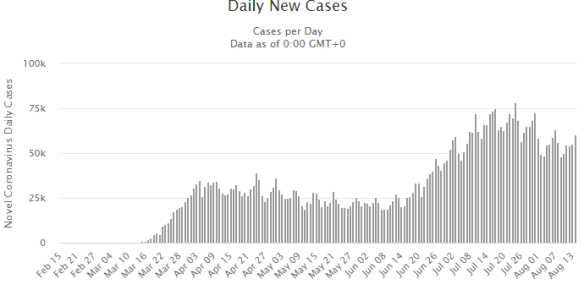
2020 has been a year like none other in recent memory.  The unemployment rate jumped from 3.5% in February to 14.7% in April.  New coronavirus infections settled down to 20,000 per day in May and now have spiked as high as 50,000 per day.  Race riots flared up in early June with demands to “defund the police.” As expected, China has finally cracked down on freedom of expression in Hong Kong.  Is the world, and especially the U.S., falling apart? There certainly are plenty of people who think so!

Capture140

But let’s take a sober look at what’s good and what’s bad about life in mid-2020 both in the U.S. and around the world.  First, the negative:

  • The coronavirus pandemic. It originated because of inadequate public health procedures in Wuhan, China, and is still rapidly spreading around the world.  New infections appeared to be under control in the U.S. at 20,000 per day but have now spiked as high as 50,000 per day.  At this point, we badly need an effective vaccine to quickly arrive on the scene.

    Capture141

  • The U.S. economy has been badly hurt with millions of workers being laid off by forced government business closures.
  • The U.S. national debt outlook, already horrible before the pandemic, is now even worse!
  • Race riots around the country as the result of the brutal killing of George Floyd by a Minneapolis police officer. This has led to all sorts of different suggestions for how to address racism in America.

But the highly unfortunate events so far this year need to be kept in perspective by comparison with the positive things that are also happening:

  • Freedom and democracy are thriving around the world. Freedom House data show that, despite today’s big challenges, the world today is far more free than unfree.  We can never take freedom for granted but it is alive and well today, both in America and many other parts of the world.

    Capture139

  • The U.S. economy appears to be bouncing back quickly from a deep recession. The unemployment rate dropped to 13.3% in May and then 11.1% in June.  The huge spike in new daily infections need not slow down this rapid recovery (more later).
  • The U.S. debt problem, as awful as it is, is still solvable. As soon as we are confident that the pandemic is under control and receding, it will be time to focus hard on fixing the debt.
  • Progress on racism. In spite of the latent racism in the U.S., it is important to be aware of the significant economic advances having been made by blacks in recent years.  See here and here.

Conclusion.  Yes, there are many problems in the world in mid-2020.  But we will get past the pandemic in the coming months.  Then our country’s fundamental economic and social strengths will again be quite apparent.  On Independence Day 2020 we should all be proud and grateful to be an American!

Sign-up for my Email Newsletter
Follow me on Facebook
Follow me on Twitter