Avoiding the Extremes on Either Side


Not only is Washington politics already hyper-partisan, but both parties are continuing to move to even greater extremes, see here and here.
Here are two examples of extreme positions now being espoused by major elements of one or the other of the two parties:

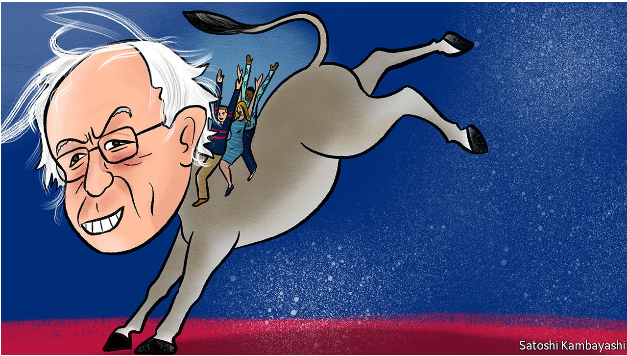
  • Single payer healthcare. The failure of the GOP effort to repeal the Affordable Care Act this past summer means that (the goal of) universal healthcare is here to stay. The ACA expands access to healthcare but does nothing to control costs. Single payer, Medicare for All, would control costs but then we end up with socialized medicine. The only way to establish a cost efficient free market healthcare system is to remove, or at least limit, the tax exemption for employer provided care and to set up high deductible catastrophic care supplemented by health savings accounts to pay for routine expenses. This would compel everyone to pay close attention to the cost of their own healthcare.
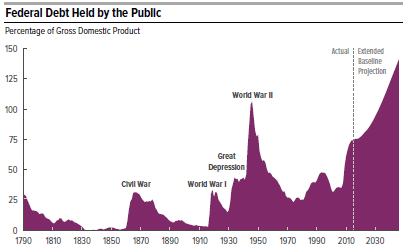
  • Tax cuts instead of tax reform. Tax reform, i.e. lowering both corporate and individual tax rates, paid for by closing loopholes and shrinking deductions, is an excellent way to speed up economic growth and thereby create more and better paying jobs. But it is imperative to do this in a revenue neutral manner, i.e. without increasing our annual deficits. Our debt (the public part on which we pay interest) now stands at 77% of GDP, the highest it has been since the end of WWII, and is predicted by the Congressional Budget Office to keep getting larger without major changes in public policy.
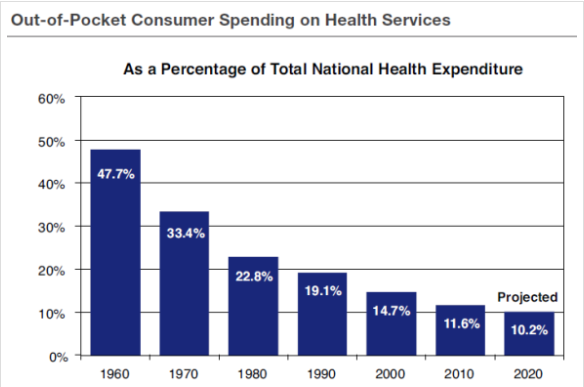
Conclusion. The U.S. badly needs a more cost efficient healthcare system and a simpler and more efficient tax system. But there are right ways and wrong ways to do both of these things.  Single payer healthcare and (unpaid for) tax rate cuts are the wrong way to proceed.  In each case, no action at all is much better than getting it wrong.
Follow me on Twitter 
Follow me on Facebook 

New Urgency in Deficit and Debt Control


The general theme of this blog is major fiscal and economic issues facing the U.S. such as slow economic growth and huge debt. But our currently low unemployment rate of 4.4% and several trends, here and here, suggest that economic growth may already be starting to pick up.
This means that our huge debt, now 77%, for the public part on which we pay interest, the highest it has been since right after WWII, is now one of the very biggest problems facing our country.
Consider:

  • The only practical way to “solve” our debt problem (so to speak) is for each year’s annual deficit to be less than economic growth for that year. When this happens, then the debt will decrease as a percentage of GDP. If this pattern were to hold year after year, then debt would continue to shrink. This is exactly what happened from 1946 until about 1980 but since then the pattern has reversed and the debt has increased. It has grown especially fast since the financial crisis in 2008 (see chart).
  • The Fiscal Year 2017 deficit is $700 billion out of a total GDP of $20 trillion, which computes to 3.5% of GDP, well above the 2% annual growth of GDP for the 2017 FY. This means that our debt got worse in 2017.
  • Congress has already approved $15 billion in disaster relief for Hurricane Harvey. Now the White House is asking for $29 billion more ($12.8 billion for new disaster relief, especially for Puerto Rico, and $16 billion for the National Flood Insurance Program).  Congress has also approved a big increase in the Defense Budget, to $700 billion, for the 2018 FY.
  • Congress will soon be approving a budget for 2018 and then start working on a tax reform package. Given the likely increases in both military spending and disaster relief described above, it is now even more important for the new budget to show overall spending restraint and for the tax reform package to be revenue neutral.

Conclusion. Let’s hope that Congress gets the message about the new urgency of our debt problem and acts accordingly!

Follow me on Twitter 
Follow me on Facebook 


Fundamental Principle for Tax Reform II. What to Avoid


In my last post I made the case that the two fundamental principles for effective tax reform are:

  • Faster economic growth, to create more jobs and bigger pay raises.
  • Revenue neutrality, since more debt at this time is just too risky.

And then I went on to suggest the specific changes in the tax code which would achieve these goals:

  • Reducing the corporate tax rate to approximately 20%.
  • Full expensing for business investment replacing depreciation spread out over many years.
  • Simplification of rules for individuals such as fewer tax rates and fewer credits.
  • Achieving revenue neutrality by eliminating as many deductions as necessary to pay for the above tax rate cuts.

There are different ways to accomplish all this and I recently described one attractive plan put together by the Tax Foundation. The Republican Congressional Leadership (Big Six) has proposed a different plan which has been analyzed by the nonpartisan Committee for a Responsible Federal Budget.  Unfortunately CRFB concludes that this plan will cost $2.2 trillion over ten years in lost revenue.  But it could be modified in the following ways to become revenue neutral:

  • The mortgage interest deduction is maintained but limited to one dwelling and $500,000, down from the current limit of two homes and $1 million.
  • The tax exemption for employer provided health insurance is limited. This not only increases tax revenue but also forces the 150 million Americans who receive health insurance from their employer to take an active role in holding down the cost of healthcare.
  • Drop the proposal of establishing a maximum “pass through” rate of 25% for business owners. Any such proposal would be subject to wide spread abuse. Businesses would be benefitting from the full expensing provision above and their owners should pay taxes at the same rates as everyone else.
  • Keep the estate tax until annual deficits are greatly reduced. It only brings in $20 billion per year but every little bit helps.

Conclusion. These common sense changes in the Big Six plan would make it revenue neutral and still capable of achieving a significant boost to the economy.

Follow me on Twitter 
Follow me on Facebook 


Fundamental Principles for Tax Reform


I have been criticizing the Republican Congress lately for straying from fundamentals in attempting to reform healthcare and tax policy. What are the fundamentals for tax reform?  In my opinion they are:

  • Faster economic growth. The economy has averaged only 2% annual growth since the end of the Great Recession in June 2009. The unemployment rate has slowly fallen to the current 4.4% level and a labor shortage is now developing. But wage gains for the broad middle class and especially blue collar workers have been minimal. Faster growth will put pressure on employers to raise wages faster to acquire the skilled workers they need.
  • Revenue neutrality. With the public debt (on which we pay interest) now 77% of GDP, the highest since the end of WWII, and predicted by the Congressional Budget Office to keep getting steadily worse without major changes in policy, it would be the height of irresponsibility for Congress to approve tax changes which increase our annual deficits.

Given these two basic principles, what should be the specific changes made to tax law? Here are my priorities:

  • Lowering the corporate tax rate from its current level of 35% to a competitive level, approximately 20%, with other developed countries. This would be a huge incentive for our multinational corporations to bring their foreign profits back home.
  • Full expensing for business investment is allowed, replacing depreciation over a period of years, to speed up new investment.
  • Simplification of the rules for individuals, such as with fewer tax rates and fewer credits, so that fewer errors will be made and a greater proportion of true tax liabilities will be collected.
  • Create revenue neutrality for the above tax rate cuts by eliminating, or at least shrinking, many deductions and closing loopholes.

Conclusion. Tax reform will be highly beneficial for the economy if it is done correctly. This means ignoring many of the special interest provisions which have also been suggested for conclusion.  I will discuss these in my next post.

Follow me on Twitter 
Follow me on Facebook 

Why Is Political Progress So Difficult in the United States?


With Donald Trump expanding the culture wars and the Democrats lining up with the progressive policies of Bernie Sanders, the national political scene seems to be getting more confusing all the time.


And yet there is remarkable consensus on many levels about what the country really needs:

  • Faster economic growth would help provide more jobs and better paying jobs for the blue-collar workers which both parties are trying to appeal to.
  • Tax reform meaning to reduce tax rates, shrink deductions and generally simplify the tax code has widespread bipartisan support, as one way to provide the growth which everyone wants.
  • Shrinking the debt as a percentage of GDP is widely recognized as critical to the future well-being of our country and especially for the poor who are most dependent on social welfare programs.  How to curtail spending sufficiently to get this done is inevitably a highly contentious issue.
  • Healthcare for (almost) all is now the law of the land, given that the GOP has failed to repeal the Affordable Care Act. The emphasis going forward should be to control healthcare costs for both individuals and families as well as for the federal government (the taxpayers).
  • Immigration and DACA. There appears to be strong bipartisan support in Congress for giving the Dreamers legal status in the U.S. With a very low (4.4%), and still dropping, unemployment rate, a huge labor shortage is developing in many states, including Nebraska. What the U.S. needs is an expanded guest worker visa program so that all employers are able to find the (legal) employees they need to conduct business. Perhaps DACA reform will lead to broader immigration reform as well.

Conclusion. The above issues should be largely amenable to bipartisan consensus. Both parties would benefit from putting aside petty differences and working together to solve them.

Follow me on Twitter 
Follow me on Facebook 


Why Can’t Democrats and Republicans Work Together?


I am a non-ideological fiscal conservative and social moderate. I agree with Republicans on some issues and Democrats on others.  It seems to me that there is a lot of common ground between the two national parties and plenty of opportunity for working together.


For example:

  • The economy. Donald Trump was elected President with the support of blue-collar workers. He wants to help them out by speeding up economic growth.  But the Democrats also want to give a boost to the working class.  Why not lower the corporate tax rate to encourage multi-national companies to bring their profits back to the U.S.? Why not exempt small community banks from Dodd-Frank so they can lend more money to main street businesses?
  • Sustainable healthcare. After failing to repeal and replace the ACA, Republicans now have to accept that universal health insurance is here to stay even though it needs much better cost control. The popularity of employer provided health insurance makes single payer healthcare unacceptable to many. Two major changes are needed to lower healthcare costs.  The ACA Cadillac tax should be replaced by an upper limit on the tax exemption for employer provided insurance. The Medicare Part B premium covers only 25% of the cost of that program and should be increased on a means adjusted basis.
  • Immigration policy. With the unemployment rate now 4.4% and dropping, a huge labor shortage is beginning to develop which will retard economic growth. We now need more skilled and unskilled immigrants alike.  An expanded guest-worker program to meet the needs of employers should be created. Enhanced border security can be part of the mix.
  • Military spending. In a dangerous world we need a strong military defense. But there is a lot of waste in the Pentagon budget. Do we really need 800 foreign bases in over 70 different countries?  Nebraska’s own Chuck Hagel identified $25 billion a year in military waste while he was Secretary of Defense.

Conclusion. Here are just a few ways that the two parties can work together to address some of our biggest national problems. Faster economic growth and fiscal restraint just make common sense.

Follow me on Twitter 
Follow me on Facebook 

Constraints on Economic Growth


Many workers feel left out in today’s slow growth economy. Faster growth will improve their prospects by creating more and better paying jobs.
The private sector economist, Ruchir Sharma, warns however that faster growth will be hard to achieve.  He says that our relatively slow GDP growth of 2% per year since the end of the Great Recession has been caused by the Three Ds: depopulation, deleveraging and deglobalization.


In particular:

  • Depopulation. The baby boom caused explosive population growth after WWII. Even in the early 2000s the working age population in the U.S. was growing by 1.2% per year but is now predicted by the CBO to grow by only .5% per year in the coming years. More immigration, not less, would help in this respect.
  • Deleveraging. Since the Financial Crisis consumers have cut back on borrowing. Also the Dodd-Frank Act has restricted bank lending for business investment. Exempting small community banks from Dodd-Frank would help in this respect.
  • Deglobalization. Cross-border trade expanded from 30% of GDP in 1980 to 60% of GDP in 2008 but has since fallen back to 55% of GDP. Upon taking office President Trump immediately killed the Trans Pacific Partnership and is now renegotiating NAFTA. Any falloff in American export business will hurt economic growth.

In fact, there are countervailing trends. I have previously discussed evidence for the likelihood of faster growth based on the infusion of information technology into physical industries over the next 15 years.

Conclusion. The best way to improve employment prospects for the broad middle class, including blue-collar workers, is by making the economy grow faster. The constraints on faster growth are real but can be alleviated with sensible policies.

Follow me on Twitter 
Follow me on Facebook 

Donald Trump and American Progress


I am a non-ideological (registered independent) fiscal conservative and social moderate. I was not very excited about either presidential candidate last fall but finally decided to vote for Clinton because of Trump’s sleaziness.
As it turned out Mr.Trump was elected because of his strong support from the white working class, especially in the upper Midwestern states of Wisconsin, Michigan and Pennsylvania.  Interestingly, the Democrats are responding by proposing legislation to try to appeal more strongly to blue-collar workers.
Of course I disapprove of Donald Trump’s poor handling of the Charlottesville tragedy but I try to avoid being distracted by all of the drama and rather stay focused on his policies and actions.  In this respect there are both plusses and minuses.


On the positive side:

  • North Korea. He is handling this crisis well simply by working through the UN to condemn North Korea’s provocative testing of ballistic missiles. Also his Administration has clearly stated that the goal of U.S. policy is to denuclearize the Korean peninsula, not to achieve regime change in North Korea.
  • The economy is still chugging along at 2% annual growth. On the deregulation front, the annualized pace of new regulations for 2017 is 61,000 pages, down from 97,000 in 2016. This is the lowest level since the 1970s and has the potential to speed up growth.

On the negative side:

  • NAFTA renegotiation is just getting started. Any shrinkage of U.S. exports will badly hurt the economy, especially in states like Nebraska which depend so much on agricultural exports.
  • Immigration. Mr. Trump proposes to dramatically decrease annual legal immigration quotas, especially for low-skilled workers. This is a very poor idea  which will hurt the economy, especially in states like Nebraska which have low unemployment rates.

Conclusion. President Trump’s record at this point is mixed, all the more so since the two very important issues of the 2018 budget and tax reform have yet to be resolved in Congress. Mr. Trump’s election may or may not be good for progress in America.  We simply don’t know yet.

Follow me on Twitter 
Follow me on Facebook 

The Major Challenges Facing the United States


As I frequently remind my readers I am a fiscal conservative and a social moderate. I usually write about particular economic and fiscal problems facing our country.  But every now and then I like to step back and view our overall situation at one time.  The last time I did this was here.
Let’s take another look:

  • The economy is puttering along at 2% annual growth with a relatively low unemployment rate of 4.3% and a good indication that faster growth, up to 2.5% annually, is right around the corner, see here and here.  The economy, at least, is headed in the right direction.
  • Foreign policy. Long term our biggest problem is China, which has four times as many people as we do and is growing economically three times as fast. China will soon surpass us in both economic and military strength. Our best insurance for this inevitable day is to have lots of democratic friends around the world.
  • Global warming is real and getting worse. Our best strategy for dealing with it is a revenue neutral carbon tax, rather than depending on ad hoc regulations like the Clean Power Plan and ever increasing auto emission standards. If the U.S. demonstrates its seriousness with a carbon tax, it is likely that the U.S. and China (which is highly polluted) could work together to establish world-wide carbon emission standards.
  • National debt, currently 77% of GDP (for the public debt on which we pay interest), is predicted by the CBO to keep getting steadily worse (see chart)  without major changes in current policy. Right now our approximately $14.3 trillion public debt is almost “free” money because interest rates are so low. But sooner or later interest rates will return to more normal levels and, when this happens, interest payments on the debt will rise by hundreds of billions of dollars per year. This will inevitably lead to a severe fiscal crisis, far worse than the Financial Crisis of 2008.

Conclusion. I am relatively optimistic that we can maintain good relations with China and will have the good sense to better control carbon emissions. But our debt problem is politically very difficult to address because it will require spending curtailments.  How do we successfully address such a huge problem?

Follow me on Twitter 
Follow me on Facebook 


We Need More Low-Skilled Immigrant Labor, Not Less


Our economy is chugging along at 2% annual growth of GDP, not spectacular but not awful either. The unemployment rate has dropped to 4.3%, and low-wage earners are beginning to see decent pay raises. Furthermore there are good indications that GDP growth may rise in the near future to at least 2.5%, see here and here.
As growth increases, unemployment continues to drop, and wages increase more quickly, severe labor shortages in certain job categories are likely to develop.  As the New York Times economics reporter, Eduardo Porter, points out, “The Danger from Low-Skilled Immigrants: Not Having Them.”


Consider:

  • Eight of the fifteen occupations expected to experience the fastest growth – personal care and home health aides, food preparation workers, janitors and the like – require no schooling at all.
  • Low-skilled immigration does not just knock less-educated Americans out of their jobs, it often leads to the creation of new jobs – at better wages.
  • The strawberry crop in California owes its existence to cheap immigrant pickers. They are sustaining better paid American workers in the strawberry patch to market chain who would have to find other employment if the U.S. imported the strawberries directly from Mexico.

  • The benefits of immigration come from occupational specialization. Immigrants concentrated in more manual jobs free up natives to specialize in more communication-intensive (English speaking) jobs.
  • The average American worker is more likely to lose than to gain from immigration restrictions. Halting immigration completely would reduce annual economic growth by .3%.
  • The Pew Research Center estimates that about 30,000 unauthorized immigrants work in Nebraska, 3.2% of Nebraska’s total labor force. They are heavily represented in a handful of industries, making up 18% of Nebraska’s construction workers, 9% of production workers, and 5% of farm laborers.  With an unemployment rate hovering around 3%, the Nebraska economy would be severely stressed without these immigrant workers.

Conclusion. Both in Nebraska and nationwide, the U.S. economy has a strong need for immigrant workers. An adequate guest worker visa program is badly needed to provide legal status to these workers who are so critical to the success of the U.S. economy.

Follow me on Twitter 
Follow me on Facebook