
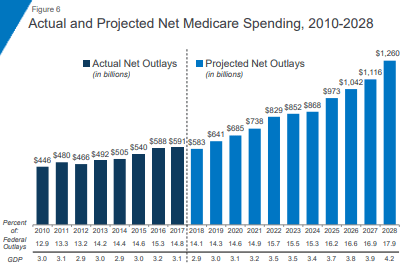
As the readers of this blog know, I focus on what I consider to be our country’s biggest problems. Right now the biggest problem of all is our rapidly growing and largely out-of-control national debt. The only way we will solve our debt problem is to control the growth of entitlement spending, especially for public healthcare programs such as Medicare and Medicaid. But the basic problem with these programs is the overall cost of healthcare in the U.S. which is far more expensive than in any other developed country.

What are our options for controlling healthcare costs in the U.S.?
- In “Overcharged”, the authors claim that $1 trillion of the total annual cost of U.S. healthcare of $3.5 trillion, is due to fraud, waste and abuse. There are thousands of whistleblowers in the healthcare industry who share in funds recovered from fraud but recovered funds are just a drop in the bucket to what is lost.
- The price of new drugs can be outrageous. For example, the drug Soliris, to treat a rare blood disease affecting 10,000 people in North America and Europe costs $440,000 per patient per year for the rest of their lives. Clearly at least some government regulation of drug prices is justified.
- “Healthcare is expensive because it is insured.” If individuals paid directly for routine healthcare, costs would go way down. Medical tourism and retail clinics such as Urgent Care would flourish, doctors would compete on price, and cost of treatment would drop dramatically. Of course, we would all still need high deductible catastrophic insurance for major health problems such as heart attacks and cancer.

- There are a variety of different models for healthcare systems in other developed countries but they all have one thing in common: “What other countries have learned is that without some form of price regulation, there is no effective check on prices.”
Summary. There are various ways to lower the cost of healthcare in the U.S. such as cracking down harder on fraud and abuse, doing a better job of regulating new drug approvals and encouraging direct payment for routine healthcare by increasing the use of catastrophic health insurance. But these approaches are all hard to implement and the only practical alternative is for government price regulation of some sort. Healthcare prices must be dramatically lowered and if the free market can’t get the job done, then government price regulation will inevitably result.











 It Does Not Add Up