What Ever Happened to Fiscally Responsible Tax Reform?


“I think this level of national debt is dangerous and unacceptable. My preference on tax reform is that it be revenue neutral.  What I’m hoping we will avoid is a trillion dollar stimulus.  Take you back to 2009.  We borrowed $1 trillion and nobody could find that it did much of anything.  So we need to do this carefully and correctly, and the issue of how to pay for it needs to be dealt with responsibly”

Senator Mitch McConnell (R, KY), 2016

Here is where we are today:

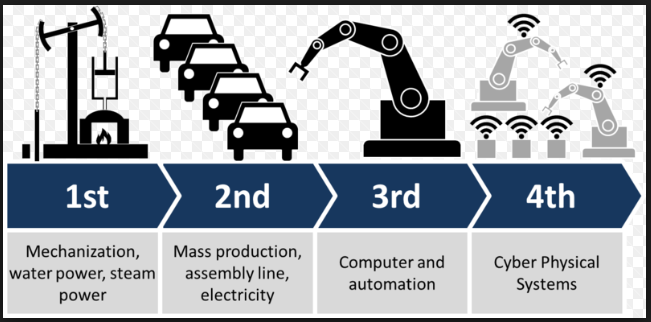
  • The world has seen remarkable human progress over the past 200 years. What has brought this about is specialization and trade, i.e. economic growth.
  • Since the end of the Great Recession in June 2009, economic growth in the U.S. has averaged just 2.1%, a remarkably slow recovery by historical standards. This has led to stagnant wage growth especially for blue collar workers. Finally growth is up over 3% for the past two quarters and wage growth is surging.
  • The U.S. corporate tax rate at 35% is not internationally competitive and encourages multinational corporations to move their operations overseas. A lower rate of 20% or so would encourage U.S. multinationals to bring their profits home and also encourage foreign companies to set up shop in the U.S.
  • What all of this means is that we still need tax reform (i.e. lower tax rates) but not fiscal stimulus.
  • The Republican tax plan now moving through Congress will increase our already outrageously excessive debt by $1 trillion over ten years, according to the Joint Committee on Taxation, the official scorekeeper for the U.S. Senate.
  • The Republican Congress will be making a huge mistake by implementing the current plan which has now passed both the House and the Senate. The GOP will no longer be able to make a credible case that it is the party of fiscal responsibility.
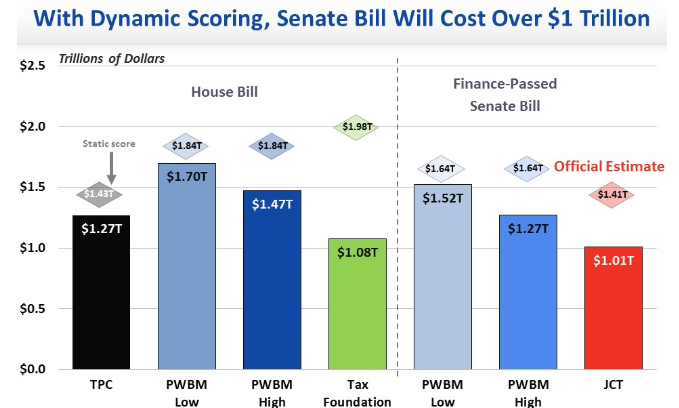
Conclusion. With a (public, on which we pay interest) debt of $15 trillion, and growing rapidly, the U.S. is approaching fiscal insolvency. The Republican tax plan will add an additional $1 trillion to this debt over the next ten years.  This is unconscionable behavior.

Follow me on Twitter 
Follow me on Facebook 
 

Understanding Economic Growth


One of the major topics I discuss on this blog is:

  • Economic growth, in particular the fact that the U.S. economy has grown at the relatively slow rate of 2.1% per year since the end of the Great Recession in June 2009. It appears, however, that the economy may now be starting to pick up speed.

There are plenty of “experts” who say that it is unrealistic to expect economic growth to continue indefinitely at the same level (3% on average) which has prevailed since the end of WWII because:

  • Resources are limited. The earth is finite but it is also vast. It is unlikely that any mineral or even energy source such as fossil fuels will be depleted for hundreds, if not thousands, of years. If and when any particular resource becomes scarce, human ingenuity will be able to find a replacement.
  • Population growth is slowing down. It is likely that human population worldwide will level off this century somewhere between 9 and 10 billion. This is highly desirable but is unlikely to slow down economic growth. As income and education levels rise, productivity and GDP per person will also increase.
  • Growth tends to be debt financed which is unsustainable.  I agree with this reservation. This is the one problem, if not solved, which has the potential to derail continued steady progress.

The remarkable human progress of the last 200 years is likely to continue indefinitely.  In particular:

Conclusion. The world has enjoyed remarkable human progress in the last two hundred years, in the form of steady economic growth, and this progress is likely to continue indefinitely into the future.

Follow me on Twitter 
Follow me on Facebook 

Responding to Economic Trends


In my most recent posts I have been making the case that

  • The American economy is in basically good shape with a low unemployment rate of 4.2% and the likelihood of somewhat faster growth in the near future.
  • Income inequality and poverty are real problems, see here and here, but there are reasonable and effective ways to address them.
  • Rapidly accumulating debt is by far our most critical unsolved problem which is all the more frightening because our polarized political system does not seem capable of addressing it.

The Bureau of Labor Statistics has just released its projections of what the U.S. economy will look like in 2026.


The highlights are:

  • More dominated by the service sector amid the continuing erosion of manufacturing jobs (see two charts below).

  • More polarized in both earnings and geography (see top and bottom charts).

  • More tilted towards jobs which require at least a bachelor’s degree (see bottom chart).

The BLS report has several ramifications for public policy as follows:

  • Improved educational outcomes are needed all along the line: K-12 basic and vocational, training programs for the many skilled jobs going begging and also more low-cost college programs.
  • More low-skill immigrants, not fewer, are needed to take on the expanding number of low-wage jobs, such as caring for the growing numbers of elderly, which Americans are not willing to do.

Conclusion. These economic trends towards more earnings and geographical polarization could easily make our current political polarization even worse than it already is. This means it is all the more important to make sure that we keep speeding up economic growth, better address income inequality and poverty and get our gargantuan debt problem under control.

Follow me on Twitter 
Follow me on Facebook 


Which Is Worse: Republican Hypocrisy about Debt or Democratic Complacency about It?


My recent posts about the American Idea have argued that our country has a great future before it.  We have a strong and prosperous economy and are the world’s leading innovator.  Furthermore there are clear cut and effective ways to address the income inequality and poverty which hold back many Americans from fully sharing the benefits of our remarkably successful society.
But there is one huge problem our political system is ignoring which will lead to a major crisis if left unattended much longer.


I am referring, of course, to our gargantuan:

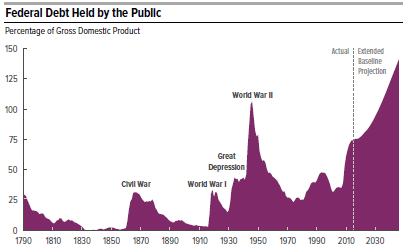
  • National Debt, now sitting at 77% of GDP (for the public part on which we pay interest), the largest it has been since the end of WWII. It is predicted by the Congressional Budget Office to keep steadily getting worse without major changes in current policy. Right now all of this debt is essentially “free money” because interest rates are so low.

Republicans are very good at deploring the debt but quick to forget about it, when it gets in the way of cutting taxes.  Note that:

  • Economic growth is created by tax cuts but only 10-20% of the lost revenue from tax cuts is offset by new growth.

Democrats, on the other hand, don’t take the debt seriously, except when arguing against Republican tax cuts. Debt deniers claim that the risk of government overspending is inflation, not bankruptcy. What they don’t understand is that

  • Interest rates will return to more normal (and much higher) historical levels eventually and, when this happens, interest payments on the debt will skyrocket by hundreds of billions of dollars every year. This will crowd out all sorts of spending on popular domestic programs. It is likely to lead to a new fiscal crisis, much worse than the Financial Crisis of 2008.

Conclusion. For all of our nation’s great strengths, we are in a very serious fiscal pickle, with no clear cut path of orderly resolution. Realistically our debt problem cannot be wound down without committed Presidential leadership and this is unlikely to happen anytime soon.

Follow me on Twitter 
Follow me on Facebook 

Another Reason for Tax Reform to Be Revenue Neutral


My last post noted that with our unemployment rate down to 4.2% and with median household income having increased by 3.2% in 2016, the emphasis now should be totally directed to addressing our number one long term problem:

  • Massive national debt. With a deficit of $668 billion for Fiscal Year 2017, our debt now stands at 77% of GDP (for the public part on which we pay interest), the highest it has been since the end of WWII. It is predicted by the Congressional Budget Office to go much higher without significant changes in current policy.

Obviously our annual deficits are way too large and we need to shrink them dramatically. One way to start doing this is to speed up economic growth which will increase tax revenue especially by creating more jobs and better paying jobs.  Faster economic growth is quite feasible and this is one of the main goals of tax reform, now being considered by Congress.  But it needs to increase growth without increasing the deficit which is entirely doable.

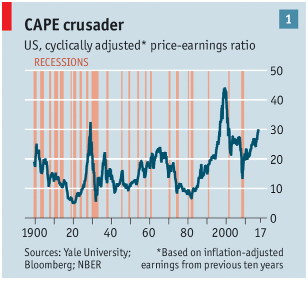
But there is another big reason for revenue neutral tax reform as well. The dollar has depreciated by 10% in 2017 while the stock market has increased by 13%.  The S&P price-earnings ratio has risen to 30 at present which is way above average.  All of this means that we are in a loose money financial bubble.  For Congress to make our annual deficits worse than they already are, with deficit increasing tax reform, would make this bubble even bigger and therefore be highly irresponsible.

Conclusion. When interest rates return to much higher normal levels, as they inevitably will, interest payments on our debt will grow dramatically and cause a huge budget crunch. If ignored, this situation will eventually lead to a new fiscal crisis, much worse than the Financial Crisis of 2008.

Follow me on Twitter 
Follow me on Facebook 

The Republicans Need to Adopt a Responsible Budget Plan for 2018


With the unemployment rate now down to 4.2% and household incomes having recently reached an all-time high, the first order of government business should be:

  • Fiscal responsibility which means to start reducing the size of the national debt, which is now 77% of GDP (for the public part on which we pay interest), the highest since the end of WWII. The only practical way to do this is to begin to shrink the size of our annual deficits from the very high level of almost $700 billion for the 2017 Fiscal Year which just ended on September 30.
  • A responsible budget for the 2018 Fiscal Year can have a deficit of at most $500 billion which amounts to 2.5% of our total GDP of $20 trillion. A realistic forecast for economic growth in the coming year is 2.5% of GDP which means that a deficit for the 2018 FY of $500 billion would at least not increase our debt as a percentage of GDP.

  • Budgets for later years need to actually shrink (not just hold steady) the debt. The goal should be to decrease annual deficits down close to zero which would mean achieving a balanced budget. The Congressional Budget Office projects that the cumulative deficits will climb by $10 trillion over the next ten years under current policy, pushing the debt up to 91% of GDP in 2027.
  • Tax reform, to be considered next by Congress, is likely to stall if it is not pursued within a sensible fiscal policy just as healthcare reform stalled last summer. Sensible tax reform, both growth enhancing and revenue neutral, is quite doable  and will make the debt problem that much easier to solve.

Conclusion. It cannot be emphasized too strongly that our rapidly growing debt puts us in a dire fiscal bind. We must change policy significantly and soon or else we will put our prized liberty and prosperity in grave danger.

Follow me on Twitter 
Follow me on Facebook 

Avoiding the Extremes on Either Side


Not only is Washington politics already hyper-partisan, but both parties are continuing to move to even greater extremes, see here and here.
Here are two examples of extreme positions now being espoused by major elements of one or the other of the two parties:

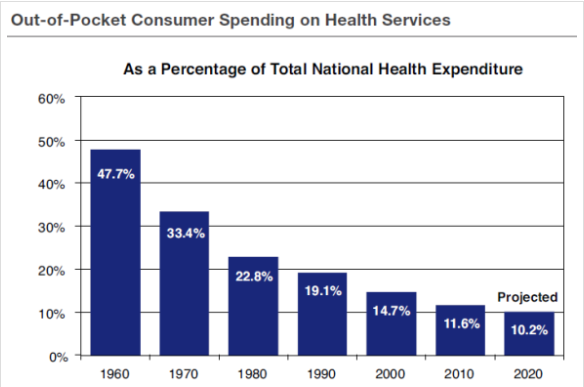
  • Single payer healthcare. The failure of the GOP effort to repeal the Affordable Care Act this past summer means that (the goal of) universal healthcare is here to stay. The ACA expands access to healthcare but does nothing to control costs. Single payer, Medicare for All, would control costs but then we end up with socialized medicine. The only way to establish a cost efficient free market healthcare system is to remove, or at least limit, the tax exemption for employer provided care and to set up high deductible catastrophic care supplemented by health savings accounts to pay for routine expenses. This would compel everyone to pay close attention to the cost of their own healthcare.
  • Tax cuts instead of tax reform. Tax reform, i.e. lowering both corporate and individual tax rates, paid for by closing loopholes and shrinking deductions, is an excellent way to speed up economic growth and thereby create more and better paying jobs. But it is imperative to do this in a revenue neutral manner, i.e. without increasing our annual deficits. Our debt (the public part on which we pay interest) now stands at 77% of GDP, the highest it has been since the end of WWII, and is predicted by the Congressional Budget Office to keep getting larger without major changes in public policy.

Conclusion. The U.S. badly needs a more cost efficient healthcare system and a simpler and more efficient tax system. But there are right ways and wrong ways to do both of these things.  Single payer healthcare and (unpaid for) tax rate cuts are the wrong way to proceed.  In each case, no action at all is much better than getting it wrong.

Follow me on Twitter 
Follow me on Facebook 

New Urgency in Deficit and Debt Control


The general theme of this blog is major fiscal and economic issues facing the U.S. such as slow economic growth and huge debt. But our currently low unemployment rate of 4.4% and several trends, here and here, suggest that economic growth may already be starting to pick up.
This means that our huge debt, now 77%, for the public part on which we pay interest, the highest it has been since right after WWII, is now one of the very biggest problems facing our country.
Consider:

  • The only practical way to “solve” our debt problem (so to speak) is for each year’s annual deficit to be less than economic growth for that year. When this happens, then the debt will decrease as a percentage of GDP. If this pattern were to hold year after year, then debt would continue to shrink. This is exactly what happened from 1946 until about 1980 but since then the pattern has reversed and the debt has increased. It has grown especially fast since the financial crisis in 2008 (see chart).
  • The Fiscal Year 2017 deficit is $700 billion out of a total GDP of $20 trillion, which computes to 3.5% of GDP, well above the 2% annual growth of GDP for the 2017 FY. This means that our debt got worse in 2017.
  • Congress has already approved $15 billion in disaster relief for Hurricane Harvey. Now the White House is asking for $29 billion more ($12.8 billion for new disaster relief, especially for Puerto Rico, and $16 billion for the National Flood Insurance Program).  Congress has also approved a big increase in the Defense Budget, to $700 billion, for the 2018 FY.
  • Congress will soon be approving a budget for 2018 and then start working on a tax reform package. Given the likely increases in both military spending and disaster relief described above, it is now even more important for the new budget to show overall spending restraint and for the tax reform package to be revenue neutral.

Conclusion. Let’s hope that Congress gets the message about the new urgency of our debt problem and acts accordingly!

Follow me on Twitter 
Follow me on Facebook 
 

Fundamental Principle for Tax Reform II. What to Avoid


In my last post I made the case that the two fundamental principles for effective tax reform are:

  • Faster economic growth, to create more jobs and bigger pay raises.
  • Revenue neutrality, since more debt at this time is just too risky.

And then I went on to suggest the specific changes in the tax code which would achieve these goals:

  • Reducing the corporate tax rate to approximately 20%.
  • Full expensing for business investment replacing depreciation spread out over many years.
  • Simplification of rules for individuals such as fewer tax rates and fewer credits.
  • Achieving revenue neutrality by eliminating as many deductions as necessary to pay for the above tax rate cuts.

There are different ways to accomplish all this and I recently described one attractive plan put together by the Tax Foundation. The Republican Congressional Leadership (Big Six) has proposed a different plan which has been analyzed by the nonpartisan Committee for a Responsible Federal Budget.  Unfortunately CRFB concludes that this plan will cost $2.2 trillion over ten years in lost revenue.  But it could be modified in the following ways to become revenue neutral:

  • The mortgage interest deduction is maintained but limited to one dwelling and $500,000, down from the current limit of two homes and $1 million.
  • The tax exemption for employer provided health insurance is limited. This not only increases tax revenue but also forces the 150 million Americans who receive health insurance from their employer to take an active role in holding down the cost of healthcare.
  • Drop the proposal of establishing a maximum “pass through” rate of 25% for business owners. Any such proposal would be subject to wide spread abuse. Businesses would be benefitting from the full expensing provision above and their owners should pay taxes at the same rates as everyone else.
  • Keep the estate tax until annual deficits are greatly reduced. It only brings in $20 billion per year but every little bit helps.

Conclusion. These common sense changes in the Big Six plan would make it revenue neutral and still capable of achieving a significant boost to the economy.

Follow me on Twitter 
Follow me on Facebook 
 

Fundamental Principles for Tax Reform


I have been criticizing the Republican Congress lately for straying from fundamentals in attempting to reform healthcare and tax policy. What are the fundamentals for tax reform?  In my opinion they are:

  • Faster economic growth. The economy has averaged only 2% annual growth since the end of the Great Recession in June 2009. The unemployment rate has slowly fallen to the current 4.4% level and a labor shortage is now developing. But wage gains for the broad middle class and especially blue collar workers have been minimal. Faster growth will put pressure on employers to raise wages faster to acquire the skilled workers they need.
  • Revenue neutrality. With the public debt (on which we pay interest) now 77% of GDP, the highest since the end of WWII, and predicted by the Congressional Budget Office to keep getting steadily worse without major changes in policy, it would be the height of irresponsibility for Congress to approve tax changes which increase our annual deficits.

Given these two basic principles, what should be the specific changes made to tax law? Here are my priorities:

  • Lowering the corporate tax rate from its current level of 35% to a competitive level, approximately 20%, with other developed countries. This would be a huge incentive for our multinational corporations to bring their foreign profits back home.
  • Full expensing for business investment is allowed, replacing depreciation over a period of years, to speed up new investment.
  • Simplification of the rules for individuals, such as with fewer tax rates and fewer credits, so that fewer errors will be made and a greater proportion of true tax liabilities will be collected.
  • Create revenue neutrality for the above tax rate cuts by eliminating, or at least shrinking, many deductions and closing loopholes.

Conclusion. Tax reform will be highly beneficial for the economy if it is done correctly. This means ignoring many of the special interest provisions which have also been suggested for conclusion.  I will discuss these in my next post.

Follow me on Twitter 
Follow me on Facebook