Shall I Enter the Nebraska Republican Primary for U.S. Senate?


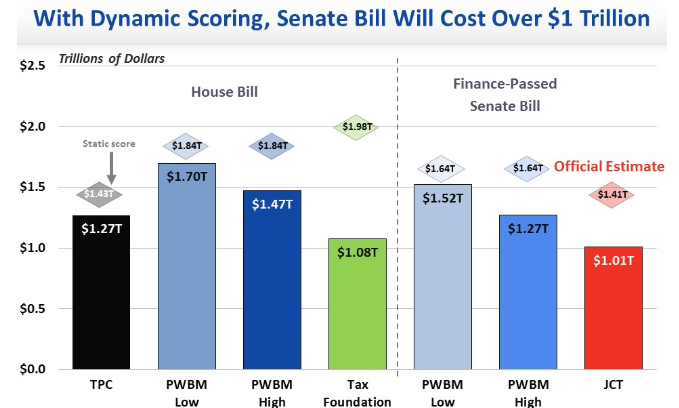
The tax bill was signed by President Trump on Friday and is now law. In spite of many good individual features, including the reduction of the corporate tax rate from 35% to 21%, it has the overall negative effect of adding $1 trillion to the national debt over the next decade, and this is after allowing for new growth.
Every Republican Senator voted for this new law.  That means every single one of them is responsible for increasing our debt by $1 trillion.  This includes Nebraska Senator Deb Fischer, who is up for reelection in 2018.  She needs to be chastised for voting for this atrocious law.
I am seriously thinking of entering the Republican Primary against her, if there is sufficient support for my candidacy.  Here is a summary of my views on the most important issues.  Roughly in order of importance:

  • Debt. Now worse than ever with the new tax law, we will soon be back to trillion dollar annual deficits.  The only real solution is to curtail the growth (no actual cuts needed!) of entitlement spending.  Otherwise a new fiscal crisis will soon occur.
  • Global Warming. The evidence for man-made global warming is overwhelming,  including warmer and more acidic oceans, shrinking artic sea ice, and rising sea levels. The best solution is to impose a (refundable!) carbon tax to replace all sorts of ad hoc and arbitrary regulations.
  • Economic growth. The U.S. is the most prosperous large country in the world and prosperity equates to economic growth. But our economy is now growing at a 3% annual clip and the new tax law is likely to overheat it and cause inflation to take off.  This will force interest rates up prematurely.
  • Trade Policy. Withdrawing from NAFTA would be a disaster for the whole country and especially Nebraska with its export based ag economy. It is China’s mercantilist policies, restricting imports from other countries, which need to be opposed.
  • Immigration Reform. With a national unemployment rate of 4.1% (2.7% in Nebraska), a severe labor shortage is developing. The solution is to establish an adequate guest worker visa program so that employers can be assured of having the employees they need.

Conclusion.  Senator Deb Fischer is simply unwilling to make the tough decisions necessary to shrink annual deficits and thereby control our burgeoning debt.  I would be a sensible replacement for her.  Will you support me if I run?  Let me know at jackheidel@yahoo.com.

Follow me on Twitter 
Follow me on Facebook 

The New Tax Bill Is Likely to Take Us over a Fiscal Cliff


The Republican tax bill has now come out of conference and will soon be voted on by both the House and the Senate. It is expected to easily pass both chambers and be signed by the President. As I have discussed extensively on this blog, I have no argument with the individual features of this bill.  They will definitely increase economic growth which is highly desirable.
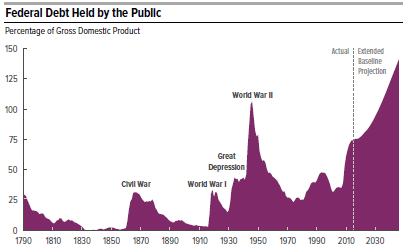
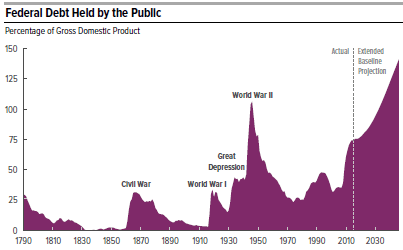
The problem is that the tax bill will also add $1 trillion to the debt over ten years (as scored by the JCT).  It is simply outrageous for the GOP to consciously add $1 trillion to our already $15 trillion debt (the public part on which we pay interest), which at 77% and climbing, is the highest it has been since right after WWII.


But the damage will be even worse than this.  The trillion dollar artificial stimulus is likely to overheat an already briskly growing economy.  As the Economist reports in its latest issue:

  • Second quarter growth of 3.1% and third quarter growth of 3.3% are very strong.
  • Median household income grew 5.2% in 2015 and 3.2% in 2016.
  • The average net worth of households in the middle income quintile grew by 34% between 2013 and 2015.
  • The wages and salaries of production workers grew at a 3.8% pace in the third quarter of 2017.
  • The unemployment rate at the end of 2018 is likely to be between 3.4% and 3.8%.

Economic growth is good because it raises living standards across the board. But faster growth also means higher inflation which means higher interest rates as the Federal Reserve responds.  Higher interest rates mean higher interest payments on our massive debt. Every time the Federal Reserve raises interest rates by ¼ %, the interest payments on our debt will increase by about $38 billion per year.  A 2% increase in interest rates, likely within two years, means a $300 billion increase in annual interest (on top of the $266 billion paid in FY 2017).  Our massive debt will soon become a huge burden for the federal budget.

Conclusion. Adding $1 trillion to the debt on top of the existing debt is a terrible idea. Such artificial stimulus at a time when GDP growth is already picking up will drive up interest rates all the faster and greatly speed up the day of reckoning for extreme fiscal irresponsibility.

Follow me on Twitter 
Follow me on Facebook 

What Are the Good Features in the Republican Tax Bill?


I have made very clear in recent posts that one negative feature of the tax bill, increasing national debt by $1 trillion over ten years, greatly outweighs its good features.  For this reason I ask Nebraska Senator Deb Fischer to put the welfare of our country ahead of the demands of her Republican colleagues and vote against the bill.


Nevertheless, the tax bill does have beneficial features and I would like to acknowledge them here.  Major ones are:

  • Lowering the corporate tax rate from 35% to 21% and moving to a territorial system, making us far more internationally competitive and encouraging our multinational corporations to bring their foreign profits back home.
  • Establishing immediate expensing of capital investment, thereby speeding up business investment and increasing economic growth.
  • Reducing itemized deductions for state and local taxes and mortgage interest, but not eliminating them as should be done for much greater revenue savings.
  • Increasing the standard deduction to $12,000/$24,000 (for singles/couples) which will reduce the number of individual taxpayers who itemize deductions from 30% to just 6%. This single feature alone achieves major simplification.
  • Measuring inflation adjustments for income thresholds by the Chained Consumer Price Index (CCPI) rather than the current CPI. CCPI takes consumer behavior into account when computing inflation and will lead to an increase in tax revenue over time.
  • Eliminating the individual mandate for the ACA which will lead to fewer healthy people signing up for health insurance. This begins a process of healthcare cost reform which must continue much further to significantly reduce the cost of American healthcare. Much more later.

Conclusion. The good features in the tax bill do not nearly outweigh the awfulness of adding $1 trillion to our debt over the next ten years. The Republican Party should be ashamed of itself for such poor fiscal and economic stewardship.  What is it thinking?

Follow me on Twitter 
Follow me on Facebook 

The GOP Tax Plan: Bad Economic Policy and Bad Fiscal Policy


It is a very good idea to cut the top corporate tax rate to 20% or so from its current 35% level. This will make the U.S. competitive with other developed countries and encourage our multinational companies to bring their foreign profits back home for reinvestment in the U.S.  It will also encourage other foreign companies to set up shop in the U.S.
My last post, however, strongly criticizes the current GOP tax plan, now in Conference Committee, because it will add $1 trillion to our already huge debt:

  • Current national debt, at 77% of GDP (for the public part on which we pay interest) is the highest it has been since right after WWII, and is already predicted by CBO to keep getting worse, without major changes in current policy. When interest rates eventually return to more normal and higher levels, interest payments on the debt will skyrocket. And this will continue indefinitely, eventually leading to a new fiscal crisis, much worse than the Financial Crisis of 2008.

This means that the GOP tax plan, by adding an additional $1 trillion to our debt, is terrible fiscal policy. But the situation is even worse than this.  It is also bad economic policy:

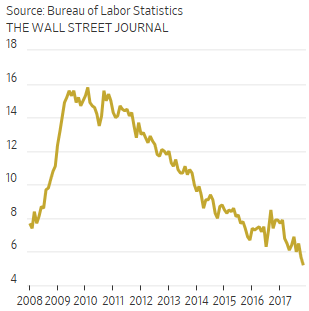
  • Economic growth is finally becoming robust.  We now have had two quarters in a row of 3% growth. In 2015 median household income grew by 5.2% with another 3.2% added in 2016. Blue collar wages are beginning to take off (see chart).  The overall unemployment rate has dropped to 4.1%. Even the unemployment rate for Americans age 25 and older, without a high school diploma, has dropped to 5.2% (see second chart).

Conclusion. The last thing our economy needs right now is the artificial stimulus caused by a deficit-financed tax cut. It is likely to overheat an already hot economy and thereby ignite inflation which will force the Federal Reserve to raise interest rates much faster than would otherwise be necessary.

Follow me on Twitter 
Follow me on Facebook 


What Ever Happened to Fiscally Responsible Tax Reform?


“I think this level of national debt is dangerous and unacceptable. My preference on tax reform is that it be revenue neutral.  What I’m hoping we will avoid is a trillion dollar stimulus.  Take you back to 2009.  We borrowed $1 trillion and nobody could find that it did much of anything.  So we need to do this carefully and correctly, and the issue of how to pay for it needs to be dealt with responsibly”

Senator Mitch McConnell (R, KY), 2016

Here is where we are today:

  • The world has seen remarkable human progress over the past 200 years. What has brought this about is specialization and trade, i.e. economic growth.
  • Since the end of the Great Recession in June 2009, economic growth in the U.S. has averaged just 2.1%, a remarkably slow recovery by historical standards. This has led to stagnant wage growth especially for blue collar workers. Finally growth is up over 3% for the past two quarters and wage growth is surging.
  • The U.S. corporate tax rate at 35% is not internationally competitive and encourages multinational corporations to move their operations overseas. A lower rate of 20% or so would encourage U.S. multinationals to bring their profits home and also encourage foreign companies to set up shop in the U.S.
  • What all of this means is that we still need tax reform (i.e. lower tax rates) but not fiscal stimulus.
  • The Republican tax plan now moving through Congress will increase our already outrageously excessive debt by $1 trillion over ten years, according to the Joint Committee on Taxation, the official scorekeeper for the U.S. Senate.
  • The Republican Congress will be making a huge mistake by implementing the current plan which has now passed both the House and the Senate. The GOP will no longer be able to make a credible case that it is the party of fiscal responsibility.

Conclusion. With a (public, on which we pay interest) debt of $15 trillion, and growing rapidly, the U.S. is approaching fiscal insolvency. The Republican tax plan will add an additional $1 trillion to this debt over the next ten years.  This is unconscionable behavior.

Follow me on Twitter 
Follow me on Facebook 


Another Reason for Tax Reform to Be Revenue Neutral


My last post noted that with our unemployment rate down to 4.2% and with median household income having increased by 3.2% in 2016, the emphasis now should be totally directed to addressing our number one long term problem:

  • Massive national debt. With a deficit of $668 billion for Fiscal Year 2017, our debt now stands at 77% of GDP (for the public part on which we pay interest), the highest it has been since the end of WWII. It is predicted by the Congressional Budget Office to go much higher without significant changes in current policy.

Obviously our annual deficits are way too large and we need to shrink them dramatically. One way to start doing this is to speed up economic growth which will increase tax revenue especially by creating more jobs and better paying jobs.  Faster economic growth is quite feasible and this is one of the main goals of tax reform, now being considered by Congress.  But it needs to increase growth without increasing the deficit which is entirely doable.

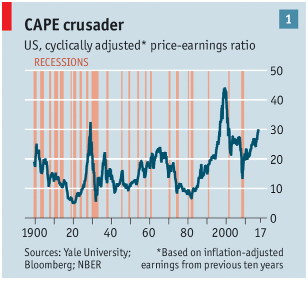
But there is another big reason for revenue neutral tax reform as well. The dollar has depreciated by 10% in 2017 while the stock market has increased by 13%.  The S&P price-earnings ratio has risen to 30 at present which is way above average.  All of this means that we are in a loose money financial bubble.  For Congress to make our annual deficits worse than they already are, with deficit increasing tax reform, would make this bubble even bigger and therefore be highly irresponsible.

Conclusion. When interest rates return to much higher normal levels, as they inevitably will, interest payments on our debt will grow dramatically and cause a huge budget crunch. If ignored, this situation will eventually lead to a new fiscal crisis, much worse than the Financial Crisis of 2008.

Follow me on Twitter 
Follow me on Facebook 

New Urgency in Deficit and Debt Control


The general theme of this blog is major fiscal and economic issues facing the U.S. such as slow economic growth and huge debt. But our currently low unemployment rate of 4.4% and several trends, here and here, suggest that economic growth may already be starting to pick up.
This means that our huge debt, now 77%, for the public part on which we pay interest, the highest it has been since right after WWII, is now one of the very biggest problems facing our country.
Consider:

  • The only practical way to “solve” our debt problem (so to speak) is for each year’s annual deficit to be less than economic growth for that year. When this happens, then the debt will decrease as a percentage of GDP. If this pattern were to hold year after year, then debt would continue to shrink. This is exactly what happened from 1946 until about 1980 but since then the pattern has reversed and the debt has increased. It has grown especially fast since the financial crisis in 2008 (see chart).
  • The Fiscal Year 2017 deficit is $700 billion out of a total GDP of $20 trillion, which computes to 3.5% of GDP, well above the 2% annual growth of GDP for the 2017 FY. This means that our debt got worse in 2017.
  • Congress has already approved $15 billion in disaster relief for Hurricane Harvey. Now the White House is asking for $29 billion more ($12.8 billion for new disaster relief, especially for Puerto Rico, and $16 billion for the National Flood Insurance Program).  Congress has also approved a big increase in the Defense Budget, to $700 billion, for the 2018 FY.
  • Congress will soon be approving a budget for 2018 and then start working on a tax reform package. Given the likely increases in both military spending and disaster relief described above, it is now even more important for the new budget to show overall spending restraint and for the tax reform package to be revenue neutral.

Conclusion. Let’s hope that Congress gets the message about the new urgency of our debt problem and acts accordingly!

Follow me on Twitter 
Follow me on Facebook 


Fundamental Principle for Tax Reform II. What to Avoid


In my last post I made the case that the two fundamental principles for effective tax reform are:

  • Faster economic growth, to create more jobs and bigger pay raises.
  • Revenue neutrality, since more debt at this time is just too risky.

And then I went on to suggest the specific changes in the tax code which would achieve these goals:

  • Reducing the corporate tax rate to approximately 20%.
  • Full expensing for business investment replacing depreciation spread out over many years.
  • Simplification of rules for individuals such as fewer tax rates and fewer credits.
  • Achieving revenue neutrality by eliminating as many deductions as necessary to pay for the above tax rate cuts.

There are different ways to accomplish all this and I recently described one attractive plan put together by the Tax Foundation. The Republican Congressional Leadership (Big Six) has proposed a different plan which has been analyzed by the nonpartisan Committee for a Responsible Federal Budget.  Unfortunately CRFB concludes that this plan will cost $2.2 trillion over ten years in lost revenue.  But it could be modified in the following ways to become revenue neutral:

  • The mortgage interest deduction is maintained but limited to one dwelling and $500,000, down from the current limit of two homes and $1 million.
  • The tax exemption for employer provided health insurance is limited. This not only increases tax revenue but also forces the 150 million Americans who receive health insurance from their employer to take an active role in holding down the cost of healthcare.
  • Drop the proposal of establishing a maximum “pass through” rate of 25% for business owners. Any such proposal would be subject to wide spread abuse. Businesses would be benefitting from the full expensing provision above and their owners should pay taxes at the same rates as everyone else.
  • Keep the estate tax until annual deficits are greatly reduced. It only brings in $20 billion per year but every little bit helps.

Conclusion. These common sense changes in the Big Six plan would make it revenue neutral and still capable of achieving a significant boost to the economy.

Follow me on Twitter 
Follow me on Facebook 


Fundamental Principles for Tax Reform


I have been criticizing the Republican Congress lately for straying from fundamentals in attempting to reform healthcare and tax policy. What are the fundamentals for tax reform?  In my opinion they are:

  • Faster economic growth. The economy has averaged only 2% annual growth since the end of the Great Recession in June 2009. The unemployment rate has slowly fallen to the current 4.4% level and a labor shortage is now developing. But wage gains for the broad middle class and especially blue collar workers have been minimal. Faster growth will put pressure on employers to raise wages faster to acquire the skilled workers they need.
  • Revenue neutrality. With the public debt (on which we pay interest) now 77% of GDP, the highest since the end of WWII, and predicted by the Congressional Budget Office to keep getting steadily worse without major changes in policy, it would be the height of irresponsibility for Congress to approve tax changes which increase our annual deficits.

Given these two basic principles, what should be the specific changes made to tax law? Here are my priorities:

  • Lowering the corporate tax rate from its current level of 35% to a competitive level, approximately 20%, with other developed countries. This would be a huge incentive for our multinational corporations to bring their foreign profits back home.
  • Full expensing for business investment is allowed, replacing depreciation over a period of years, to speed up new investment.
  • Simplification of the rules for individuals, such as with fewer tax rates and fewer credits, so that fewer errors will be made and a greater proportion of true tax liabilities will be collected.
  • Create revenue neutrality for the above tax rate cuts by eliminating, or at least shrinking, many deductions and closing loopholes.

Conclusion. Tax reform will be highly beneficial for the economy if it is done correctly. This means ignoring many of the special interest provisions which have also been suggested for conclusion.  I will discuss these in my next post.

Follow me on Twitter 
Follow me on Facebook 

The GOP Congress Needs to Get Back to Fundamentals


Granted that it is hard to implement good policy with a populist President like Donald Trump who is most interested in stirring up his base, nevertheless the Republican Congress is making some serious policy mistakes:

  • Healthcare. The GOP should accept the fact that universal healthcare is a desirable societal goal and is here to stay. The Graham-Cassidy bill is bad policy because some states, such as debt-ridden Illinois, can’t possibly handle healthcare on their own. The fact that the ACA needs operational fixes gives the Republicans leverage for insisting on cost lowering changes in a bipartisan bill.
  • Tax Reform. The GOP should focus on the most serious problems in our tax system. The complexity of the tax code is partly responsible for the fact that taxes paid lag true tax liabilities by an estimated 16% or $406 billion per year.  As an example of waste, the IRS has paid out $132 billion in EITC benefits over the last decade to people who were ineligible.
    Our uncompetitive corporate tax rate of 35% encourages multinational companies to leave their profits overseas rather than bringing them back home for reinvestment.  Even so, corporate tax revenue as a share of GDP is less than in most other developed countries.
    Republicans claim to be the party of fiscal responsibility and should therefore be highly uncomfortable with any tax plan which reduces federal revenue and increases our already very large annual deficits.  With a low unemployment rate of 4.4%, any additional artificial (deficit financed) fiscal stimulus is likely to kick off a new round of inflation.

Conclusion. Republicans have a relatively short window of opportunity to enact policy changes beneficial for the country. They need to get serious about what is really important before time runs out.

Follow me on Twitter 
Follow me on Facebook