The Republicans are Making a Huge Mistake with the Current Tax Plan by Appearing to be Fiscally Irresponsible


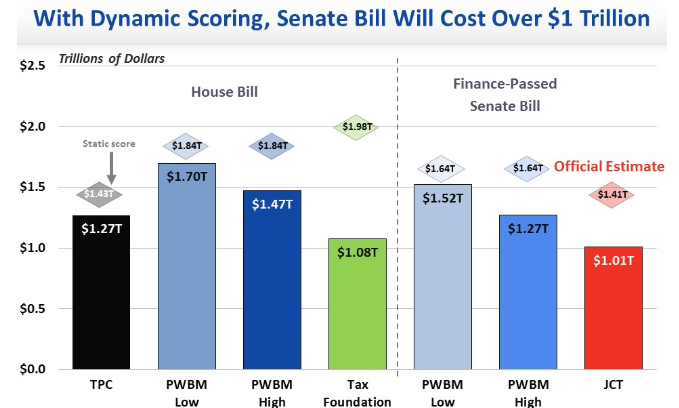
The House and Senate have now each passed their own similar tax bills and a conference will come up with a single unified plan. Each of the individual bills has been scored to add $1 trillion to the national debt over a ten year period and so the final plan will almost surely have this same feature.
With our public (on which interest is paid) debt now 77% of GDP, the highest since right after WWII, and already growing rapidly, this is an extremely unattractive, and even dangerous, feature of the tax plan.
One of our most cherished principles in the U.S. is “liberty and justice for all.”  But consider the normally perceived philosophical differences between the two political parties:

  • The Republicans are the party of liberty concentrating on providing maximum opportunity for people to succeed in life by realizing their full potential. This means fostering strong economic growth in order to have lots of opportunities for self-betterment. It also means keeping government at all levels as lean and efficient as possible, so as to minimize interference with private initiative. Excessive public debt is a particular anathema by creating a huge public burden, especially on future generations.

  • The Democrats are the party of justice concentrating on helping to provide the less fortunate members of society with the necessities of life by means of public support programs. This also means working to oppose all forms of prejudicial behavior based on race, gender, sexual orientation, etc. In addition it means trying to alleviate the inevitable income inequalities which arise in a free and dynamic society like ours, primarily with redistribution of tax revenues.

Conclusion. Both parties have fundamentally important principles. They gain and keep adherents by fighting for what they believe in. If the national Republican Party becomes lackadaisical about our huge national debt, as it appears to be right now, it risks losing its reputation for fiscal responsibility.  This will do it great damage.
Follow me on Twitter 
Follow me on Facebook 

What Ever Happened to Fiscally Responsible Tax Reform?


“I think this level of national debt is dangerous and unacceptable. My preference on tax reform is that it be revenue neutral.  What I’m hoping we will avoid is a trillion dollar stimulus.  Take you back to 2009.  We borrowed $1 trillion and nobody could find that it did much of anything.  So we need to do this carefully and correctly, and the issue of how to pay for it needs to be dealt with responsibly”

Senator Mitch McConnell (R, KY), 2016

Here is where we are today:

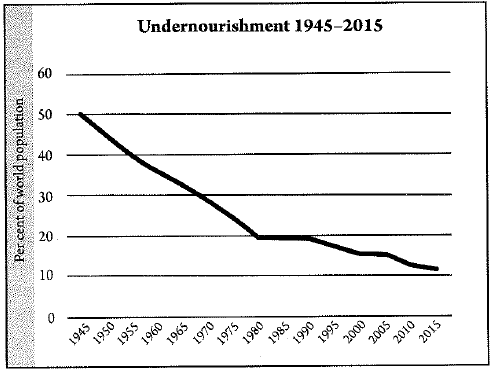
  • The world has seen remarkable human progress over the past 200 years. What has brought this about is specialization and trade, i.e. economic growth.
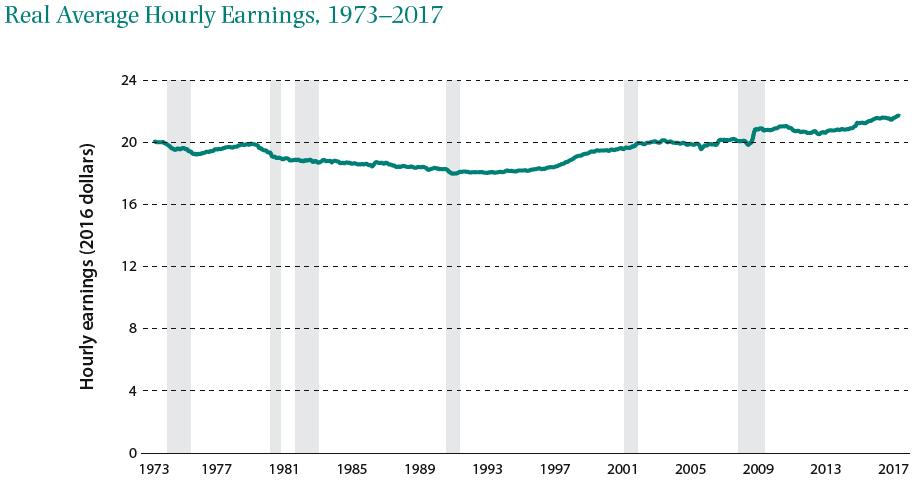
  • Since the end of the Great Recession in June 2009, economic growth in the U.S. has averaged just 2.1%, a remarkably slow recovery by historical standards. This has led to stagnant wage growth especially for blue collar workers. Finally growth is up over 3% for the past two quarters and wage growth is surging.
  • The U.S. corporate tax rate at 35% is not internationally competitive and encourages multinational corporations to move their operations overseas. A lower rate of 20% or so would encourage U.S. multinationals to bring their profits home and also encourage foreign companies to set up shop in the U.S.
  • What all of this means is that we still need tax reform (i.e. lower tax rates) but not fiscal stimulus.
  • The Republican tax plan now moving through Congress will increase our already outrageously excessive debt by $1 trillion over ten years, according to the Joint Committee on Taxation, the official scorekeeper for the U.S. Senate.
  • The Republican Congress will be making a huge mistake by implementing the current plan which has now passed both the House and the Senate. The GOP will no longer be able to make a credible case that it is the party of fiscal responsibility.

Conclusion. With a (public, on which we pay interest) debt of $15 trillion, and growing rapidly, the U.S. is approaching fiscal insolvency. The Republican tax plan will add an additional $1 trillion to this debt over the next ten years.  This is unconscionable behavior.

Follow me on Twitter 
Follow me on Facebook 


Is World Population Under Control?


The main topics discussed on this blog are the major fiscal and economic issues facing the U.S. My approach is to be calm, factual, rational and objective but I do have a very definite point of view.  I am an optimist.  I think that life is getting better slowly but surely both in the U.S. and around the world, see here and here.
The key to this progress is economic growth.  Faster growth means more progress.  But there are limits as to how fast the economy can grow.  In particular there are environmental limits as I have discussed in my last two posts, here and here.
Global warming is definitely a huge threat to human progress.
But severe overpopulation is not likely based on two reliable sources which I am using.  One is the latest UN Report, “World Population Prospects, 2017”.  The other is the 2010 book by Matt Ridley, “The Rational Optimist”.
Consider:

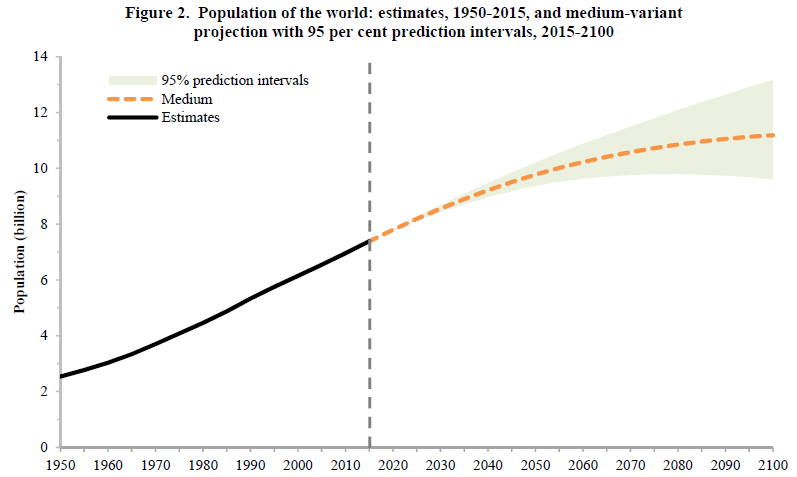
  • World population in 2017 is 7.6 billion. 10 years ago it was growing by 1.24% per year, today it is growing by 1.10% per year, i.e. growth is slowing down.

  • There is a 27% chance that world population will stabilize and begin to fall before the end of this century (see graph). Mr. Ridley’s prediction that population will peak at 9.2 billion in about 2075 and then begin to fall is consistent with the lower level of the UN graph.
  • The UN’s median projection is that the global fertility level will decline from 2.5 births per woman in 2010-2015 to 2.2 births per woman in 2045-2050 and then to 2.0 births per woman in 2095-2100. Since replacement level is 2.1 births per woman, no later than 2100 the die will be cast for world population to peak in the early 22nd century and then begin to decline.
  • Already 83 countries in 2010-2015 had below replacement level fertility. After 2050 Africa will be the only region still experiencing substantial population growth.

Conclusion. Sometime between about 2075 and the early 2100s, world population will peak and then begin to decline. The sooner this happens, the less misery there will be for humanity.  Nevertheless, the catastrophe of never ending population growth is very unlikely to occur.

Follow me on Twitter 
Follow me on Facebook 

Human Progress and the Environment


Human civilization has made remarkable progress in the past two hundred years starting with the Industrial Revolution. This has been well documented in two current books, The Rational Optimist by Matt Ridley and Progress: ten reasons to look forward to the future by Johan Norberg.
But for human progress to continue indefinitely into the future depends on sufficient economic growth.  Faster growth means more progress.  The purpose of the Republican tax plan now working its way through Congress is to speed up economic growth in the U.S.
It is a legitimate question to ask whether there are environmental constraints on faster growth.  What are the world’s largest environmental problems and how serious are they?  In rough order of severity:

  • Global warming is a very serious problem, for which the evidence is overwhelming.  The use of renewable energy sources like wind and solar is growing but not fast enough to stop the world wide increase in carbon emissions. It will require the world’s two largest economies, the U.S. and China, working together to solve this huge problem but it can be done.

  • World population is likely to stabilize at about 9.2 billion (the Rational Optimist, page 206) by 2075 and then start to decline. This is because in country after country economic progress has led first to slower mortality rates and then to slower birth rates. When this demographic process eventually reaches Africa, world population will begin to decline.

  • Pollution is on the decline around the world (see above chart from Norberg). Air pollution is declining in the U.S. (see Ridley, page 279) and China is beginning to get serious about it.
  • Natural resources are simply not running out, see here and here.

Conclusion. Yes, the world has environmental problems (mainly global warming) but no, they need not stand in the way of economic growth indefinitely into the future.

Follow me on Twitter 
Follow me on Facebook 

Is Economic Growth Environmentally Sustainable?


Economic growth is a question of much political interest these days. Slow growth is a major reason why Donald Trump was elected President in 2016.  The main justification for the Republican tax reform plan now moving through Congress is that it will speed up economic growth.
There are many people who say that humanity must learn to live with slower growth because our planet can no longer support the high rate of growth we have enjoyed since the Industrial Revolution.  But consider:

  • World Population is likely to peak at about 9.2 billion in approximately 2075 and then start to decline. (See the Rational Optimist by Matt Ridley, page 206.)   In country after country around the world, economic progress has already led to lower mortality rates which in turn have led to lower birth rates. This demographic process is likely to continue.
  • Pollution is rapidly declining in the developed world (see above, page 279). Yes, greenhouse gas emissions (and global warming) are still increasing worldwide but the use of renewable energy is also increasing. Furthermore, the U.S. and China, working together, easily have enough clout to enact a carbon tax, which would provide an economic incentive for industry to get carbon emissions under control.

  • Natural Resources aren’t running out.  Take phosphorous for example, which is vital to agricultural fertility. When the richest mines are depleted, there are extensive lower grade deposits still available. The fracking revolution means that oil and natural gas will be available for hundreds of years to come. The earth is finite, of course, but it is also a vast storehouse of resources.

Conclusion. The economic growth that is needed to create more jobs and better paying jobs is compatible with maintaining a clean and stable environment on earth.

Follow me on Twitter
Follow me on Facebook 


How to Speed Up Wage Growth in the U.S.


Donald Trump was elected President a year ago because the white working class is angry about a lot of things, including slow wage growth. The tax burden in the U.S. is lower than in other developed countries and wages are higher in the U.S. even if they are not rising fast enough. The Brookings Institute has carefully analyzed the wage growth issue, here and here, and has delineated several reasons for wage stagnation:

  • Compensation has lagged behind productivity growth. This is largely due to globalization and technology which has put upward pressure on skills and downward pressure on wages.
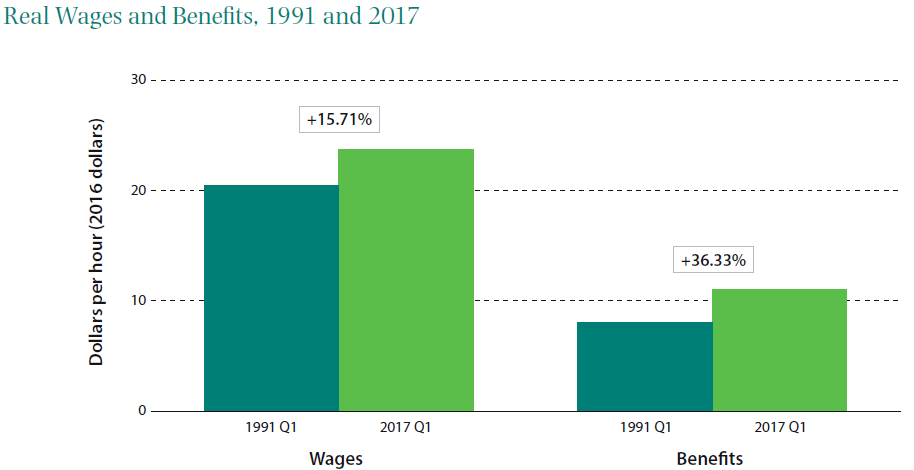
  • Benefits have grown faster than wages, thus holding down wages. The skyrocketing cost of healthcare is mostly responsible for this.
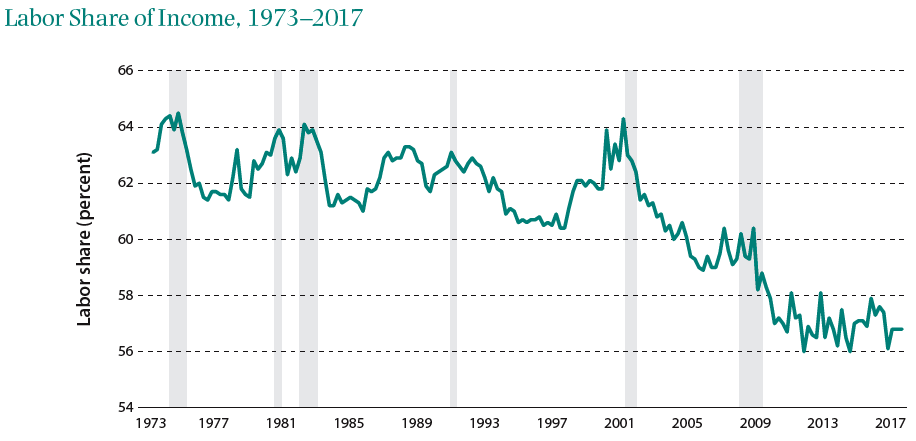
  • Labor’s share of income, compared to capital’s, has been shrinking. Technology needs less low skill labor. Also, market concentration, i.e. monopoly power, has been increasing, which increases profits and therefore return on capital.
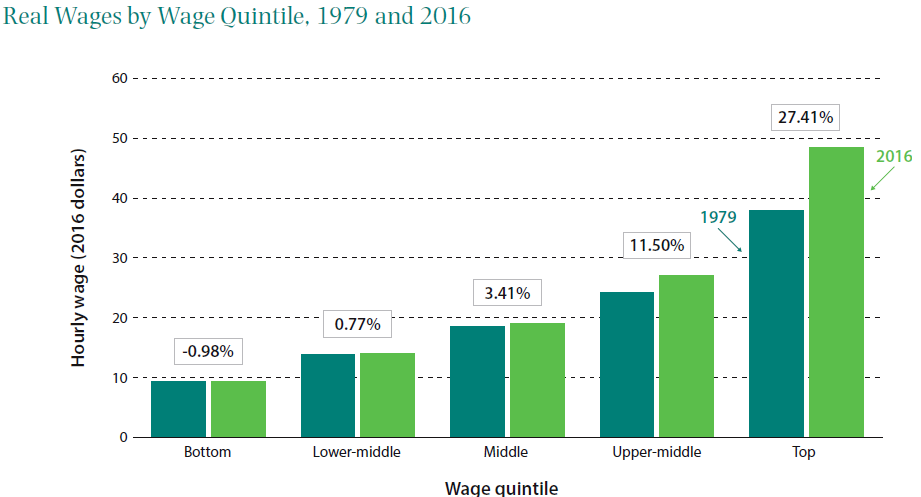
  • Wage gains have been higher in the higher wage quintiles. This is explained by the increasing wage benefit of more education and higher skill levels.
  • Manufacturing output is up and employment is down. High technology needs fewer low skill workers and high skill workers are in short supply.
  • Entrepreneurship, i.e. new business formation, has declined over the past several decades. This is caused by increased business consolidation and would also be relieved by more immigration of high skilled workers.
  • Labor market slack has declined since the Great Recession. This bodes well for wage increases which are now starting to occur.

  • Labor productivity growth since the Great Recession has been especially slow. What is needed is increased business investment which is the justification for the current push for lower corporate and business tax rates.

Conclusion. In short, what is needed to boost wages is better education and skills, more business investment, control of the surging cost of healthcare, better trust busting to break up monopolies, and more high level immigration.

Follow me on Twitter 
Follow me on Facebook 

Why Wage Growth Has Been So Slow in Recent Years


My last post pointed out that there appears to be an inverse correlation between tax rates and economic growth in developed countries.  In particular:

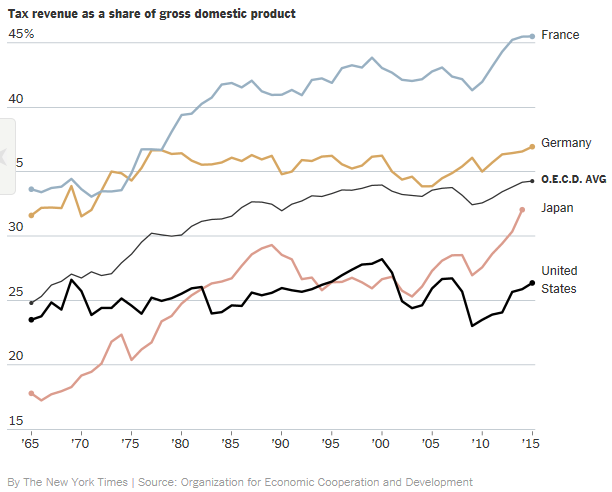
  • Tax levels in the U.S. have stayed relatively constant since 1965 while they have grown significantly in other O.E.C.D. countries.
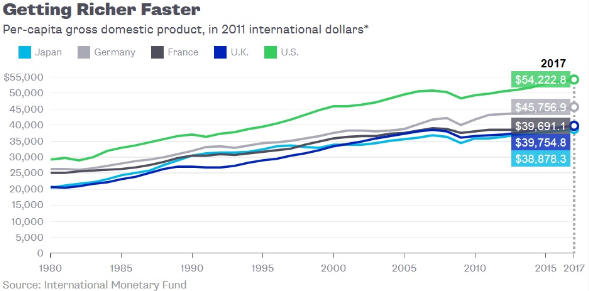
  • GDP, on the contrary, has been growing faster in the U.S. than it has in these same countries.
  • Median wages, while growing more slowly in the U.S., are still much higher than in the other major O.E.C.D. countries.

A new report from the Brookings Institute analyzes the factors which have contributed to relatively slow wage growth in the U.S.


For example:

  • Labor productivity has been growing faster than hourly compensation since the mid-1970s.

  • Benefits have grown much faster than wages in recent years.

  • Labor’s share of income, compared to capital’s share, has been dropping in recent years.

  • Wage gains have been greater in the higher wage quintiles.

  • Domestic manufacturing output has increased even as manufacturing employment has decreased.

  • Entrepreneurship (i.e. new business formation) has declined in recent years even though it may now be starting to pick up.

  • Labor market slack has declined since the Great Recession though some still remains (measured as the share of the work force that works part time for economic reasons).

  • Recent labor productivity growth has been especially slow, restraining wage growth.

Conclusion. As everyone knows, slow wage growth is a highly contentious issue in the U.S. In addition to being a fundamental measure of a society’s wellbeing, it played a central role in the outcome of the 2016 Presidential election.
What can and should be done to speed up wage growth in the U.S.?  Stay tuned!

Follow me on Twitter 
Follow me on Facebook 

The Connection between Taxes and Growth


One of my favorite economic journalists is Eduardo Porter of the New York Times who writes the weekly column Economic Scene. In his latest column.  He points out that taxes (federal, state and local) for the U.S. and the O.E.C.D. average were about the same 27% of GDP in 1969.  But now, almost 50 years later, the U.S. tax level has stayed the same while the O.E.C.D. average has grown by 7% (see chart below).


Mr. Porter says that according to Wagner’s Law “government spending as a share of the economy will increase as nations get richer and their citizens demand more and better public services.”
Americans may be receiving fewer public services than citizens of the OECD countries but we are also enjoying faster economic growth as pointed out by the AEI scholar James Pethokoukis using data from the International Monetary Fund (see chart below).


According to the Pew Research Center our median family wage is also one of the highest in the world (see chart below).


As pointed out by Mr. Pethokoulis, lower taxes are a fundamental reason for the superior performance of the U.S. economy.  Other (tax-related) reasons are:

  • The most competitive large economy as ranked by the World Economic Forum.
  • An entrepreneurial culture fueled by a willingness to take risks.
  • Labor markets which generally link workers and jobs unimpeded by excessively restrictive labor regulations.
  • A growing population fueled by immigration based on economic opportunity.
  • A culture and tax-transfer system that encourages hard work and long hours.
  • A favorable regulatory environment, relatively speaking.
  • A decentralized political system in which states compete both tax-wise and by other means.

Conclusion. Americans pay lower taxes than other developed countries and also enjoy faster economic growth and higher median wages than most. There appears to be a strong connection between these three fundamental measures of economic wellbeing.

Follow me on Twitter 
Follow me on Facebook 

Improving the Republican Tax Plan


The Republican tax plan has many good features and is now moving along in Congress. The best feature of all is reducing the top corporate rate from 35% to 20%.  This will make the U.S. internationally competitive and create a strong incentive for all multinational companies to conduct more business in the U.S. and for U.S. multinationals to bring their profits back home for reinvestment.
The Tax Foundation estimates that the Senate version of the Plan will lead to the creation of 925,000 new jobs and an after tax income gain of $2,598 for a middle-income family over a ten year period.
But there are several parts of the plan which could be significantly improved.  For example:

  • Revenue neutrality, at least on a dynamic basis (taking growth into account) is essential. Our national debt is way too large to ignore.

  • Shrinking more deductions, to achieve revenue neutrality. The mortgage interest deduction should be eliminated completely, not just limited to $500,000 mortgages. Same for the state and local tax deduction.
  • More progressivity. Keep the estate tax to bring in more tax revenue. Scrap the lower 25% rate for a pass-through business tax because it will be too easy to abuse.  The Congressional Budget Office has estimated that eliminating the individual mandate for the ACA will save $338 billion over ten years.  It will also save millions of Americans from having to pay a tax penalty of $695 or more for not having health insurance.
  • Emphasis on growth. Make expensing (i.e. immediate write-off) for new investment a permanent feature rather than limited to five years only.

Conclusion. There are lots of good features in the Tax Reform Plan. Several changes would make it even better.  As soon as it achieves stability in the legislative process, the CBO will analyze its fiscal and economic effects.  At this point revenue neutrality will be essential for achieving broad support.

Follow me on Twitter 
Follow me on Facebook 

Donald Trump and Isolationism, Protectionism and Nativism


Most of the time on this blog I write about the pros and cons of various policy measures, independently of which individuals or parties are supporting them. But, of course, the U.S. President is the most important single actor on the political stage so it does matter immensely what the President thinks on any particular issue.


The three biggest quagmires for Republican presidents are nativism, protectionism and isolationism. Where does President Trump come down on these major policy threads?

  • Isolationism. Mr. Trump is not an isolationist.  He is working with China and other Asian countries to contain North Korea. He is working with several Mideast powers to defeat ISIS. We have beefed up forces in Afghanistan to neutralize the Taliban. He has clearly backed down on his threat to withdraw from NATO.
  • Protectionism. Unfortunately, Mr. Trump is too much of a protectionist. He is not against trade per se but he wants to replace broad multilateral trade agreements with separate bilateral trade agreements with lots of different countries. This will simply create an “insanely complicated mishmash of rules.”  Instead he should focus on bargaining with China to get much better access for American products into Chinese markets.
  • Nativism. Again, Mr. Trump (and many of his supporters) apparently doesn’t appreciate the enormous contributions which immigrants make to the U.S. economy at both the high end (skilled workers and entrepreneurs) and the low end (willingness to provide hard physical labor in agriculture, meatpacking, construction and personal care). Especially with our currently low unemployment rate of 4.1% we should take the opportunity to solve our illegal immigration problem by expanding our guest worker visa program.

Conclusion. President Trump is clearly not an isolationist but smarter trade and immigration policies would help to speed up economic growth and create more jobs and higher wages for the blue-collar workers who are Mr. Trump’s main base of support.

Follow me on Twitter 
Follow me on Facebook