Quo Vadis America?


In many respects things are going quite well in the U.S. at the present time:

  • The economy is chugging along at 2% annual growth, not spectacular but better than in most other developed countries. In fact a rather severe labor shortage is developing in some industries such as construction and agriculture.   More specialized guest worker visas would help relieve these shortages. Better career and vocational education in high school as well as targeted job retraining programs for the underemployed would help prepare workers for the millions of high-skill manufacturing jobs going unfilled.
  • Pesky foreign policy problems are under control. ISIS is being squeezed in the Middle East. China appears willing to help contain the North Korean nuclear threat. Iran is mostly abiding by the 2015 nuclear agreement.
  • Congress is inching its way towards resolution of the healthcare stalemate, by repairing Obamacare rather than repealing it. It’s not clear how much tax reform will be implemented this session but there is at least a consensus on lowering the corporate tax rate to encourage multinational companies to bring their profits back home.
  • Deregulation efforts by the Trump Administration will give the economy at least a small beneficial boost.
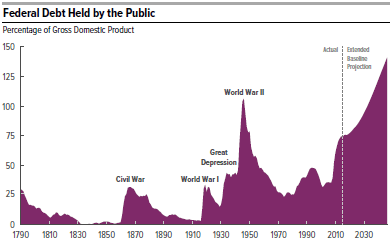
    But there is one huge problem which is constantly being swept under the rug or being kicked down the road by both parties in Congress and by Democratic as well as Republican presidential administrations alike. I am referring, of course, to our massive national debt, now sitting at 77% of GDP (and growing) for the public part on which we pay interest.  Right now this debt is essentially “free” money because interest rates are so low.  But it’s really a ticking time bomb because sooner or later interest rates will return to more normal levels and then interest payments will skyrocket causing a huge fiscal crisis.
Conclusion. It is imperative for Congress to reform entitlement programs to make them less costly to the federal budget and to otherwise restrain discretionary federal spending across the board. The future of our country depends on our national leaders exercising much greater fiscal restraint.  They need to get much better at doing this!

Follow me on Twitter
Follow me on Facebook

Responsible Tax Reform III. Avoid Complacency about Debt


The Trump Administration has proposed a tax reform plan, with both good and bad features, and it is not yet known how Congress will respond to it.  In the meantime we should focus on what tax reform can accomplish if does right:

  • Lower tax rates. Most observers agree that lower tax rates will increase economic growth by encouraging more business investment. Since the end of the Great Recession in June 2009, GDP has grown at the historically slow rate of 2% per year. Any additional growth will be beneficial by tightening the job market, thereby creating more jobs as well as higher wages for the already employed.
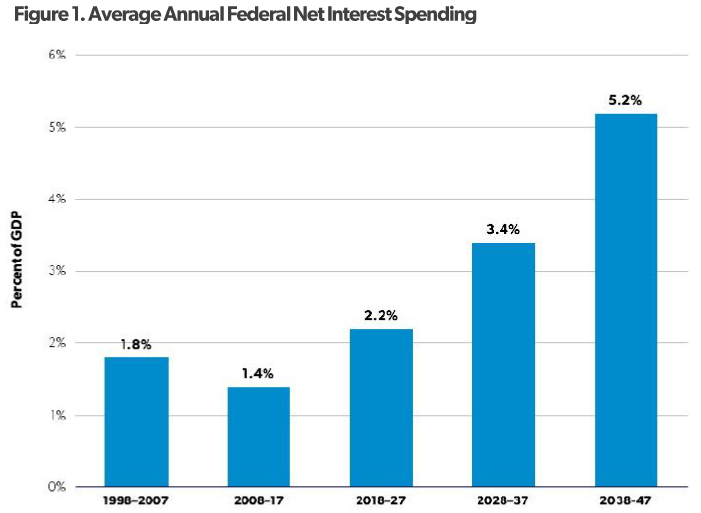
  • Revenue neutrality. Our public debt (on which we pay interest) is now 77% of GDP, the highest it has been since right after WWII. At the present time interest rates are so low that the debt is almost “free” money. But interest rates will inevitably rise back to more normal levels in the future. When this does happen, whether it be sooner or later, interest payments on our ever increasing debt will skyrocket, and eat up as much as a third of federal tax revenue.  A huge fiscal crisis will then occur, far worse than the Financial Crisis of 2008.

  • Observing historical precedent. There have been five tax rate cuts in the last half century: (Kennedy (1964), Reagan (1981, 1986) and Bush (2001, 2003)).  Note that public debt was 40% or less of GDP at the time of each of these tax cuts (see chart). The revenue losses associated with each was temporary and the first three at least strongly stimulated new growth.

Conclusion. Our national debt is much too high at the present time to adopt a tax reform plan with an extravagant disregard for revenue loss. The current debt level is so high (and projected to keep getting steadily worse) that modest tax rate cuts, coupled with significant spending restraint, is clearly called for.

Follow me on Twitter
Follow me on Facebook

Responsible Tax Reform II. The Trump Plan


Responsible tax reform will be highly beneficial for the U.S. economy because:

  • Economic growth will be speeded up by lowering tax rates on businesses, thereby encouraging more investment.
  • National debt will shrink because faster growth will produce more tax revenue. But this only works if the revised tax plan is revenue neutral to begin with.

The Trump tax plan, described here and here, has the following features:

  • three tax brackets, reduced from seven. Simplification like this is a good idea.
  • double the standard deduction. This puts more money in the pockets of the average tax payer who does not itemize deductions and is therefore a good idea.
  • repeal of the alternative minimum tax. This only affects wealthy people and should be retained, if necessary, to make sure that overall reform does not increase the deficit.
  • lower capital gains tax. This will encourage more investment but should not be included unless the overall plan is revenue neutral.
  • repeal of inheritance tax. This tax feature should be retained until our annual budget deficits are eliminated, i.e. until we achieve balanced budgets on an annual basis.
  • preserving deductions for mortgage interest and charitable contributions. The mortgage interest deduction should be greatly reduced from its current level of $1 million per residence. Wealthy taxpayers don’t need that much help. Raising the standard deduction will already help middle income taxpayers.
  • cutting the corporate tax rate. This is an excellent idea as long as its revenue loss is made up elsewhere. It will encourage multinational corporations to bring their overseas profits back home for reinvestment in the U.S.

Conclusion. The Trump tax plan has some good features as well as some poor ones. Reducing tax rates is a good idea.  But adding to annual deficits is a very bad idea.  With some effort it is possible to reduce tax rates in a revenue neutral way.

Follow me on Twitter
Follow me on Facebook

Principles for Responsible Tax Reform

President Trump has just unveiled the outline of his tax reform proposal. Tax reform done right can give our economy a needed shot in the arm.  The big question is, of course, what is the right way to do it?
The Committee for a Responsible Federal Budget has proposed some sensible guidelines:

  • Promote Economic Growth and Dedicate the Gains to Deficit Reduction. The Joint Committee on Taxation and the Treasury Department have estimated that comprehensive tax reform can increase the growth rate of GDP over the next decade by .05 to .25% per year. For example, a .2% increase would reduce our debt by $550 billion over ten years (see chart). This does not fix our fiscal problems but it helps.

  • Maintain or Reduce Current Deficits. Make sure that any tax rate cuts are offset by revenue increases (i.e. shrinking tax deductions) so that the annual deficit is not increased. Ultimately, our fiscal challenges are unlikely to be solved without reducing spending, reforming entitlements and increasing revenue.
  • Set Permanent Tax Policy. The reconciliation process in the Senate, whereby a simple majority can approve legislation, disallows any increase in the debt beyond ten years. In other words, permanent tax reform will require a sixty vote majority to override a filibuster. This is the only way to achieve sound policy.
  • Avoid Unjustified Timing Shifts and Other Gimmicks. A timing shift is a gimmick if it doesn’t make economic sense. For example, gradually reducing tax rates, rather than cutting them immediately, would only delay revenue losses by shifting them to the future, and is therefore a gimmick.
  • Rely on Reasonable Economic Assumptions. A good example of a faulty economic assumption is to arbitrarily assume that a tax rate reduction will create 3% annual GDP growth and therefore pay for itself over a sufficiently long time period. Such a proposal was made by the economist Stephen Moore in yesterday’s Wall Street Journal.

Conclusion. Slow economic growth and massive debt are our country’s two biggest problems. Tax reform done right will speed up growth without worsening the debt.  I will be paying close attention to the forthcoming debate on this issue.

Follow me on Twitter
Follow me on Facebook

Economic Growth and Economic Justice II. What Needs to Happen


In today’s fractious political climate, it is at least widely recognized that skilled blue-collar workers are often suffering from stagnant income growth and/or job loss. Unfortunately, the political parties often disagree on how to address this major problem.  There are several different perspectives from which to view the overall situation:

  • Slow economic growth, averaging only 2% per year since the end of the Great Recession in June 2009. From 1950 – 2000 the economy grew at over 3% per year and produced a prosperous American middle class. Now, with strong headwinds from globalization and constantly improving technology, we badly need faster overall economic growth to provide more and better paying middle class jobs.
  • Income inequality. There is increasing income inequality in the U.S. even though the top 25% or so are doing very well. But raising taxes on the wealthy could slow down economic growth by discouraging new investment. In addition, redistribution of tax revenue to lower income Americans will not give them much of a boost.

  • Income insecurity. This is a huge problem for the many blue-collar workers who are struggling to make ends meet. There are a number of specific government actions which could alleviate this enormous societal problem.
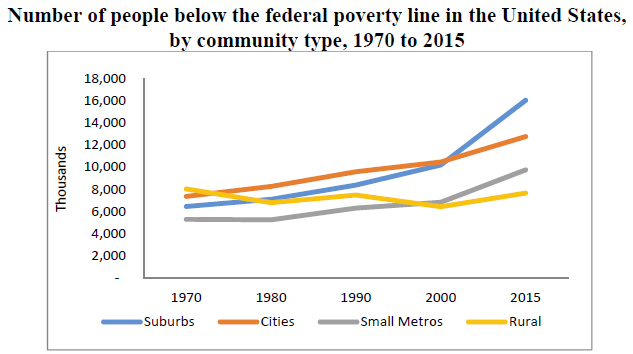
  • Economic justice. Poverty in the U.S. is widely distributed geographically, with almost as much in rural and small town areas as in big cities. This could provide an opportunity for Republicans and Democrats to work together to address a very challenging problem.

Conclusion. Our country has very serious economic and fiscal problems which are not being addressed because of severe partisan infighting in Congress. But slow economic growth, income insecurity and poverty affect a wide variety of people with different political outlooks.  It’s inexcusable to allow partisan bickering to get in the way of finding workable solutions.

Follow me on Twitter
Follow me on Facebook


Economic Growth and Economic Justice I. the Problem

Over and over for the past several years I have been saying on this blog that our country’s two biggest problems are:

  • Slow Economic Growth, averaging just 2% since the end of the Great Recession in June 2012. Such slow growth has led to wage stagnation and job loss for many millions of blue-collar workers.
  • Massive debt accumulation, now amounting to 77% of GDP (for our public debt on which we pay interest), the worst it has been since right after the end of WWII. And the Congressional Budget Office predicts that it will continue to get steadily worse without changes in current policy.

Unfortunately, political gridlock in Washington ever since the beginning of the 112th Congress in January 2011 (when the Tea Party took control of the House) has prevented making progress on either of these two problems.  That could perhaps change in the near future with the election of President Trump, at least with respect to faster growth.
But Mr. Trump’s election does not change a fundamental reality.  Many progressives think that 2% growth is the “new normal” or, what’s worse, that any economic growth at all will simply require more fossil fuel use and therefore lead to even faster global warming. Furthermore, while many progressives have little interest in economic growth, they do care very much about economic justice.  They think that the top 1% take home too much income and that, in addition, there is far too much poverty in America.


In today’s Omaha World Herald there is an article about the Human Resources Subcommittee of the House Ways and Means Committee chaired by Rep. Adrian Smith (R, NE).  This subcommittee has jurisdiction over temporary assistance for needy families, food stamps, low-income energy assistance, and unemployment benefits.  It turns out that there is rural and small town poverty almost as much as in urban and suburban areas (see chart).


Conclusion. Poverty exists all over our country and so should be of concern to both Republican and Democratic members of Congress. Perhaps if the two sides can work together on this major issue, they can work together on other important issues as well.  More later!

Follow me on Twitter
Follow me on Facebook

The Magnitude of our Debt Problem


I began writing this blog in November 2012, right after the 2012 national election when Barack Obama was reelected to a second term as President. Under Obama our biggest problems were: 1) slow economic growth (2% annually since June 2009) and 2) massive and rapidly increasing debt, now 77% of GDP.
After the surprise victory of Donald Trump last fall, my perspective has changed a little bit.  Slow growth is still a huge problem.  My last several posts have, in fact, focused on the despair of many blue-collar workers who have been harmed by our stagnant economy in recent years.
Mr. Trump was strongly supported by blue-collar workers last fall and clearly wants to help them out.  Faster economic growth will accomplish this and President Trump is working with the Republican Congress to get this done through tax and regulatory reform.  I’m optimistic that progress will be made along these lines.
But our debt problem has not really been addressed so far by the Trump Administration.  James Capretta from the American Enterprise Institute gives a good summary of where we are:

  • Entitlement Spending is the Problem. In 1972 the federal government spent a combined 4.2% of GDP on Social Security, Medicare and Medicaid. In 2016 spending on these programs was 10.4% of GDP. The Congressional Budget Office predicts that this figure will jump to 13.5% of GDP in 2030 and 15.6% of GDP in 2047 unless current policy is changed.

  • The Fiscal Consequences of Interest Rate Normalcy. In 2008 when federal debt was at 39% of GDP, federal spending on net interest payments was 1.7% of GDP. For 2017 net interest payments will be just 1.3% of GDP even though the federal has doubled since 2008. This is due to the abnormally low interest rate of 2.3% at the present time. CBO projects that the interest rate on 10-year Treasury notes will rise to 3% in 2019-2020 and 3.6% for the period 2021-2027.

Conclusion. Right now our huge and rapidly increasing debt is almost “free money” because interest rates are so low. This can’t and won’t last.  As interest rates inevitably climb to more normal levels, interest payments on the debt will rise precipitously.  This will cause much pain by further squeezing spending on many popular programs.  The only sane way to mitigate this highly unpleasant prospect is to shrink deficit spending down to zero as quickly as possible.

Follow me on Twitter
Follow me on Facebook

America’s Huge Challenge: Giving Blue-Collar Workers a Boost


The American economy has been stagnating since the end of the 20th century and has grown especially slowly (2% per year on average) since the end of the Great Recession in June 2009.  This slow growth has various unpleasant causes and consequences:

  • Men without Work. The political economist, Nicholas Eberstadt, has pointed out that the work rate for prime working age (25 – 54) men has dropped from 94.1% in 1948 to 84.3% in 2015. This translates into 9.5 million prime working age men who are not currently in the workforce.
  • Mortality Crisis. The economists, Anne Case and Angus Deaton, show that the mortality rate for working class whites in America, aged 45 – 54, has doubled since 1990, and that these new deaths are largely “deaths of despair.”
  • Complacency.  The economist, Tyler Cowen, makes a strong case that too many Americans are so comfortable in their own worlds that they have become complacent about the structural problems facing American society.
  • Segregation by Class The political scientist Charles Murray has described a separation of American society into a new Upper Class (20% of all Americans) and a new Lower Class (30% of all Americans) with the Upper Class enjoying the four deepest satisfactions of life: family, vocation, community and faith while the Lower Class is largely left out.

What can be done to improve the fortunes of America’s blue-collar workers? There are actually a lot of things:

  • Greatly improve vocational training for the millions of skilled jobs for which there aren’t enough qualified applicants.
  • Revitalize America’s job-generating capacities. More businesses have closed than opened each year since the Financial Crisis.
  • Reverse the perverse disincentives against male work embedded in our social welfare systems. The Earned Income Tax Credit should be extended to single adults without dependents. Eligibility for disability income should be tightened considerably.

  • Come to terms with the enormous challenge of bringing convicts and felons back into society. The huge increase in incarceration rates in recent years has coincided with a dramatic drop in rates for both violent crime and property crime.

Conclusion. It’s a scandal that so many blue-collar workers are struggling to live a fulfilling life. There are many different actions government can take to improve their lot.

Follow me on Twitter
Follow me on Facebook

How Goes the ‘American Project’? II. The Prognosis


Every once in a while we should step back from our country’s everyday problems and look at the bigger picture.  In my last post I pointed out that, while there has been enormous human material progress around the world in the last two hundred years, some prominent thinkers say that the U.S. is now mired in complacency and is at great risk of deteriorating.
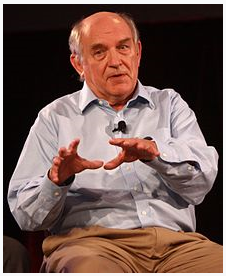
In particular, Charles Murray has well described how U.S. society has separated into a new Upper Class (20% of all Americans) and a new Lower Class (30% of all Americans) with totally distinct characteristics and interests. He presents two possible scenarios:

A Hollow Elite, characterized by:

  • The collapse of a sturdy moral code. It has lost self-confidence in the rightness of its own customs and values (marriage, industriousness and civic engagement) and preaches only non-judgmentalism instead.


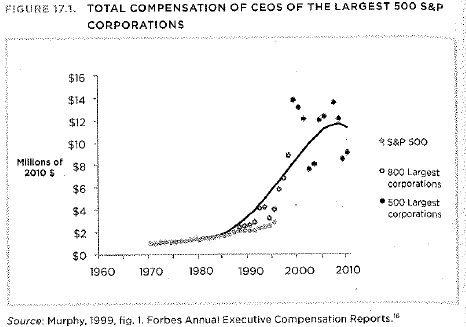
  • Unseemliness. CEOs make increasingly enormous salaries and receive incredibly huge separation bonuses. Also, hundreds of billions of dollars in government funds are up for grabs as contracts or tax expenditures.
  • Drifting towards the European model of more welfare paid for with higher taxes because paying taxes is a cheap price for a quiet conscience.


A Civic Great Awakening, characterized by:

  • Watching the European model implode. As publicly financed benefits grow, so do the populations who think they need them, and the fewer people there are in the private sector to pay for them. There is no way out of the self-destructive dynamics of the welfare state and America is watching this happen first in Europe.
  • The increasing obviousness of an Alternative. Mr. Murray proposes that our current welfare state be replaced by a guaranteed annual income of $10,000 (in 2002 dollars) for all, phased out at incomes above $25,000. The idea is that such a proposal will become increasingly desirable as our welfare state becomes increasingly unaffordable.
  • The resilience of American ideals. Mr. Murray believes that a civic Great Awakening will take place among the new upper class. He believes that American exceptionalism has a historical basis and that the qualities of industriousness, neighborliness and self-confidence will reassert themselves and put the ‘American Project’ back on track.

Conclusion. Regardless of the specific details of what he foresees, Charles Murray is an optimist and so am I.

Follow me on Twitter
Follow me on Facebook

How Goes the ‘American Project’? I. Background


The main topic of this blog is U.S. fiscal and economic policies and especially, how, and to what extent, they are lacking. But every so often I take a broader perspective.
For example, the Swedish economist, Johan Norberg, has described in detail the remarkable human progress of the past 200 years, starting with the industrial revolution.  The British scholar, Matt Ridley, has given a cogent explanation of what brought about all of this progress.  Conclusion: human life, overall, has improved dramatically in the last 200 years and most likely will continue to improve well into the future.
How are things going in the U.S.?  Not so well, relatively speaking, according to the economist, Tyler Cowen.  He thinks that too many Americans are so self-satisfied with enjoying the fruits of prosperity that as a society we have become complacent about many hidden, but very serious, problems, such as debt, deteriorating life conditions for blue-collar workers, and a huge buildup of internet crime.  This complacency is likely to make America less dynamic in the future.


The eminent political scientist, Charles Murray, has weighed in on this issue with his tour-de-force tome, “Coming Apart: The State of White America 1960 – 2010.”   Mr. Murray describes a new kind of segregation which has developed in the U.S. based on socio-economic class, largely fueled by educational attainment and professional status.  The new Upper Class (20% of all Americans) are largely separated from the rest of society not only by the neighborhoods where they live and their professional employment but also because they are more likely to be married, hardworking and engaged in society.  The new Lower Class (30% of all Americans) has just the opposite characteristics of the Upper Class.
Mr. Murray argues that the four sources of deepest satisfaction in life are: family, vocation, community and faith and that these four main sources of satisfaction have become enfeebled for the Lower Class over the past 50 years.  But the Upper Class is also being hollowed out in other ways.
Conclusion. “Great nations eventually cease to be great,” observes Mr. Murray.  Is America doomed to moral deterioration and decay?  Stay tuned!