Too Much Income Inequality is Harmful to Society


It is well understood that income inequality is increasing in the U.S. and that there are lots of reasons for it.  Globalization provides low cost goods from around the world and thus puts pressure on low-wage workers in our own country.  Rapid technological advancement puts a high premium on educational attainment and skill acquisition and thus helps individuals who are highly motivated to succeed.  The Great Recession and our slow recovery from it have held back the growth of employment and wages increases for middle- and lower-income workers.

CaptureIncreasing income inequality is a pernicious social condition and has lots of unpleasant consequences.  A new study of U.S. counties has shown that there is a strong correlation between more inequality in a particular geographical area and shorter average live spans.  It is quite reasonable to expect that higher-income people will be more health conscious than lower- income people. Excessive inequality is bad for lots of reasons.
The question is what we can do about it.  Here are two good ways to address it:

  • Faster economic growth would help a lot. The American Enterprise Institute’s Michael Strain has recently proposed a fairly modest plan for increasing employment by cutting tax deductions for the wealthy, increasing the Earned Income Tax Credit for the poor and at the same time decreasing deficit spending. I have made a more substantial proposal along the same lines.
  • Boost educational performance across the board. College-ready middle class kids will take care of themselves so the emphasis should be on the 70% of young adults who will not go to a four year college. There are lots of good jobs available for the highly skilled and so we need more career education in high school. We also need more early childhood education to prepare kids from low-income families to get off to a good start in elementary school.

Increasing economic growth and expanding educational opportunities for the non-college bound will require little, if any, new federal spending.  Such policies as above are simply common sense ways to reduce income inequality and achieve a more inclusive society.
The Slow Growth Fiscal Trap We’re Now In.


Our economy has been growing very slowly, about 2.2% per year on average, since the end of the Great Recession in June 2009.  The Congressional Budget Office predicts that this slow growth will continue indefinitely, although with a brief respite of 2.9%  growth in 2015 and 2016.  The American Enterprise Institute predicts an even lower, less than 2% growth rate, going forward.
CaptureHere’s the essence of the overall problem:

  • Slow growth keeps the unemployment level high and also means minimal raises for employed workers  The resulting economic slack leads to
  • Low Inflation. But low inflation in turn means that the Federal Reserve can try to increase growth with quantitative easing and at the same time maintain
  • Low Interest Rates to encourage borrowing. But an unfortunate side effect of low interest rates is that Congress can borrow at will and run up huge deficits without having to worry about paying interest on this “free” money. This leads to:
  • Massive Debt. But what is going to happen when inflation does take off which is bound to happen eventually? Then the Fed will be forced to raise interest rates quickly and we will be stuck with huge interest payments on our accumulated debt. When this happens, interest payments plus ever growing entitlement spending will eat up most, if not all, of the federal budget. This will almost inevitably lead to a severe
  • Fiscal Crisis.

                                                    FLOW CHART

  Slow Growth->Low Inflation->Low Interest Rates->Massive Debt->Fiscal Crisis

Of course, there are alternative scenarios.  Congress might become more responsible and cut spending and/or raise taxes.  We might luck out, so to speak, with such prolonged slow growth that inflation stays low indefinitely and interest rates never increase.  But slow growth is not pain free.  There are 20 million unemployed or under-employed Americans who want to work and whose lives are much less satisfying as a result of being idle.
Isn’t it obvious that the best response to this slow growth fiscal trap is to adopt policies to make the economy grow faster?  There are lots of things that could be done, many of which I addressed in my last post (https://itdoesnotaddup.com/2015/03/01/will-middle-class-economics-lift-us-out-of-secular-stagnation/) so I won’t repeat them here.  But I’ll be coming back to them again and again in the future!

The Financial Crisis II. Is Peter Wallison Credible?


“It was a great mistake to push lower-income people into housing they couldn’t afford and couldn’t really handle once they had it.
 
                                                             former Congressman Barney Frank, 2010

“The ferocity of the left in defending Fannie Mae, Freddie Mac, and the government’s housing policies before 2008 is sometimes shocking, especially when even Barney Frank has given up.  It makes you wonder why this is so important to them.  They have no data, no policy arguments, just a virulent denial that anything other than the private financial sector could possibly be responsible for the financial crisis.”
                                                  “Hidden in Plain Sight,” p 42, by Peter Wallison, 2015

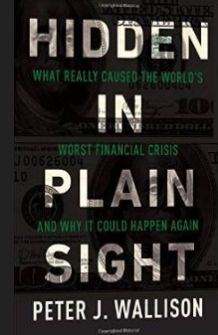
My last post, “The Financial Crisis I. The Cause” reported on a new book “Hidden in Plain Sight: What Really Caused the World’s Worst Financial Crisis and Why It Could Happen Again” by Peter Wallison, a financial policy analyst at the American Enterprise Institute.  He makes a very strong case, with voluminous documentation, that the basic cause of the financial crisis was the HUD policy requiring government agencies like Fannie Mae, Freddie Mac and the FHA to gradually acquire an increasing percentage of subprime mortgages.  When the housing bubble finally burst in 2007, the enormous number of delinquencies and defaults among these nontraditional mortgages, aggregate value over $5 trillion, drove down housing prices and caused the financial crisis.
CaptureAs noted above by Mr. Wallison himself, such an explanation is simply unacceptable to people who insist on blaming the private sector for the crisis.  Rather than dealing with public records and data available, they instead try to discredit Mr. Wallison.  My purpose today is to give two vivid examples of the types of documents which Mr. Wallison uses to make his case:

  • (Fannie Mae 10-K report, 2006). “We have made, and continue to make, significant adjustments to our mortgage loan sourcing and purchase strategies in an effort to meet HUD’s increased hosing goals and new subgoals.  These strategies include entering into some purchase and securitization transactions with lower expected economic returns than our typical transactions.  We have also relaxed some of our underwriting criteria to obtain goals-qualifying mortgage loans and increased our investments in higher-risk mortgage loan products that are more likely to serve the borrowers targeted by HUD’s goals and subgoals, which could increase our credit losses.
  • (statement by Daniel Mudd, former Fannie Mae CEO, April 2010). “Fannie Mae’s mission regulator, HUD, imposed ever-higher housing goals that were very difficult to meet during my tenure as CEO.  The HUD goals greatly impacted Fannie Mae’s business, as a great deal of time, resources, energy and personnel were dedicated to finding ways to meet these goals.  HUD increased the goals aggressively over time to the point where they exceeded the 50% mark, requiring Fannie Mae to place greater emphasis on purchasing loans in underserved areas.  This became particularly problematic when goal requirements grew to far exceed the proportion of eligible mortgages originated in the primary market.”

Mr. Wallison’s book is filled with this type of detailed documentation for the case he is making.  It should be persuasive to anyone with an open mind.  It certainly is to me.  Now that Mr. Wallison’s credibility is established, it is time to discuss the implications of his thesis.  Stay tuned!

The Financial Crisis I. The Cause


Only by understanding the factors that led to and amplified the crisis can we hope to guard against a repetition.                                                                                                         Ben Bernanke, September 2, 2010

An outstanding new book by Peter Wallison, ”Hidden in Plain Sight: What Really Caused the World’s Worst Financial Crisis and Why It Could Happen Again” gives a voluminous and highly compelling explanation of the main cause of the financial crisis of 2008.  Mr. Wallison worked at the Treasury Department in the 1980s, was a member of the Financial Crisis Inquiry Commission (2009 – 2011) and is currently a scholar at the American Enterprise Institute.
CaptureHere is the outline of Mr. Wallison’s story:

  • The Department of Housing and Urban Development gradually increased the requirement that loans acquired by Fannie Mae and Freddie Mac be made to low- and moderate-income borrowers from 30% in 1992 to 56% in 2008.
  • As a result of these policies, by the middle of 2008 there were 31 million Nontraditional (low down payment and/or poor credit) Mortgages (NTMs) in the U.S. Financial system, more than half of all mortgages outstanding, with an aggregate value of more than $5 trillion. At least 76% of these were on the books of government agencies such as Fannie, Freddie and the FHA or banks and S&L institutions, holding loans which they were required to make by the Community Reinvestment Act.
  • The 24 million NTMs acquired or guaranteed by government agencies were major contributors to the growth of the housing bubble and its lengthy extension in time.
  • The growth of the bubble suppressed the losses that would ordinarily have brought NTM type Private Mortgage-Backed Securities (PMBS) to a halt but rather made these instruments look like good investments.
  • When the bubble finally burst, the unprecedented number of delinquencies and defaults among NTMs drove down housing prices.
  • Falling home prices produced losses on mortgages, whether they were government backed or PMBS.
  • Losses on mortgages caused investors to flee the PMBS market, reducing the liquidity of the financial institutions that held the PMBS.
  • Once the housing bubble burst, four major errors were made by our top government financial officials: The first and major error was the rescue of Bear Stearns. The moral hazard created by this action reduced the incentive for other firms to restore their capital positions. Once Bear had been rescued it was essential to rescue Lehman Brothers. Treasury Secretary Paulson and Fed Chairman Bernanke’s arguing that they did not have legal authority to rescue Lehman provided an excuse for Congress to pass the destructive Dodd-Frank Act. Finally, TARP accomplished little but caused much popular resentment against the banks which supposedly got bailed out.

Conclusion: as long as the American people don’t understand that government housing policies were the main cause of the financial crisis, we are likely to repeat the same mistakes over again.

Is Europe’s Decline an Indication of America’s Future?


One of my favorite writer’s on current affairs is Arthur Brooks from the American Enterprise Institute.  His article in yesterday’s New York Times, “An Aging Europe in Decline” gives a good explanation for the current malaise in Europe.  “The optimists see the region’s economy growing by just 1% in 2015: many fear that a triple-dip recession is in the offing. … Predictions of decade-long deflation, low productivity and high unemployment are becoming conventional wisdom.” But Mr. Brooks makes a strong case that Europe’s core problems are as much demographic as economic:

  • In 2014, the average number of children per woman in the European Union was 1.6, well below the replacement rate of 2.1.
  • The labor participation rate in the EU in 2013 was just 57.5%, much lower than the 62.7% in the U.S..
  • In 2012 the median age of the national population in the EU was 41.9 while the average age of foreigners living in the EU was 34.7. But “anti-immigration sentiment is surging across the continent.”

In other words, Europe is “rejecting the culture of family, turning its back on work and closing itself off to strivers from the outside.”  This is a powerful indictment of contemporary European culture.
Capture1To a certain extent these same trends are evident in the U.S. although to a somewhat lesser degree:

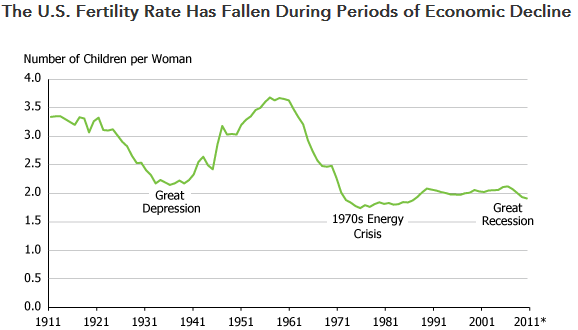
  • Our own fertility rate (see the above chart) is down to 1.9 children per woman in 2012, and is dropping among all racial groups.
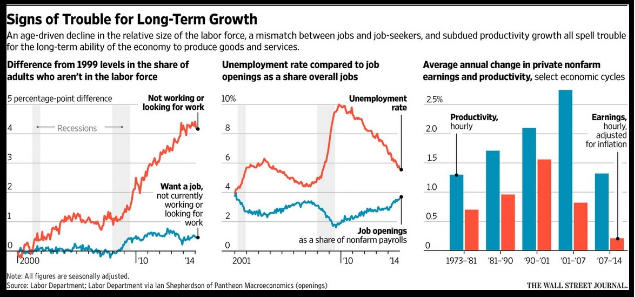
  • Our labor participation rate is better than Europe’s but is our own lowest in 36 years.
  • We admit over a million legal immigrants per year who lower the average age of our population. However we fail to accept many highly educated and skilled workers who would be able to give our economy a huge boost.

Demographics are a problem for the U.S. just as they are for Europe.  The only way to counteract strong demographic trends is with smarter economic policies.

Let’s Do Something about Corporate Welfare and Crony Capitalism!


The American Enterprise Institute is one of my favorite Washington think tanks.  It defines its mission as “research and education on issues of government, politics, economics and social welfare.”  I especially like its interest in social welfare which translates for me as being fiscally conservative with a heart.
CaptureThe AEI’s Timothy Carney has just proposed “An anti-corporate welfare, anti-cronyism agenda for the 114th Congress.” Most candidates for Congress condemn crony capitalism and corporate welfare.  This generally means any policies which tilt the playing field, picking winners and losers and rewarding well-connected insiders.  Such actions contribute to the public perception that the “game” is rigged and harm economic growth and innovation.  Here are some prime examples discussed by Mr. Carney:

  • Health Care: repeal Obamacare’s insurer bailout (the “risk corridors”) so that health insurers compete totally on price.
  • Health Care: end the individual mandate which forces people to buy a product from a private industry. An alternative incentive for individuals to remain covered would be limiting enrollment periods, for example, to a brief six-week sign-up period every two years.
  • Energy: end tax breaks and subsidies for both renewable energy (including ethanol) and oil and gas. Make all forms of energy compete in the market.
  • Taxes: make corporate taxes simpler, lower and more neutral. Besides being fairer, such changes will boost the economy.
  • Finance: Rein in Fannie Mae and Freddie Mac by treating them the same as all big banks. This means the same capital requirements, the same tax treatment and the same consumer protection regulation.
  • Finance: Kill Dodd-Frank’s too-big-to-fail designation. It acts as a moat, protecting the big guys from competition.
  • Trade: Kill the Export-Import Bank.
  • Trade: Repeal the Jones Act. It requires all shipping between U.S. ports be done on U.S. flagged vessels.
  • Agriculture: End the Sugar Program which costs consumers $3 billion per year.
  • Agriculture: Reform the Federal Crop Insurance Program by making it self-supporting.

These mostly well-known examples of corporate welfare represent just the tip-of-the-iceberg.  Nevertheless they provide a good place to start in cleaning things up!

Inequality Does Not Reduce Prosperity


In the national elections this year four states: Alaska, Arkansas, Nebraska and South Dakota raised their state minimum wage rates above the national rate of $7.25 per hour and, at the same time, elected Republicans to the U.S. Senate, in three cases replacing Democratic incumbents.  Does this represent contradictory behavior by the voters?
CaptureThe American Enterprise Institute’s James Pethokoukis recently reported (see above) that the U.S. has the third highest rate of billionaire entrepreneurs behind only Hong Kong and Israel, as well as by far the most billionaires over all.  These are the high-impact innovators like Bill Gates, Steve Jobs and Mark Zuckerberg and the Google Guys.
These observations are put in context by the Manhattan Institute’s Scott Winship who recently reported that “Inequality Does Not Reduce Prosperity.” Here is a summary of his findings:

  • Across the developed world, countries with more inequality tend to have higher living standards.
  • Larger increases in inequality correspond with sharper rises in living standards for the middle class and poor alike.
  • In developed nations, greater inequality tends to accompany stronger economic growth.
  • American income inequality below the top 1 percent is of the same magnitude as that of our rich-country peers in continental Europe and the Anglosphere.
  • In the English-speaking world, income concentration at the top is higher than in most of continental Europe; in the U.S., income concentration is higher than in the rest of the Anglosphere.
  • With the exception of a few small countries with special situations, America’s middle class enjoys living standards as high as, or higher than, any other nation.
  • America’s poor have higher living standards than their counterparts across much of Europe and the Anglosphere.

Conclusion: Americans are fair-minded and would like to help the working poor do better.   But Americans also appreciate the value of innovation and entrepreneurship.  When there is a tradeoff between increasing prosperity and reducing inequality, greater prosperity comes first.

Poverty and the Minimum Wage


Americans are a generous and kind-hearted people. We are more than willing to go to bat for the less fortunate among us.  The question is how to do it effectively.  A post six months ago, “A balanced and Sensible Anti-Poverty Program,” laid out four principles for an effective anti-poverty program from Robert Doar of the American Enterprise Institute.  They are:

  • work requirements for welfare recipients
  • work incentives such as the Earned Income Tax Credit
  • fostering married, two-parent families
  • business growth and investment to create more jobs

There is currently much interest in , and public support for, raising the minimum wage at both the state and national levels.  This is viewed by the general public as an effective way of addressing poverty.
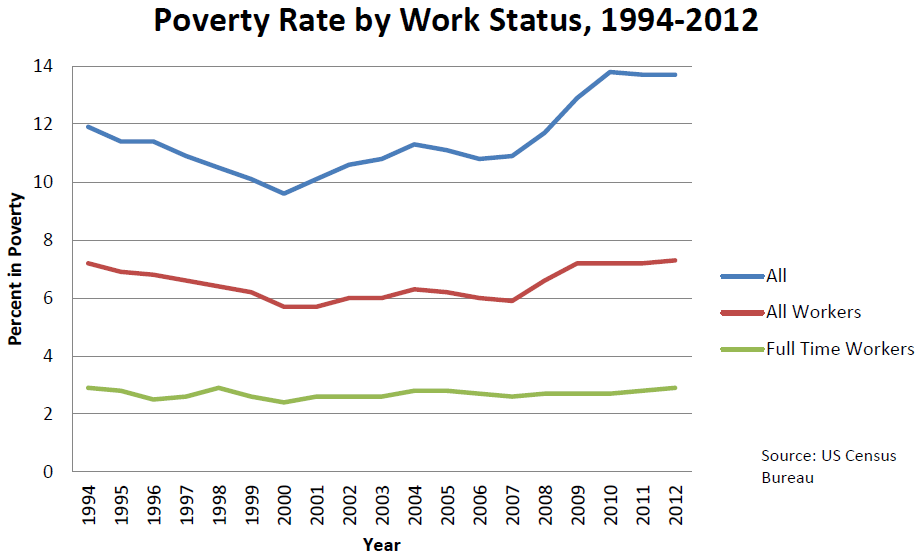
CaptureHowever a new report from Mr. Doar makes clear that simply holding a real job, even with low pay, is what makes the biggest difference as to whether or not someone is able to rise above poverty.  Even though the overall poverty rate in the U.S. is about 14%, the poverty rate for fulltime workers is only 3% and even for part-time workers it is just 7% (see the above chart).
Capture1Furthermore, as detailed in the second above chart, the total income (including selected benefits) of a low-income earner, at $8/hour, with two dependent children, and working fulltime, is $30,204, well above the poverty line.
Conclusion: yes, poor people need public assistance but it is equally important to work with them to find and hold a job, regardless of hourly wage.  Not only will this meet their basic material needs, it will also put them on track to become self-supporting, productive citizens.

The Federal Reserve Cannot Revive the Economy by Itself


The Great Recession caused by the financial crisis ended in June 2009.  In the intervening five years the U.S. economy has grown at the anemic annual rate of 2.2%.  In an attempt to speed up growth the Fed has injected $4 trillion into the economy and kept short term interest rates near zero during this time period.  Fed Chair Janet Yellen recently gave her semiannual report to Congress and, according to the American Enterprise Institute’s John Makin, “Fed Chair Yellen puts on a brave face.”  She said that “If economy performance is disappointing, then the future path of interest rates likely would be more accommodative than currently anticipated.”
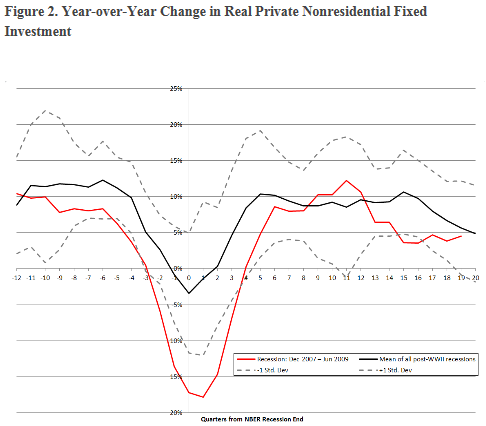
CaptureCapture1Mr. Makin adds that “Eventually the realization will dawn that the only way to get the economy moving again is to work on the supply side.  Specifically, that means undertaking measures to boost investment and produce a rising capital stock which will boost labor productivity, hiring, and GDP growth without inflation.” He suggests that three measures to boost capital spending are:

  • Enactment of accelerated depreciation provisions and investment tax credits.
  • A sharp reduction in the corporate tax rate from 35 to 15 percent to induce corporations to repatriate the $1.59 trillion in accumulated profits being held abroad.
  • A concerted White House-led effort to set a clear, less burdensome path for healthcare and other regulatory measures as a means to reduce investment dampening uncertainty.

I would add a fourth measure:

  • An across the board lowering of individual tax rates (offset by closing loopholes and deductions which primarily benefit the wealthy) in order to boost personal consumption which has been highly depressed due to stagnant wage growth and high unemployment.

In other words there are clear and straightforward measures which our national leaders can take to speed up the economy.  ‘If there is a will, there’s a way’ and incumbents should be held responsible for inaction come the elections in November!

A Balanced and Sensible Anti-Poverty Program


The American Enterprise Institute’s Robert Doar recently testified before the U.S. Senate Committee on the Budget with ”Back to Work: How to improve the prospects of low-income Americans”.  His recommendations are based on the four principles:

  • Work requirements as a condition of public assistance.  The work first approach has been shown to have better outcomes with regard to attachment to the labor force than even approaches which focus on training and education.
  • Robust work supports for those who are working at low wages.  The Earned Income Tax Credit accomplishes this and should be extended to childless adults.
  • Business growth and investment.  Policies that raise the cost of doing business and deter growth do little to create what the poor need most: jobs.
  • Foster married, two-parent families.  We need to mitigate marriage penalties in public assistance programs and we need to be honest about the consequences for children of single parenthood.

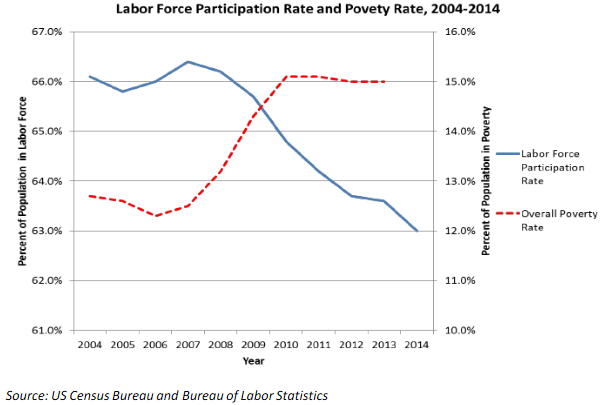
Mr. Doar points out that 10.2 million American’s are unemployed at the present time, 3.6 million have been jobless for more than 27 weeks, 7.3 million are involuntarily working part-time and 837,000 workers are so discouraged that they have stopped looking for work.  Labor force participation has dropped from over 66% in 2007 to 63% today while the poverty rate has risen from 12.5% to 15%.
CaptureRaising the minimum wage will not help the job prospects of most poor Americans.  Only 11.3% of individuals who would benefit from raising the minimum wage are living below the poverty line.  The Congressional Budget Office estimates that raising the minimum wage to $10.10 per hour would lead to 500,000 people losing their jobs.  CBO also estimates that the Affordable Care Act will reduce full-time employment by 2.3 million by 2021.  Given the strong anti-correlation (see the above chart) between labor participation and poverty, this means that the poverty rate may go higher yet.
The conclusion to draw from this excellent poverty synopsis (with lots of references) is that there are intelligent and effective ways to fight poverty and also much poorer ways to try to do it.  Good intentions are not enough!