Avoiding the Extremes on Either Side


Not only is Washington politics already hyper-partisan, but both parties are continuing to move to even greater extremes, see here and here.
Here are two examples of extreme positions now being espoused by major elements of one or the other of the two parties:

  • Single payer healthcare. The failure of the GOP effort to repeal the Affordable Care Act this past summer means that (the goal of) universal healthcare is here to stay. The ACA expands access to healthcare but does nothing to control costs. Single payer, Medicare for All, would control costs but then we end up with socialized medicine. The only way to establish a cost efficient free market healthcare system is to remove, or at least limit, the tax exemption for employer provided care and to set up high deductible catastrophic care supplemented by health savings accounts to pay for routine expenses. This would compel everyone to pay close attention to the cost of their own healthcare.
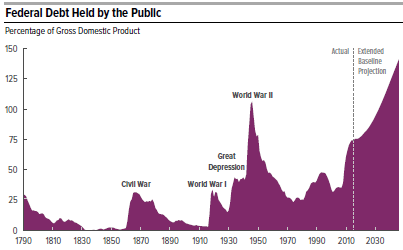
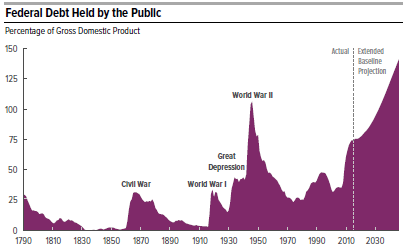
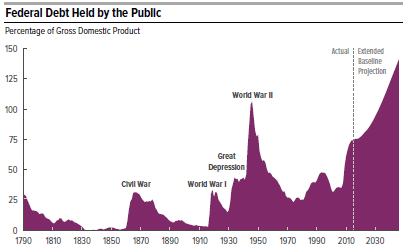
  • Tax cuts instead of tax reform. Tax reform, i.e. lowering both corporate and individual tax rates, paid for by closing loopholes and shrinking deductions, is an excellent way to speed up economic growth and thereby create more and better paying jobs. But it is imperative to do this in a revenue neutral manner, i.e. without increasing our annual deficits. Our debt (the public part on which we pay interest) now stands at 77% of GDP, the highest it has been since the end of WWII, and is predicted by the Congressional Budget Office to keep getting larger without major changes in public policy.
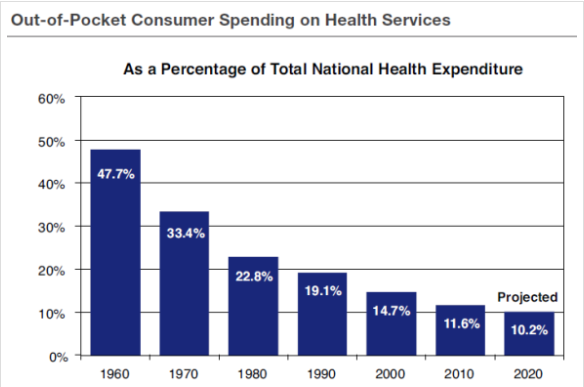
Conclusion. The U.S. badly needs a more cost efficient healthcare system and a simpler and more efficient tax system. But there are right ways and wrong ways to do both of these things.  Single payer healthcare and (unpaid for) tax rate cuts are the wrong way to proceed.  In each case, no action at all is much better than getting it wrong.
Follow me on Twitter 
Follow me on Facebook 

New Urgency in Deficit and Debt Control


The general theme of this blog is major fiscal and economic issues facing the U.S. such as slow economic growth and huge debt. But our currently low unemployment rate of 4.4% and several trends, here and here, suggest that economic growth may already be starting to pick up.
This means that our huge debt, now 77%, for the public part on which we pay interest, the highest it has been since right after WWII, is now one of the very biggest problems facing our country.
Consider:

  • The only practical way to “solve” our debt problem (so to speak) is for each year’s annual deficit to be less than economic growth for that year. When this happens, then the debt will decrease as a percentage of GDP. If this pattern were to hold year after year, then debt would continue to shrink. This is exactly what happened from 1946 until about 1980 but since then the pattern has reversed and the debt has increased. It has grown especially fast since the financial crisis in 2008 (see chart).
  • The Fiscal Year 2017 deficit is $700 billion out of a total GDP of $20 trillion, which computes to 3.5% of GDP, well above the 2% annual growth of GDP for the 2017 FY. This means that our debt got worse in 2017.
  • Congress has already approved $15 billion in disaster relief for Hurricane Harvey. Now the White House is asking for $29 billion more ($12.8 billion for new disaster relief, especially for Puerto Rico, and $16 billion for the National Flood Insurance Program).  Congress has also approved a big increase in the Defense Budget, to $700 billion, for the 2018 FY.
  • Congress will soon be approving a budget for 2018 and then start working on a tax reform package. Given the likely increases in both military spending and disaster relief described above, it is now even more important for the new budget to show overall spending restraint and for the tax reform package to be revenue neutral.

Conclusion. Let’s hope that Congress gets the message about the new urgency of our debt problem and acts accordingly!

Follow me on Twitter 
Follow me on Facebook 


Fundamental Principle for Tax Reform II. What to Avoid


In my last post I made the case that the two fundamental principles for effective tax reform are:

  • Faster economic growth, to create more jobs and bigger pay raises.
  • Revenue neutrality, since more debt at this time is just too risky.

And then I went on to suggest the specific changes in the tax code which would achieve these goals:

  • Reducing the corporate tax rate to approximately 20%.
  • Full expensing for business investment replacing depreciation spread out over many years.
  • Simplification of rules for individuals such as fewer tax rates and fewer credits.
  • Achieving revenue neutrality by eliminating as many deductions as necessary to pay for the above tax rate cuts.

There are different ways to accomplish all this and I recently described one attractive plan put together by the Tax Foundation. The Republican Congressional Leadership (Big Six) has proposed a different plan which has been analyzed by the nonpartisan Committee for a Responsible Federal Budget.  Unfortunately CRFB concludes that this plan will cost $2.2 trillion over ten years in lost revenue.  But it could be modified in the following ways to become revenue neutral:

  • The mortgage interest deduction is maintained but limited to one dwelling and $500,000, down from the current limit of two homes and $1 million.
  • The tax exemption for employer provided health insurance is limited. This not only increases tax revenue but also forces the 150 million Americans who receive health insurance from their employer to take an active role in holding down the cost of healthcare.
  • Drop the proposal of establishing a maximum “pass through” rate of 25% for business owners. Any such proposal would be subject to wide spread abuse. Businesses would be benefitting from the full expensing provision above and their owners should pay taxes at the same rates as everyone else.
  • Keep the estate tax until annual deficits are greatly reduced. It only brings in $20 billion per year but every little bit helps.

Conclusion. These common sense changes in the Big Six plan would make it revenue neutral and still capable of achieving a significant boost to the economy.

Follow me on Twitter 
Follow me on Facebook 


The GOP Congress Needs to Get Back to Fundamentals


Granted that it is hard to implement good policy with a populist President like Donald Trump who is most interested in stirring up his base, nevertheless the Republican Congress is making some serious policy mistakes:

  • Healthcare. The GOP should accept the fact that universal healthcare is a desirable societal goal and is here to stay. The Graham-Cassidy bill is bad policy because some states, such as debt-ridden Illinois, can’t possibly handle healthcare on their own. The fact that the ACA needs operational fixes gives the Republicans leverage for insisting on cost lowering changes in a bipartisan bill.
  • Tax Reform. The GOP should focus on the most serious problems in our tax system. The complexity of the tax code is partly responsible for the fact that taxes paid lag true tax liabilities by an estimated 16% or $406 billion per year.  As an example of waste, the IRS has paid out $132 billion in EITC benefits over the last decade to people who were ineligible.
    Our uncompetitive corporate tax rate of 35% encourages multinational companies to leave their profits overseas rather than bringing them back home for reinvestment.  Even so, corporate tax revenue as a share of GDP is less than in most other developed countries.
    Republicans claim to be the party of fiscal responsibility and should therefore be highly uncomfortable with any tax plan which reduces federal revenue and increases our already very large annual deficits.  With a low unemployment rate of 4.4%, any additional artificial (deficit financed) fiscal stimulus is likely to kick off a new round of inflation.

Conclusion. Republicans have a relatively short window of opportunity to enact policy changes beneficial for the country. They need to get serious about what is really important before time runs out.

Follow me on Twitter 
Follow me on Facebook 

Why Our National Debt Is a Very Serious Problem for All Americans, but Especially the Poor


Congress has just postponed the debt ceiling until December 8 but at least they didn’t repeal it.  It is crucial to retain regular and explicit debt ceilings as a reminder of the urgency of putting our debt on a downward course (as a percentage of GDP).
As a reminder:

  • The debt now stands at 77% of GDP (for the public part on which we pay interest), the highest it has been since right after WWII. The $15 trillion public debt right now is essentially “free” money because interest rates are so low. But interest rates will inevitably return to more normal, and higher, historical levels and, when this happens, interest payments on the debt will skyrocket.
  • The entitlement programs of Social Security. Medicare and Medicaid are the drivers of our debt problem because their costs are increasing so rapidly. Medicaid costs the federal government almost $400 billion per year. Medicare costs the federal government $400 billion per year more than it receives in FICA taxes and premiums paid.

The attached chart demonstrates the scope and urgency of the problem.  By 2032, just fifteen years from now, all federal tax revenues will be required to pay for Social Security, Medicare, Medicaid and interest payments on the debt. This means that all of ordinary discretionary spending: on defense, various government operations and social welfare programs will be paid for entirely from new deficit spending and, in the process, will almost inevitably suffer huge cutbacks.  The lower-income and poor people, who are the most reliant on government programs to get by, will be the most adversely affected.

Conclusion. Such a dreary scenario of drastically tightened government spending does not have to occur. It can be avoided by immediately starting to make sensible curtailments, not actual spending cuts, all along the line.  Do our national leaders have the common sense and fortitude to do this?

Follow me on Twitter 
Follow me on Facebook 


Don’t Get Rid of the Debt Ceiling!


Congress has just voted to postpone the debt ceiling by three months until December 8. That’s okay; it’s just a tactic which also provides quick federal help for the damage caused by Hurricane Harvey.  The important thing is not to repeal the debt ceiling entirely.
As I have said before, global warming and national debt are both creeping catastrophes.  We ignore them at our great peril.  Right now hurricanes Harvey and Irma are reminding us of the huge devastation which can be caused by extreme weather events (which are made more likely by global warming).
In the same way, having an explicit debt ceiling reminds us at regular intervals that we have a very serious problem which will eventually catch up with us if we don’t take strong action to address it.


I know that I’m repeating myself but I can’t help it!

  • The National Debt, now 77% of GDP (for the public part on which we pay interest), is the highest it has been since right after WWII. It is predicted by the non-partisan Congressional Budget Office that it will keep getting steadily worse without major changes in current policy.
  • The urgency of the debt problem is based on the fact that interest rates are now so low that our debt is almost “free” money. But interest rates will inevitably return to more normal, and higher, historical levels and, when this happens, interest payments on the debt will increase dramatically. This will eventually lead to a new Fiscal Crisis, much worse than the Financial Crisis of 2008.
  • The solution to this problem need not be drastic. Federal spending is growing by 5% per year while tax revenues are increasing by 3% per year. All we need to do, so to speak (because it will take some restraint!), is to hold spending increases to about 2.5% per year and then the federal budget would be balanced in a few years and debt would start shrinking as a percentage of GDP.

Conclusion.  Congress, the President and the American people need to be reminded often and loudly how serious the debt problem is.  Hopefully the message will eventually sink in.  The sooner the better!

Follow me on Twitter 
Follow me on Facebook 


Global Warming and Debt Are Both Creeping Catastrophes


Three devastating hurricanes have struck the U.S. in recent years: Katrina (2005), Sandy (2012) and now Harvey (2017). Hurricanes and tropical storms are natural events which have occurred since the distant past, long before global warming became a problem.
What has changed is that the oceans are now steadily getting warmer by absorbing much of the heat reflected back to earth by greenhouse gases (see chart).  Warmer water has more latent energy and this makes hurricanes more severe. The warmer the oceans become, the more devastating future hurricanes will be.


It is (past) time to get serious about global warming.  As the world’s strongest country, it is up to the U.S. to provide leadership on this very serious problem.  The best way we can respond is by adopting a (revenue neutral) carbon tax to discourage future carbon emissions as much as possible.  This problem is not going to disappear but it is within our power to limit the damage it causes before it gets a lot worse.
The exact same thing is true about our national debt.  At 77% of GDP (for the public part on which we pay interest), it is the highest it has been since the end of WWII. Right now interest rates are so low that our debt is almost “free money.”  But interest rates will eventually return to more historically normal levels.  When this happens, interest payments on the debt will rise by hundreds of billions of dollars per year.  At that point a severe Fiscal Crisis will not be far behind.
Again, debt is a solvable problem if only our national leaders will take it seriously.  All it requires (so to speak, because it won’t be easy!) is to limit future federal spending in sensible ways.

Conclusion. Both global warming and national debt are serious, urgent problems. The sooner we get started on addressing them, the better off we will be.

Follow me on Twitter 
Follow me on Facebook 

What Do I Mean When I Say I’m a Fiscal Conservative?


Americans are a very fortunate people. We are protected by two oceans and friendly neighbors to our north and south.  We are the strongest country in the world, both economically and militarily.  We provide the world with cutting edge leadership in many areas such as technology, finance, energy production, scientific research and university education.
In short we live in a very successful, prosperous and complex society.  We do have serious problems but they are being addressed by our elaborate legal and governmental processes and structures. Slowly but surely life in America is getting better and better all the time.
Given our country’s size, complexity and dominance in the world, it is inevitable that government will also grow in size and structure in order to take on new responsibilities. It is completely unrealistic to think that we can return to a more limited form of government that existed in the past.
When I say, then, that I’m a fiscal conservative, I am not advocating for less government but merely that we pay for the government that we have, in other words, act in a fiscally responsible manner.


And we are not doing this at the present time:

  • Our national debt, now 77% of GDP (for the public debt on which we pay interest), is the highest since right after WWII. It is predicted by the Congressional Budget Office that it will keep steadily getting worse without major changes in current policy.
  • The urgency of the debt problem is based on the fact that interest rates are now so low that it is almost “free” money. But interest rates will inevitably return to more normal historical levels and, when this happens, interest payments on the debt will skyrocket. Eventually this will lead to a Fiscal Crisis, much worse than the Financial Crisis of 2008.
  • The solution to this problem need not be drastic. Federal spending is growing by 5% per year while tax revenues are growing by 3% per year. If we would just hold spending increases down to 2.5% per year, the federal budget would be balanced in a few years and our debt would start shrinking as a percentage of GDP.

Conclusion. Spending restraint, with very few actual spending cuts, is all that it will take to put our debt problem on a path to solution. Surely we are capable of acting in a fiscally responsible manner like this!

Follow me on Twitter 
Follow me on Facebook 

Should I Run for the U.S. Senate?


For the past almost five years, beginning in November 2012, I have been blogging about fiscal and economic issues facing the United States. With the unemployment rate now down to 4.3%, and the economy growing at 2% annually and likely to pick up speed, our biggest problem by far is an exploding national debt, currently 77% of GDP (for the public debt on which we pay interest), the highest since the end of WWII.
There are two announced candidates so far for the Nebraska Senate seat which becomes open in January 2019:

  • The incumbent, Senator Deb Fischer, a Republican
  • Jane Raybould, Lincoln City Councilwoman, a Democrat.

There is always enormous pressure on members of Congress to maintain or increase spending for popular projects and little pressure to cut anything. In general, Republicans deplore large deficits and debt but are ineffective in implementing fiscal restraint while Democrats simply don’t want to talk about the debt problem at all. I am a non-ideological (registered independent) fiscal conservative and social moderate, highly focused on substantially shrinking our annual deficits over a short time period.


Here are my options for the Senate race:

  • Enter the Republican Primary. I would get almost no traction running against the incumbent Republican in the Primary, even though she is a big spender, and I am antiabortion and support a national 20 week cutoff for most abortions.
  • Run as an independent. This is futile without huge name recognition or financial resources, of which I have neither.
  • Enter the Democratic Primary. The announced candidate has a strong party affiliation which I lack. But she has little chance of defeating Senator Fischer in the general election whereas I could by credibly hammering Fischer as a big spender.

Please respond! Please give me you input on this matter one way or another. My email address is jackheidel@yahoo.com.  Would you support me as a Senate candidate?  Congress badly needs more members who are serious about shrinking our debt and I am such a person.  More later!

Follow me on Twitter 
Follow me on Facebook 


Getting Started on Fiscal Responsibility


This blog is devoted to fiscal and economic issues facing the U.S. Both the Trump Administration and the Democrats are working to speed up economic growth and I believe there is a good chance that this will happen.
However there is not nearly enough interest in addressing an even bigger problem:  our national debt, is now larger, in relative terms, than at any time since the end of WWII.


This is a very difficult political problem because elected representatives would much rather say yes than say no to new programs and more spending.  It is even more difficult to try to restrain the growth of, let alone cut, existing programs.
The Congressional Budget Office has recently published a long list of possible ways to decrease federal spending (or increase federal revenues) over the next ten years. It is interesting to pull out several of these suggestions to see what can be accomplished:

Program                                                                                              10 year savings

  • Eliminate concurrent receipt of retirement pay and disability              $139 billion for veterans.
  • Use an alternative measure of inflation to index mandatory               $182 billion
    programs.
  • Reduce funding for International Affairs Programs.                            $117 billion
  • Limit highway funding to expected highway revenues.                          $40 billion
  • Reduce the size of the federal workforce through attrition                     $50 billion
  • Reduce funding for grants to state and local governments                    $56 billion
  • Impose caps on federal spending for Medicaid                                    $680 billion
  • Increase premiums for Medicare Parts B and D from 25% to              $331 billion 35% of cost.
    Total     $1595 billion

Conclusion. This brief list of budget restraints would reduce deficit spending by about $160 billion per year.   This is significant but not nearly enough compared to the projected deficit of $685 billion for just the 2017 fiscal year alone.  About 2/3 of the savings come from the two entitlement programs of Medicare and Medicaid. The idea here is to give specific examples of the sort of changes which will be necessary to seriously confront our debt problem.

Follow me on Twitter 
Follow me on Facebook