The Obama Legacy


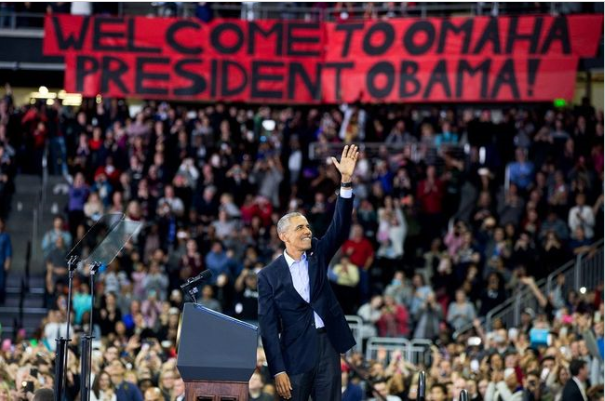
I have no antagonism for Barack Obama. He was elected because of the unpopularity of the Iraq War and George Bush who started it.  He inherited the Financial Crisis and pulled us out of it without another depression.  He has put us on the road to universal healthcare even though the structure of the Affordable Care Act does little to control costs.
Capture  But overall, the negatives of his presidency outweigh the positives.  Consider the situation we are currently in:

  • Stagnant Economy. The annual rate of growth of GDP since the end of the Great Recession in June 2009 has been an anemic 2% compared to our historical growth rate of 3% since the end of WWII. Although the official unemployment rate is down to a respectable 5%, there are millions of unemployed and underemployed people who have stopped looking for work. Obama and the Democrats in Congress have little interest in the tax reform and deregulatory measures which would boost economic growth.
  • Massive Debt. Our public debt (on which we pay interest) has doubled to over $13 trillion on Obama’s watch. As the Federal Reserve begins to raise interest rates to ward off inflation, interest payments on this debt will increase enormously. It is absolutely imperative to begin to substantially shrink our annual budget deficits. The Democratic Party, under his leadership, has expressed no willingness to do this.
  • Chaotic Middle East. The rise of ISIS in Syria, Iraq and North Africa, and the resulting refugee crisis in Europe is the result of weak U.S. leadership in the Middle East. Peace and stability depends on a strong U.S. presence in all trouble spots around the world. We neglect this responsibility at our peril.
  • Hyper-partisan Political Atmosphere. Stalemate in addressing these and other serious problems has led to the rise of extremist presidential candidates like Bernie Sanders and Donald Trump. Moderate candidates with successful experience in elected office are unable to gain political traction.

Our country is in a big mess. We are being guided by ideology rather than common sense.  I am optimistic by nature.  But it’s awfully easy to be pessimistic about our future.

Follow me on Twitter: https://twitter.com/jack_heidel
Follow me on Facebook: https://www.facebook.com/jack.heidel.3


After Two Years of Steady Job Growth, It’s Time to Bite the Bullet and Balance the Budget!


For the past two weeks I have been I have been complaining about Congress’s irresponsible budget for 2016 and that we should now be pushing hard for a Balanced Budget Amendment to the Constitution.  In my last post I make the case that a flexible BBA is compatible with economic growth and will, in fact, contribute to it once it goes into effect.
CaptureFriday’s job report for December strengthens this argument:

  • In 2015 there was an increase of 2.65 million new jobs only slightly less than 2014’s 3.15 million new jobs, the two best years for job growth since 2000.
  • The current unemployment rate of 5.0% is the best since the end of 2006.
  • Although wage growth at 2.4% for 2015 is not as strong as the early 2000’s, wages have now been climbing 2% faster than price inflation for the past three years.
  • The offsetting negatives are a still slow GDP growth estimated at 2.2% for 2015 and a still very low labor participation rate of 62.6%.

Conclusion:  At some point in the very near future the government needs to stop spending far in excess of tax revenue.  The sooner we recognize this the easier it will be to make the necessary correction.  Our economy is the strongest it has been since the end of the Great Recession in June of 2009.  Getting government spending in better sync with tax collections will be a big challenge and will not happen overnight.  In fact, if a BBA is required to get the job done it will take several years to implement this route to fiscal responsibility.
For all of these reasons now is the time to start moving on this gigantic and festering problem!

Is a Balanced Budget Amendment Compatible with Economic Growth?


I have devoted several recent posts to discussing the desirability of a Balanced Budget Amendment to the U.S. Constitution as well as the specifics of how to set it up in an effective yet flexible manner.
CaptureThe Wall Street Journal’s Greg Ip has a pertinent article along this line in today’s paper, “Don’t Celebrate the End of Austerity” in which he argues that the recent congressional deal for the current 2016 budget year, which I and many others have criticized as being fiscally irresponsible, will finally contribute to economic growth after five years of overly “austere” budgets.
This raises the critical question: is it possible to speed up economic growth without the stimulus of deficit spending?  Would a BBA create a stranglehold on spending which would slow down the economy? I feel very strongly that fiscal responsibility and economic growth are compatible and, in fact, contribute to each other in the long run.  Here is what we should do:

  • First of all, either through Congressional action or with a Constitutional Convention, a BBA needs to be proposed, and then ratified, to put our fiscal house in order before our rapidly growing debt rises to ruinous levels. A flexible BBA would include a five year phase in period, after ratification, to give Congress time to prepare for it. There will be some pain in achieving this initial balance but it needs to be done and the sooner the better.
  • Secondly, a flexible BBA would also allow for a 2/3 majority of each House to override strict balance. This feature could be used not only for a wartime emergency, for example, but also for occasional recessionary periods where stimulus is needed.
  • Finally, keep in mind that the real goal is not a BBA per se, but rather to put our debt on a downward path over time as a percentage of GDP. This is what a flexible BBA will accomplish.

Once initial balance is achieved, it will be relatively easy to hold new debt down to manageable levels. Our current fiscal problem will then be largely solved and we can continue building a stronger, freer and more prosperous future for our country.

Follow me on Twitter: https://twitter.com/jack_heidel
Follow me on Facebook: https://www.facebook.com/jack.heidel.3
The Wider Value of a Balanced Budget Amendment


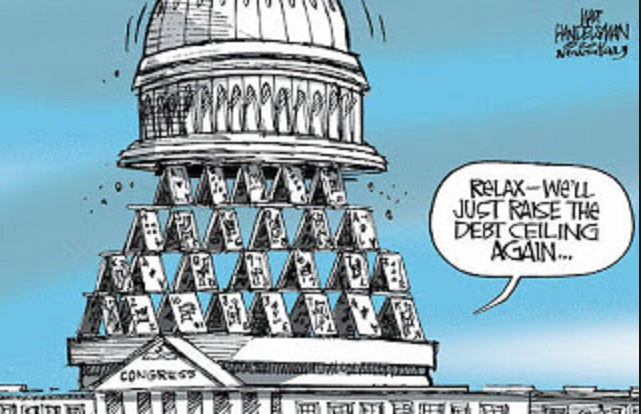
Several recent posts, especially here and here, have advocated for a BBA to the U.S. Constitution and pointed out that 27 states (out of a required 34) have now called for a Constitutional Convention to propose a BBA. I pay careful attention to the responses I receive to my posts.  Several folks have said that while they support a balanced budget, there are other higher priorities for them, such as ending wasteful and inefficient programs or focusing more on the needs of people rather than being overly worried about budgetary matters.
CaptureI contend that a carefully formulated BBA would do far more than just solve our debt problem, as important as this is.  For example:

  • An essential component of a BBA would require the President to submit a balanced budget to Congress each year. So it starts out by forcing the Administration to set priorities. If a new program is advocated, fine, but then it has to be offset by cutting back on existing programs, or else raising taxes. Congress need not accept the President’s priorities but then it has to set its own.
  • It would become a huge priority for both Congress and the President to carefully examine all programs to ferret out waste and inefficiency. There would be an incentive for programs to be shifted to the states, with the flexibility to make them more effective, in return for cost savings.
  • The best way to raise stagnant wages for the middle class is to make the economy grow faster. The best way to grow the economy faster is broad-based tax reform, with lower tax rates across the board, paid for by closing loopholes and shrinking deductions. But faster economic growth will also bring in more tax revenue, therefore making it easier to shrink the deficit and balance the budget.

Conclusion: A Balanced Budget Amendment to the U.S. Constitution would have many benefits, beyond “mere” fiscal responsibility. Next question: how should a BBA be formulated to insure that it is both effective and flexible enough to allow response to emergencies?

Follow me on Twitter: https://twitter.com/jack_heidel
Follow me on Facebook: https://www.facebook.com/jack.heidel.3

Republican Congress Approves Irresponsible Budget


Congress has adjourned for Christmas having passed a final budget for the 2016 Fiscal Year extending through next September. It puts into place for this year the two year spending agreement reached between Congress and the President in October.  However Congress started out the year by passing a ten year budget plan resolution leading to a balanced budget by 2025.  The budget just passed leads instead to a deficit of $1.1 trillion in 2025.
CaptureHere are the details as described by the nonpartisan Committee for a Responsible Federal Budget:

  • Revenue: decreased under new budget by a $650 billion (over ten years) by making various temporary tax deductions permanent.
  • Discretionary Spending: increased by $50 billion for the current budget year (by breaking the sequester cap).
  • Medicare: instead of saving $430 billion over ten years, Medicare spending is increased by $95 billion over ten years.
  • 2025 Deficit: instead of shrinking to zero in ten years, it is now projected to be more than $1 trillion in 2025.
  • 2025 Debt: currently the (public, on which we pay interest) debt is 74% of GDP. The ten year balanced budget plan would reduce the debt to 56% of GDP. Instead, the debt is now on track to reach 80% of GDP by 2025.

Granted the Republican Congress hopes to develop a tax reform plan in 2016 which would lower tax rates for everyone, paid for by closing many of the loopholes and deductions just approved last week. One very good way to do this has recently been proposed by the Tax Foundation. The TF plan would boost economic growth and thereby increase tax revenue substantially over ten years.
The problem is that real tax reform is unlikely to happen without a Republican president in office.  If a Democratic president is elected in 2016, then the dire predictions made by the CRFB (above) are likely to remain valid for the foreseeable future. Our fiscal and economic future remains quite precarious at the present time!

Follow me on Twitter: https://twitter.com/jack_heidel
Follow me on Facebook: https://www.facebook.com/jack.heidel.3
Stopping Donald Trump II. Less Inequality or More Growth?


In my last post I presented the argument that voters are often more reasonable than the populist leaders who are trying to appeal to them.  They would rather hear something more optimistic than rage against a dangerous world.
Capture0But there is a difference of opinion on how to reach these voters:

  • Leading Democratic presidential candidate Hillary Clinton endorses the Buffett Rule which calls for millionaires to pay a minimum tax of 30% on their income. Says Clinton, “I want to go even further because Warren is right. I want to be the president for the struggling, for the striving and the successful.”
  • All of the Republican presidential candidates, including Donald Trump, have tax reform plans which will grow the economy but none of which are revenue neutral. In other words, they will all add to annual deficits and therefore make our debt problem much worse than it already is.
  • The nonpartisan Tax Foundation has issued a new report, “Options for Broadening the U.S. Tax Base,” which proposes capping itemized deductions at $25,000 per individual combined with
    i)   cutting the corporate tax rate to 27%
    ii) cutting the top three ordinary income brackets by 5%, and
    iii) implementing a top capital gains tax rate of 20%.
    Such a plan would be revenue neutral and would lead to a long term GDP gain of 2.7%, a long term wage gain of 2.2% and a ten year dynamic revenue gain of $759 billion.

The Clinton plan would bring in up to $50 billion per year in new tax revenue but would do little to boost the economy. The Republican presidential tax plans are fiscally irresponsible. The Tax Foundation plan would boost the economy and reduce deficits rather than increase them.  Other specific reforms would boost the economy even more.
In other words there are clear cut ways to create more jobs and raise wages.  This is a message which should appeal to the angry and disaffected voters who are attracted to Donald Trump.

Follow me on Twitter: https://twitter.com/jack_heidel
Follow me on Facebook: https://www.facebook.com/jack.heidel.3


The Best Way to Stop Donald Trump


The main sources of background information for my posts are The New York Times and the Wall Street Journal. I read the Economist but most of the time it is either too esoteric or else too far  removed from the specifics of U.S. fiscal and economic policy which I am interested in.  But this week they have hit the nail on the head regarding Donald Trump and his fellow right-wing populists around the world.
Capture0
Says the Economist:

  • Populists differ but the bedrock for them all is economic and cultural insecurity. Stagnant wages hurt a cohort of older working-class white men whose jobs are threatened by globalization and technology. Jihadist terrorism pours petrol on this resentment and extends populism’s appeal.
  • Nobody should underestimate how hard it is to take the populists on. It is a huge mistake to dismiss their arguments by calling them fascist or extremist. Such disdain risks suggesting that political leaders are uninterested in the real grievances the populists play on.
  • The best way to overcome resentment is economic growth – not putting up walls. The best way to defeat Islamist terrorism is to enlist the help of Muslims – not to treat them as hostile.
  • Voters are often more reasonable than the populist leaders who are trying to appeal to them. Most of them would sooner hear something more optimistic than rage against a dangerous world.
  • Politicians also need to deal with the populists’ complaint that government often fails them. Reluctance to deploy more troops against the ISIS caliphate in Syria and Iraq does not appear to be a serious strategy to defeat it.

Conclusion: There is a clear path forward for candidates with a positive message of openness and tolerance and realistic plans to make the economy grow faster. Who is best situated to deliver such a message?  Stay tuned!

Follow me on Twitter: https://twitter.com/jack_heidel
Follow me on Facebook: https://www.facebook.com/jack.heidel.3

Tax Reform and Economic Growth


In a recent post I pointed out that both Republican and Democratic presidential candidates are being unrealistic with their tax reform proposals:

  • The Republican plans would stimulate the economy but at the cost of huge increases in the national debt, even taking into account the growth effects of these plans.
  • Raising the top tax rate to 50%, a Democratic idea, would bring in an additional $100 billion per year in tax revenue, but this is neither enough to make a big dent on budget deficits or appreciably lower income inequality by redistribution.
    Capture

The nonpartisan Tax Foundation has just released a new report, “Options for Broadening the U.S. Tax Base,” describing three different ways to do this:

  • Ending the exclusion of employer-sponsored health insurance
  • Removing the cap on the social security payroll tax
  • Capping itemized deductions at a fixed dollar level

Combined with marginal tax rate cuts, each of these options would lead to substantial economic growth.  However, the first option, ending the exclusion of employer-sponsored health insurance, is unlikely but rather this exclusion could be turned into tax credits as part of further healthcare reform.  Likewise, removing the cap on the social security payroll tax is more likely to be used to raise additional revenue to make social security financially sound for the long run.
However, the single measure of capping itemized deductions at $25,000 per individual could be combined with

  • Lowering the corporate tax rate to 27%
  • Cutting the top three ordinary income brackets by 5%
  • Implementing a top capital gains tax rate of 20%

Such changes would be revenue neutral and would lead to a long term GDP gain of 2.7%, a long term wage rate gain of 2.2% and a ten year dynamic revenue gain of $759 billion.
Conclusion:  it is possible to cut tax rates, broaden the tax base and grow the economy all at the same time and without increasing the deficit.  This is what we should be doing!

Follow me on Twitter: https://twitter.com/jack_heidel
Follow me on Facebook: https://www.facebook.com/jack.heidel.3

The Many Things I Am Thankful For


My website, “It Does Not Add Up,” is primarily concerned with the very serious fiscal and economic problems faced by the U.S.  Occasionally I write about other critical issues such as how the U.S. should respond to the recent terrorist attacks in Paris.  Or what can be done to address the K-12 academic achievement gap between kids from low income families and those from middle class families (an issue I am personally involved in).
CaptureToday I will try to express what I think is right about our country and why I am so thankful to be an American:

  • America is the strongest, wealthiest and one of the freest countries on earth.
  • We owe a huge debt of gratitude to those who came before us and have built such a wonderful country for us to live in.
  • We can vigorously debate our differences of opinion about how to move forward.
  • There is enormous energy, enthusiasm and participation in constantly striving to make the U.S. a freer, more just and more prosperous nation.
  • We resolve our differences peacefully through a democratic political process – one person, one vote.
  • We try to give everyone an equal opportunity to get ahead.
  • We have a vast safety net to take care of the less fortunate members of society and those who fall through the cracks.
  • We try especially hard to lift up a whole class of people who have historically been discriminated against. Slowly but surely progress is being made on this difficult task.
  • On the whole we accept our responsibility, as a strong and prosperous nation, to provide leadership in maintaining peace and stability around the world.

As you can see, I am an optimist. We do have big problems but we’re also doing many things right.  America will continue to flourish in the future because we will successfully meet our many challenges.  This won’t happen automatically or necessarily easily but rather because so many capable and dedicated people are working so hard to achieve it.  The political process will ultimately respond to the true will of the people.

What Defines a (Fiscal) Conservative?


After four debates among the Republican presidential candidates, differences between them are becoming clearer.  The New York Times has an interesting article about this in today’s paper, “G.O.P. Fight Is Now a Battle Over What Defines a Conservative.”
CaptureHere are my views on the four issues discussed:

  • A Wall or a Path? We need to solve our illegal immigration problem and the key is to set up a viable guest worker program. The fact is that our economy needs foreign workers for many jobs which require hard physical labor such as in agriculture, meatpacking and construction trades. If businesses are able to bring in immigrants when sufficient domestic labor is not available, then other issues such as border security and verifying legal status can easily be resolved.
  • The U.S. Place in the World. U.S. leadership makes the world a safer place. This means we need a strong military presence all around the world as well as active alliances, trade and military, with many other countries.
  • Of Banks, Bailouts and Blame. The cause of the financial crisis was the bursting of the housing bubble, in turn caused by an unrealistic government housing policy as well as lax enforcement of existing regulations. Blaming greedy bankers is a copout. The Dodd-Frank Law is overkill which creates a drag on the economy by hampering smaller financial institutions and community banks. The best way to control large banks is to increase their capital requirements.
  • Who Should Get Tax Cuts? The main purpose of tax reform should be to boost the economy without increasing deficit spending. The way to do this is with across the board cuts in tax rates, paid for by closing loopholes and shrinking deductions. Here are some details. The 64% of taxpayers who do not itemize deductions will get an immediate tax cut and income inequality will be greatly reduced.

Getting the answers to these issues correct will have a large effect on the future wellbeing of our country.  The Republican presidential candidates should be commended for grappling with them in a productive manner.