The Origins of Trumpism IV. The White Working Class


The U.S. political and cultural establishment is constantly bemoaning the election of Donald Trump as President and is convinced that it will hurt our country. He was elected because of his strong support from blue-collar workers.
I’m not so much afraid that he’ll be a disaster as that he will be ineffective in addressing our country’s many urgent problems.  Primarily I am trying to understand, here and here, why he was elected and what this means for the future.


Here is another clue.  The book “White Working Class: overcoming class cluelessness in America,” by Joan Williams, describes clearly who constitutes the white working class (WWC) and how it differs fundamentally from the class of professional and managerial elites (PME). Here is a brief outline of her argument:

  • Definitions. The top 1% (in income) are the wealthy, the top 20% are PME, the next 50% are the working class and the bottom 30% are the poor. The median income of a working class family is $75,000 while the median income of a poor family is $22,500.
  • The PME are order givers and value sophistication, boundary breaking and creativity. The WWC are order takers and value stability and dependability.
  • Why does the working class resent the poor? The poor get welfare benefits while the working-class may have rigid, highly supervised jobs which are often boring and repetitive which makes their work psychologically challenging. They do not receive welfare.
  • Why does the working class resent professionals? Elites seek out novelty, irony and polish while the working class seeks out stability and sincerity. The WWC often see the PMC as phony.
  • Is the working class sexist? For working class women becoming a homemaker signals a rise in status. For PME women this entails a fall in status.
  • Don’t they understand that manufacturing jobs aren’t coming back? This is more or less true but too pessimistic. There is a severe shortage for Americans trained for middle-skill jobs requiring some post-secondary education but not a four year college degree.

Conclusion.  This description should be understood as a general overview of the differences between the WWC and the PME (with many individual and particular exceptions). As such it helps in explaining why Donald Trump received such a large share of the WWC vote.  

Follow me on Twitter 
Follow me on Facebook 


The Democrats and the Economy II. A Path Forward


On Monday the Democratic Congressional leadership held a rally in rural Berryville, Virginia. They laid out a program designed to appeal to the middle class and blue-collar workers who voted for Donald Trump.  However many of their proposals involve expensive government programs and therefore would add significantly to the national debt.


What is needed is a greater emphasis on free-market ways of helping middle- and low-income workers such as:

  • Increasing basic economic growth which has stalled to a relatively slow 2% per year of GDP since the end of the Great Recession in June 2009. For example:
  • Revenue neutral tax reform, lowering rates for both individuals and corporations, paid for by closing loopholes and shrinking deductions, would have many benefits. It would stimulate business investment, create new demand by lowering the taxes paid by the approximately 2/3 of taxpayers who do not itemize deductions, and provide an incentive for multinational corporations to bring their foreign profits back to the U.S. for reinvestment.
  • Targeted deregulation of the financial sector by exempting main street banks from the onerous requirements of the Dodd-Frank Act would enable these smaller banks to lend more money to small businesses.
  • Fundamental healthcare reform to lower costs from the current 18% of GDP to the approximate 12% average of other developed countries. This would save the American economy $1 trillion annually which could be spent far more productively. The Democrats are on the right track here by refusing to accept Republican half measures.
  • Improve educational opportunities such as early childhood education for low-income families, expanded career education and job training in high school and community colleges, and more emphasis on income-based repayment for student college debt. There would be some cost involved here.
  • Modest increase in the national minimum wage from the current level of $7.25 per hour to perhaps $10 per hour and then index it to inflation going forward. The Democratic proposal for a national $15 per hour minimum wage would put too many people out of work.

Conclusion. This collection of proposals involves both Democratic and Republican ideas and should be implementable with a bipartisan effort.

Follow me on Twitter 
Follow me on Facebook 


The Democrats and the Economy


The Democratic Party is starting to wake up. Donald Trump was elected President because he was able to appeal to blue-collar workers who feel left behind in today’s high tech global economy.
Yesterday the Democratic Congressional leadership held a rally in rural Berryville, Virginia to lay out an economic program to try to appeal to these very same Trump voters.


Such a program, would, for example:

  • Increase people’s pay by lifting the national minimum wage to $15 per hour and also creating jobs with a $1 trillion infrastructure plan.
  • Reduce their everyday expenses by providing paid family and sick leave as well as breaking up large monopolies which can raise prices without restraint. Also empowering Medicare to negotiate lower drug prices for older Americans.
  • Provide workers with the tools they need for the 21st century economy by giving employers, especially small businesses, a large tax credit to train workers for unfilled jobs.

Unfortunately, there are problems with most of these ideas. In Seattle even a $13 per hour minimum wage has significantly reduced minimum wage work. The national minimum wage should be raised but to a more modest level.
There is no demonstrated need for a large-scale publicly funded infrastructure program and it would add hugely to the national debt.
A jobs program to maintain the employment rate for prime-age workers without a bachelor’s degree at the 2000 level of 79% and at a living wage of $15 per hour plus benefits would cost $158 billion per year.


Conclusion. Yes, blue-collar workers are hurting.  Yes, some of the ideas suggested above would help them get ahead.  But many would also increase already large deficit spending and therefore add dramatically to the national debt.  What is needed is a combination of free market initiatives and carefully targeted government programs.  Stay tuned!

Follow me on Twitter 
Follow me on Facebook 


The Right Way to Deregulate Wall Street


The economy has been chugging along at about 2% annual GDP growth ever since the end of the Great Recession in June 2009. Unemployment has been steadily dropping and is now a fairly low 4.4%.  Low wage earners are now even beginning to see bigger gains in pay.
Most people would like to speed up economic growth even more.  Tax reform will help in this regard but so will sensible deregulation.  Barron’s has an excellent article this week about deregulating Wall Street by William D. Cohan.


According to Mr. Cohan:

  • GDP growth is highly correlated with bank lending.
  • The Dodd-Frank Act, passed by Congress in 2010, has disproportionately burdened community banks, despite their having no role in the financial crisis.
  • More than 1700 U.S. banks have disappeared since Dodd-Frank was passed.
  • Senator John Kennedy (R, LA) has introduced a bill which would exempt community banks and credit unions with assets of less than $10 billion from the Dodd-Frank Act.
  • As a result of Dodd-Frank, big banks are now required to have more capital and less leverage. Today a bank’s assets would have to fall about 7% before a bank’s capital would be wiped out, as opposed to only 2% in 2008.  This makes them safer.
  • Prior to 1970 the Wall Street partnership structure ensured that bankers had plenty of skin in the game – essentially their full net worth was on the line every day.
  • Today bankers and traders are rewarded for taking risks with other people’s money. Mr. Cohan recommends that the top 500 traders and executives at every big bank have a significant portion of their net worth on the line.

Conclusion. Mr. Cohan’s program would not only give a big boost to the economy by enabling community banks to lend more freely but would also make our financial system safer by requiring top financiers to have skin in the game.

Follow me on Twitter 
Follow me on Facebook 
 

It’s Time for a Bipartisan Approach to Healthcare Reform


The Affordable Care Act was passed by a Democratic Congress in 2010 with no Republican support. It expands access to healthcare but does nothing to control costs which have now reached 18% of GDP and climbing.
The current Republican Senate bill to replace the ACA does attempt to control costs but is unable to attract enough support to pass.
The problem is to achieve both broad access and much lower costs at the same time.  In general, Democrats prefer a single payer system while Republicans want to retain a free market approach.  So compromise will be required.


For example:

  • The tax exemption for employer provided health insurance should be replaced by a universal (and refundable) tax credit for all limited to the cost of catastrophic health insurance (with a high deductible). This will preserve expanded access as well as requiring everyone to pay attention to costs.
  • Tax preferred health savings accounts for routine healthcare expenses should be authorized and further subsidized for low-income families through the ACA exchanges.

  • Medicaid (for poverty-level families) should be put on a fixed federal budget to control runaway costs. States should be given much greater flexibility to direct resources to those with the greatest needs.
  • Redesign of Medicare. Medicare is currently being subsidized by the federal government (after FICA taxes and premiums paid) at over $400 billion per year.  Introducing a defined contribution element into this single payer program will help to hold down costs.

  • Pre-existing Conditions can be covered with suitable enrollment windows and state-run high-risk pools.

Conclusion. The ACA has achieved nearly universal access to healthcare in the U.S. But costs continue to rise sharply.  A universal tax credit combined with health savings accounts for the private market combined with a defined contribution single payer Medicare system has a good chance of getting overall healthcare costs under much better control.

Follow me on Twitter 
Follow me on Facebook 

Boosting the Middle Class


My last two posts, here and here, have dealt with the contention by Richard Reeves  that the real inequality gap in the U.S. is not between the top 1% (the wealthy) and the bottom 99% but rather between the top 20% (the upper middle class) and the remaining 80%.
The top 20% are the highly educated doctors, lawyers, business managers, successful entrepreneurs, academics, journalists, etc. who thrive in the global economy, largely shielded from the intense market competition faced in the non-professional occupations. Basically the upper 20%, with incomes of $112,000 and up, have it made.
The question is then, how do we give a boost to the people in the middle- and lower-income brackets so that more of them can enjoy much of the same prosperity as the top 20%?


The answer is to:

  • Make the economy grow faster than the slow 2% annual GDP growth we have had since the end of the Great Recession in June 2009. With sensible tax and regulatory reform, we should be able to achieve a growth rate of 2.5% per year.  This will create more jobs and better paying jobs.
  • Improve educational opportunities by, for example, making early childhood education widely available to low-income families, attracting the best teachers to the poorest schools with targeted bonus pay, and funding college more fairly by requiring that all student debt repayment be income-based.
  • Fundamentally reform the American healthcare system in order to reduce healthcare costs from the current 18% of GDP to about 12% which is the average for other developed countries. This will save the American economy $1 trillion per year in unnecessary and extravagant costs, which could be put to much better use for higher worker pay, expanded social services and shrinking annual deficit spending.

Conclusion. The U.S. is a very prosperous country but clearly we can do an even better job to improve the quality of life for many more Americans.

Follow me on Twitter 
Follow me on Facebook 

Can Economic Prospects for the Middle Class Be Improved?


Donald Trump was elected President last fall because of his surprising and unexpected strength with blue-collar workers. These folks have had a rough time in the 21st century economy: high unemployment, unstable marriages, opioid addition, lower longevity, etc.

My last post discusses a new book by Richard Reeves which makes the case that the real inequality in the U.S. is between the top 20% (the upper middle class) and the lower 80%.  The upper middle class are mostly the well-educated professionals who benefit from the modern high-tech global economy.  Mr. Reeves believes that this elite group is so entrenched with privileges as to be self-perpetuating. His response to this situation is to try to expand opportunity more widely by, for example:

  • Reducing unintended pregnancies through better contraception by making LARCs (long-acting reversible contraceptives) more widely available to free more young women from the burden of unwanted children.
  • Expanding access to early childhood education including home visitation to give a big preschool boost especially to kids from low-income families.
  • Getting better teachers for unlucky kids by giving teachers a substantial bonus to teach in high poverty schools. This will attract better teachers to the more challenging schools.
  • Funding college more fairly. Free college is a terrible idea. It would just be yet another boondoggle for the upper middle class. All student debt repayment should be income-based. The status of vocational postsecondary learning (at community colleges) should be elevated.

Conclusion. The idea here is not to pull down those who are well off but rather to give more people the opportunity to succeed in the modern economy. Of course, faster economic growth is another way to create more and better paying jobs.  But faster economic growth has its own limitations and, at any rate, is difficult to achieve with a rapidly aging population.  I will return to this topic soon!

Follow me on Twitter 
Follow me on Facebook 


The Origins of Trumpism III. The Upper Middle Class


Like everyone else, I am trying to understand how such a sleazy and personally obnoxious individual as Donald Trump was elected President of the United States. We know that his core supporters are white working-class voters.  We also know that our relatively stagnant 21st century economy has been very difficult on blue-collar workers.


But here is another thread.  The author, Richard Reeves, in the new book “Dream Hoarders” makes a strong case that the real inequality gap in the U.S. is not between the top 1% (the wealthy) and the bottom 99% but rather between the top 20% (the upper middle class) and the remaining 80%.
Consider:

  • The top 20% consists of households with an income above $112,000 per year (see chart). Such households saw a $4 trillion increase in incomes between 1979 and 2013. A third of this income rise went to the top 1%. But this still left $2.7 trillion for the next 19%. The lower 80% saw an income rise of $3 trillion over this same period.
  • The top 20% are the highly educated doctors, lawyers, business managers, academics, think tankers, journalists, etc. These are the people who flourish in a global economy, largely shielded from the intense market competition faced in the nonprofessional occupations.
  • Donald Trump tapped into the anxiety of the lower 80%. He received 58% of the total white vote but 67% of the votes of whites without a college degree.
  • The upper middle class tend to perpetuate their inherent advantages. They tend to have stable marriages and live in the best neighborhoods with the best public schools. They can afford to send their kids to the best colleges. Most of their kids will remain in the upper middle class.

Conclusion. Such a thriving and self-perpetuating upper middle class can cause severe resentment amongst the bottom 80% who have to work much harder to make ends meet. How should this very difficult problem of entrenched elitism be addressed?  Stay tuned!

Follow me on Twitter 
Follow me on Facebook 


Time to Start Over on Healthcare Reform


The Affordable Care Act, established in 2010, greatly expanded access to healthcare in the U.S. However, in spite of its name, it has done nothing to control the rapidly increasing cost of healthcare which is the core of our debt problem.


The new Senate plan, struggling to gain enough support to pass, puts Medicaid on a budget but doesn’t even attempt to address wider aspects of the healthcare cost problem.
A wider approach is the best way to proceed and perhaps now it is the only way to succeed in getting something done. Mr. Peter Suderman, who writes for Reason magazine, proposes several principles for a new approach:

  • Work for broader coverage but not necessarily universal coverage. This allows focusing on other important features such as:
  • Unification, not fragmentation, is what should be emphasized. Medicare and Medicaid are paid for directly by the government. Employer provided coverage, subsidized through the tax code and costing $250 billion per year, is the biggest problem in the U.S. healthcare system. It incentivizes employers to provide ever more generous insurance while insulating individuals from the true cost of care. It discourages job switching and entrepreneurship. Medicare ends up paying out far more than individuals have paid in.
  • Health insurance coverage is not the same as healthcare. For non-catastrophic, non-emergency expenses, affordability should be emphasized, rather than subsidies. Health savings accounts are a good way to accomplish this.
  • Focus on government assistance for the poorest and sickest. This means upgrading Medicaid, and coverage for pre-existing conditions, at the same time as putting Medicaid, Medicare and employer provided care all on a fixed, but reasonable, budget.

Conclusion. The cost of American healthcare is a huge problem. Hopefully the Senate will begin to address this fundamental problem as it struggles to pass a healthcare reform bill.

Follow me on Twitter 
Follow me on Facebook 
 

America’s Most Serious Problem: Excessive and Growing Debt


I know that I repeat myself a lot. I am a fiscal conservative and social moderate.  This puts me in the middle of the political spectrum from left to right.  I support social welfare programs if they are legitimately helping the less fortunate among us.  I am especially supportive of programs for African-Americans because of the racial bias they experience.


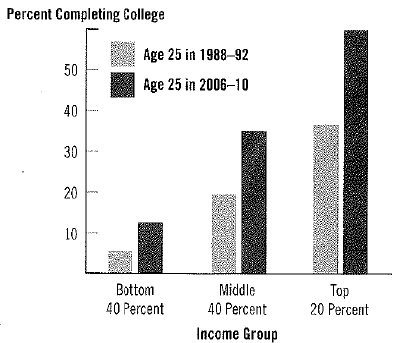
Unfortunately our national leaders have collectively lost a sense of fiscal responsibility in recent years.  Looking at the standard debt chart (above) produced by the Congressional Budget Office, it is clear that indifference to debt commenced under President Reagan and has waxed and waned ever since.  The debt has been growing especially fast ever since the Great Recession in 2008 and now stands at 77% of GDP, the highest since the end of WWII.  Shrinking the debt (as a percentage of GDP) is now America’s most urgent problem.


As I have discussed before, it is the entitlement programs of Social Security, Medicare and Medicaid, as well as interest payments on our increasing debt which will continue to worsen the debt problem in the coming years  without strong corrective action.
All entitlement programs need to be reformed to impose cost control. Right now the two healthcare bills in Congress propose that the funding mechanism for Medicaid be changed so that it will be on a fixed (federal) budget from now on, rather than be continued in its current open-ended form.
Medicare is an even more expensive program than Medicaid.  It would be better to fix both of these programs at the same time, but it is better to fix Medicaid alone than to do nothing at all.
It would be even better to replace our employer provided healthcare system with a uniform, but limited, health insurance tax credit for all (including for the self-employed) and to make all of these major changes at the same time.  This would be the fairest way to proceed.

Conclusion. The current GOP plan to curtail healthcare costs could be much improved.  It is only a small step in the right direction.

Follow me on Twitter 
Follow me on Facebook