Is America Falling Behind?


Yesterday’s New York Times has a very interesting article, “U.S. Middle Class No Longer World’s Richest”, demonstrating that from 1980 -2010 the median wage in many other developed nations has grown faster than in the U.S.  The chart below does show that the U.S. median wage is still growing but just not as fast as elsewhere.
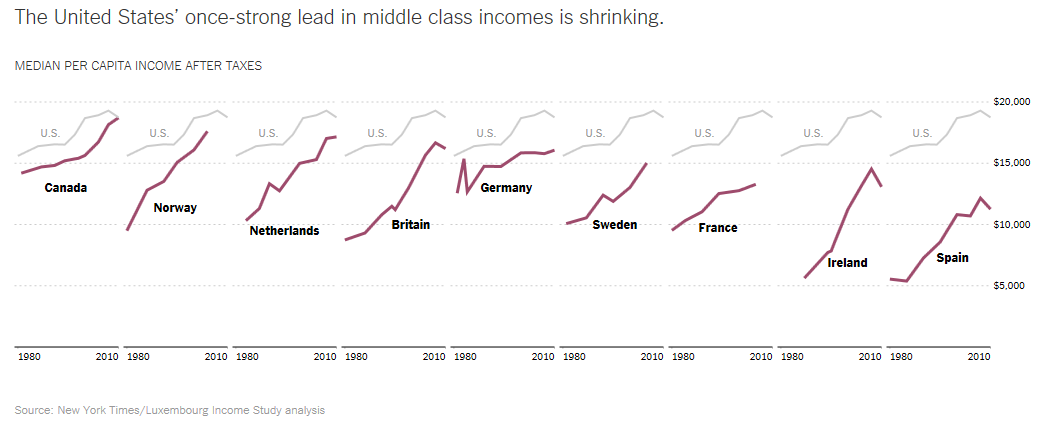
CaptureThe authors suggest three reasons to explain what is happening:

  • Educational attainment in the U.S. is growing more slowly than in the rest of the industrialized world.
  • A larger portion of business profits in the U.S. is going to top executives meaning less for middle and low income workers.
  • There is a higher degree of income redistribution (through taxation) in Canada and Western Europe than in the U.S.

The data presented in this article is more elaborate but nevertheless consistent with what other studies are showing.  We are still on top but we need to make some major changes in order to stay there.  For example:

  • Most states have adopted the national Common Core curriculum for K – 12 schools. In today’s highly competitive global environment, this will enable a more rigorous evaluation of educational attainment between the states and should, therefore, improve overall academic achievement.
  • The best way to raise salaries for middle and low-income workers is to boost economic output overall. Fundamental tax reform, with lower tax rates for everyone, offset by closing loopholes and lowering deductions for the wealthy, will put more money in the hands of the people most likely to spend it. This will increase demand and make the economy grow faster.
  • As a highly visible way of addressing economic inequality in the U.S., institute a relatively small, i.e. 1% or 2%, wealth tax on the assets of individuals with a net worth exceeding $10 million. This would raise up to $200 billion per year which could be used for an extensive infrastructure renewal program, creating lots of jobs and further boosting the economy, with a lot left over to devote to shrinking our massive federal deficits.

A program like this encourages everyone to work hard and reach their highest potential, including accumulating as much wealth as they are able to.  But the people at the very top, i.e. the superrich, will be required to give back a little bit more in order to benefit the entire country.

The Resurrection of Karl Marx II. Let’s React But Not Overreact!


This morning’s Wall Street Journal has a book review by the New York fund manager, Daniel Shuchman, “Thomas Piketty Revives Karl Marx for the 21st Century” of Thomas Piketty’s new book “Capitalism in the Twenty-First Century.” As I recently discussed, Piketty makes the simple observation that income from wealth, i.e. investment income, grows faster than income from wages or GDP.
CaptureHe then provides a large quantity of data showing how this has played out since the end of WWII.  He plausibly predicts that the value of private capital as a percentage of national income will continue to grow indefinitely into the future.
CaptureThis much is straightforward.  The question is how we should react to a steadily increasing and very large concentration of wealth in the hands of a small percentage of people.  Mr. Piketty’s own idea is, for example, to establish an 80% tax rate on incomes starting at “$500,000 or $1,000,000” in order “to put an end to such incomes.”  Mr. Shuchman attempts to discredit Mr. Piketty by focusing in on such socialistic views for dealing with the problem rather than discussing the intrinsic merit of Piketty’s basic thesis about the buildup of great wealth in the first place.
My own view is that Mr. Piketty has clearly identified a weakness of capitalism and that it behooves supporters of free markets and private initiative to address this problem in a constructive way, for example, as follows.
We need fundamental broad-based tax reform, i.e. lower tax rates in exchange for closing loop-holes and lowering deductions, in order to boost the economy and create more jobs.  As part of a major tax overhaul, we could also establish a relatively small wealth tax, of about 1% or 2%, on assets over $10,000,000, which would raise as much as $200 billion per year.  This much money could be used to begin a large scale program of infrastructure renewal as well as leaving a lot left over to make significant payments on reducing our annual deficit.
Such an overall plan would address both income inequality and wealth inequality in a highly visible manner while simultaneously helping our economy.

The Resurrection of Karl Marx


The French economist Thomas Piketty is creating a huge stir with the publication in English of his new book “Capital in the 21st Century.”  Mr. Piketty develops a very simple idea, with reams and reams of data.  Namely that income from wealth, i.e. investment income, typically grows faster than income from wages and GDP.  This means that the value of private capital is growing steadily as a percentage of national income.  This trend has been occurring ever since 1950, at the end of WWII, and is likely to continue indefinitely absent new mega shocks to the global economy such as another world war.
CaptureIn other words, wealth inequality is rapidly increasing just as is income inequality.  Today’s New York Times has an interesting article “Taking on Adam Smith (and Karl Marx)”  discussing Mr. Piketty’s background and how it has influenced his research.  “No revolutionary, Mr. Piketty says that inequality by itself is acceptable to the extent it spurs individual initiative and the generation of wealth.  But extreme economic inequality, he contends, will have a deep and deleterious impact on democratic values,” says the reporter.
Now that income inequality and wealth inequality are clearly well documented, the question is how our democratic society will respond through the political process.  First of all, we need to agree to take the problem seriously.  Equality of opportunity and economic mobility still exist but it is getting harder and harder to move up the income ladder. What our country badly needs right now is an economic program that will get our economy growing faster in order to create more jobs as well as bringing in more tax revenue to pay for government.
One way to accomplish this is with

  • Broad-based tax reform to lower rates in order to put more money in the hands of people who will spend it on basic necessities as well as business expansion. Lower rates can be paid for by closing loopholes and deductions which primarily affect the wealthy.
  • A low percentage (1% or 2%) tax on wealth (i.e. financial assets) with a fairly high personal exemption of perhaps $10 million in order to only include the most wealthy. This would raise about $200 billion per year which could be used to fund a wide scale infrastructure renovation program which would provide employment to millions of people.

Such a wealth tax would be a highly visible means of addressing economic inequality in a way which would greatly benefit to the economy at the same time.

Is Capitalism in Crisis?


The economist and public lecturer, Richard Wolff, gave an address in Omaha NE last night, entitled “Capitalism in Crisis: How Lopsided Wealth Distribution Threatens Our Democracy”.  His thesis is that after 150 years, from 1820 – 1970, of steadily increasing worker productivity and matching wage gains, a structural change has taken place in our economy.  Since 1970 worker productivity has continued to increase at the same historical rate while the median wage level has been flat with no appreciable increase. This wage stagnation has been caused by an imbalance of supply and demand as follows:
Capture

  • Technology has eliminated lots of low skill and medium skill jobs in the U.S.
  • Globalization has made it less expensive for low skill jobs to be performed in the developing world at lower cost than in the U.S.
  • At the same time as jobs were being replaced by technology and disappearing overseas, millions of women entered the labor force.
  • A new wave of Hispanic immigration has caused even more competition for low skilled jobs.

In addition, stagnant wages for the low skilled and medium skilled worker have been accompanied by an increase in private debt through the advent of credit cards and subprime mortgage borrowing.  This enormous increase of consumer debt led to the housing bubble, its bursting in 2007-2008, and the resulting Great Recession.
Five years after the end of the recession in June 2009, we still have an enormous mess on our hands: a stagnant economy, high unemployment, massive and increasing debt and a fractious political process.  How in the world are we going to come together to address our perilous situation in a rational and timely manner?
Mr. Wolff believes that capitalism’s faults are too severe to be fixed with regulatory tweaks.  He also agrees that socialism has proven to be unsuccessful where it has been tried.  He proposes a new economic system of “Workers’ Self-Directed Enterprises” as an alternative.
I agree with Mr. Wolff that capitalism is in a crisis but I think that it can be repaired from within.  The challenge is to simultaneously give our economy a sufficient boost to put millions of people back to work and to do this while dramatically shrinking our annual deficits in order to get our massive debt on a downward trajectory as a percent of GDP. How to do this is the main focus of my blog, day in and day out!

Response to a Persistent Critic


You keep saying that we need lower tax rates to boost the economy but what makes you think this will help? Businesses are sitting on piles of cash. They have plenty of money to invest in expansion. What they need are more customers. The basic problem is not enough demand for more goods. This is what is holding back the economy. It doesn’t much matter what the tax rates are. If the demand and customers are there, businesses will spend their own money or borrow as much money as they need, at low interest rates, to produce all the products they can sell.                                                                                                                Anonymous Critic

I have several responses to this criticism:

  • First of all I want to make it clear that all cuts in tax rates must be offset by shrinking or eliminating tax preferences.   So there will be no loss of tax revenue. Two thirds of all taxpayers take the standard deduction and will therefore automatically benefit from lower tax rates. This will put tens of billions of new dollars into the hands of middle class wage earners who will spend most of this money because they have tight budgets. This will give the economy a big boost.
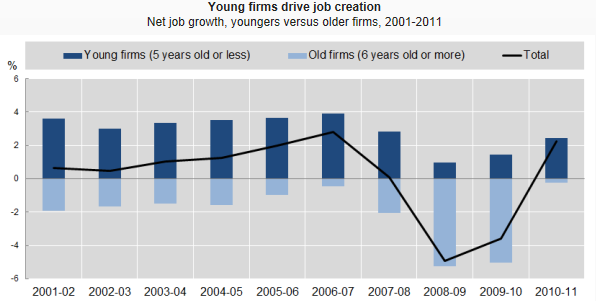
  • As I discussed in my blog post from October 26, 2013 “Where are the Jobs? II. How to Create More of Them,” most net new job creation comes from businesses less than one year old, the true “startups.” New business owners are typically not wealthy, with lots of personal tax deductions. They need all the financial resources they can muster. Lower tax rates will save them money and therefore help them get their new business going.
    Capture
  • In general, tax deductions such as for mortgage interest, municipal bond interest payments, state and local taxes, etc. benefit the wealthiest tax payers.  Therefore the lowering of tax rates, offset by shrinking tax deductions, represents a shift of funds from the wealthier to the less wealthy. This will at least slow down the increase of inequality which afflicts the modern world.

Conclusion: Lower tax rates will put more money in the hands of people who will spend it, thereby boosting the economy by creating more demand, provide support for entrepreneurs starting new businesses (which will create more jobs) and lessen income inequality. All in all this represents major progress!

Soaring Profits, Too Few Jobs and Low Interest Rates


“Low interest rates aren’t working, but we need a debate about what will,” declares The Wall Street Journal’s William Galston yesterday in “Soaring Profits but Too Few Jobs”. “Corporate profits after taxes in the fourth quarter of 2013 rose to an annual level of $1.9 trillion – 11.1% of GDP, a postwar high. Meanwhile, total compensation – wages and benefits – fell to their lowest level of GDP in at least 50 years.”
Capture“Businesses are sitting on tons of cash . . . and they’re choosing to invest their capital in hardware, rather than hiring. The reason: they believe that investing in technology is likely to have a better effect on sales than hiring more people.” Furthermore, “today’s (low) interest- rate regime lowers the cost of capital – and therefore of capital investment relative to labor.”
Meanwhile,” Republicans are banging away at the Affordable Care Act while Democrats are busy scheduling votes on a grab bag of subjects designed to boost turnout from the party’s base in the fall elections. The economic problems we face are getting lost in the partisan din.”
We are in a very tough situation. Raising interest rates might give a marginal boost to hiring more workers over capital investment but it will also greatly increase interest payments on our massive and rapidly increasing national debt. And meanwhile we have a stagnant economy with millions of people either unemployed or underemployed. What should we do?  How about

  • Boosting the economy with lower individual and corporate tax rates, paid for by cutting back on tax preferences. This will especially help small businesses grow and hire more employees. It will also encourage multinational corporations to bring their foreign profits back home for reinvestment.
  • Addressing rising income and wealth inequality by establishing an annual 1% wealth tax on individual assets in excess of $10 million. This will raise about $200 billion per year and could be used to set up a huge infrastructure improvement program to put millions of people back to work.

Interest rates will eventually return to normal levels of 5% or so and this will create a big squeeze on the federal budget. So we also need to get federal spending under control as soon as possible. But this is a separate issue.
Just boosting the economy and putting people back to work while addressing inequality in a very visible way will get us started on a path to recovery.

Conservatives Need to Take Income Inequality More Seriously


Americans are currently having a lengthy discussion about income and wealth inequality. A contribution by the Manhattan Institute’s Diana Furchtgott-Roth, “The Myth of Increasing Income Inequality”, points out, for example, that

  • The lowest 20% income quintile only has 1.7 persons per family unit while the highest quintile has 3.1 persons per family unit.
  • In 1970, 18% of households had only one person as compared with 27% of households in 2012.
  • In 1970 62% of women were married compared with 52% of women in 2012.

Clearly each of these factors will increase income disparities between households. Another recent study, from the National Bureau of Economic Research “Is the United States Still a Land of Opportunity? Recent Trends in Intergenerational Mobility”, concludes that, although the rungs of the income ladder have grown further apart, the chances of climbing from lower to higher rungs has not changed.
CaptureBut from a public perception point of view the Pew Research Center’s recent report, “Most See Inequality Growing, but Partisans Differ over Solutions”, is much more significant. It points out that:

  • 54% of all Americans say that taxes should be raised on the wealthy and corporations in order to expand programs for the poor.
  • Only 35% believe that lowering taxes on the wealthy to encourage investment and economic growth would be a better approach.
  • Unfavorable opinions of the Tea Party have increased from 25% in 2010 to 49% today.
  • The public has more confidence in Democrat’s handling of healthcare by a 45% to 37% margin.
  • Just 42% to 38% favor Republicans in handling the economy.

My conclusion from all of this data is that fiscal conservatives need to do a much better job of showing sympathy and concern for those who are struggling at the lower ends of the income scale. Success in implementing the sound policies which are needed to turn things around depends on accomplishing this!

How Do We Break Out of Our Economic Rut?


The U.S. economy is in a rut. On the one hand, growth is stagnant, unemployment is high and huge deficits are leading to massive debt. On the other hand our population has an increasing number of retirees and also an increasing number of low income (often immigrant and minority) service workers. These groups demand more services in the form of entitlements and social welfare programs. In a democracy these needs are hard to deny. Is it possible to better stimulate the economy, alleviate inequality and shrink deficit spending at the same time?   I believe it is!
Capture 

  • Stimulating the economy. The best way to do this is to lower both individual and corporate tax rates in a revenue neutral way by eliminating, or at least greatly reducing, tax preferences. Faster growth of GDP will both reduce unemployment and bring in more tax revenue and thereby lower the deficit.
  • Reducing inequality. I join many others to propose a large scale, government funded, infrastructure development program, badly needed for its own sake, but also as a way of putting hundreds of thousands, if not millions, of people back to work. However, and this is essential, it has to be paid for by a major new source of revenue. My own preference is to establish a new tax, on the assets of very wealthy people, say with a net worth of $10,000,000 or more. An asset tax of between one and two percent per year would bring in several hundred billion dollars and also represents a highly visible way of reducing inequality without adversely affecting the economy.
  • Shrinking the Deficit. One of the biggest problems with many federal programs is that there is neither built in quality control nor cost control. There is little incentive for either Congress or federal bureaucrats to set priorities and control costs. A good way to change this system is to devolve many federal programs back to the states where such controls do exist. I will have more to say about this in future posts.

Big changes are needed at the federal level to get our economy back on track and put people back to work. There are ways to do this and we simply need leaders with enough vision and determination to get the job done!

The Looming Demographic and Generational Showdown


An extraordinary new book has just been published by the Pew Research Center’s Paul Taylor, “The Next Generation: Boomers, Millennials and the Looming Generational Showdown”, describing huge demographic changes which are already beginning to wash across the American political landscape. They are in brief outline:

  • The retirement explosion. Today’s 45 million aged 65+ population will increase to 70 million by 2030.
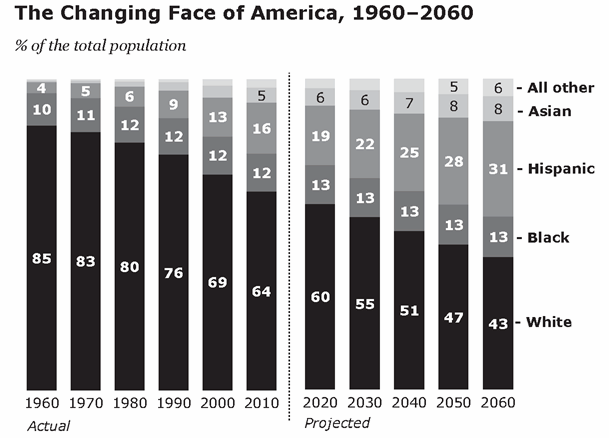
  • The color explosion. Today’s 65% Caucasian population will likely shrink to 43% by 2060.
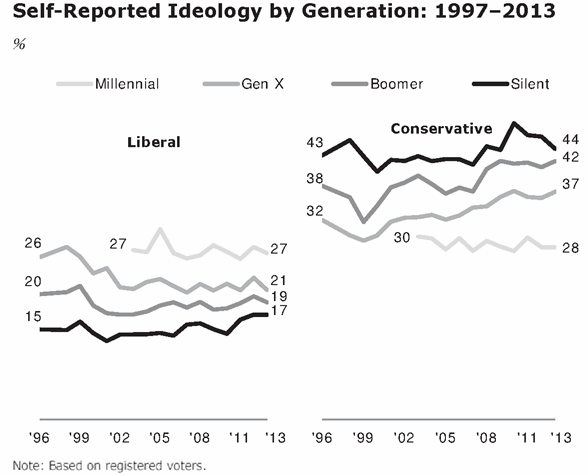
  • The ideology gap. The four current American generations; the Silents, the Boomers, the Gen Xers, and the Millennials are increasingly less conservative and more liberal.
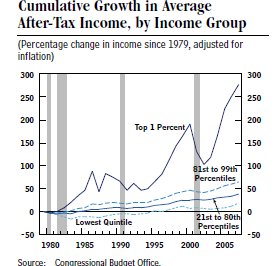
  • The inequality gap. Both income and wealth inequality are growing rapidly and this trend is likely to continue.

Each of these trends is firmly established by data as shown in the accompanying charts. There are huge political implications for these mega-trends. For starters, the biggest threat to our nation’s finances is the rapidly increasing cost of entitlements, especially Social Security and Medicare. Where will the political will to control this spending come from when there are ever more retirees who want to keep their benefit programs?
CaptureWith a surging immigrant population, primarily Hispanic and Asian, constantly gaining more political clout, it becomes more and more urgent to move our 12 million undocumented aliens out of the shadows with some kind of legal status. A broad based guest worker program would be a good way to get started.
Capture1The ideology gap is more difficult to interpret. The four groups are more conservative than liberal and people in general become more conservative as they grow older. Nevertheless, there is an overall trend towards liberalism as age decreases.
Capture2Finally, the growing inequality gap will inevitably create much resentment if ignored by our political system.
Capture4Each of these four mega-trends will create pressure for more federal spending to address the needs and interests of various segments of society. We already have huge deficits, and rapidly increasing national debt, to contend with. How do we balance the pressure for more spending with the need for fiscal restraint? Stay tuned!

Do We Really Need a Wealth Tax?


Our dire fiscal and economic problems are crying out for a bold solution.  We need to simultaneously stimulate our economy to grow faster and create more jobs, raise sufficient tax revenue to pay for our growing spending commitments, and address a widening inequality gap which threatens to undermine the basic principles of a free and just society.  How are we going to accomplish all of these tasks at the same time?
It seems to me that the best way is to thoroughly reform our income tax system based on the following principles:

  • Lower tax rates on marginal income to encourage more investment and entrepreneurship.  Such changes can be made revenue neutral by eliminating deductions, loopholes and other tax preferences.  This would apply to corporations as well as individuals.
  • Establish a new low percentage (1% – 2%) wealth tax with a relatively high personal exemption ($5 million – $10 million).  This would bring in approximately $200 billion per year to be used for reducing the deficit.  Equally as important it would be a visible sign that the wealthy are making a significant contribution towards solving our fiscal problem.  This will make it more acceptable to lower marginal tax rates on income in order to boost economic growth.

Fiscal conservatives often oppose any increase in tax revenue because, they think, it is likely to be used for new spending rather than for lowering the deficit.  One way to overcome this concern is to pass a Balanced Budget Amendment to the Constitution. This would make it much harder to increase spending.  The problem is that it will be very hard for Congress to pass such an amendment and have it ratified by ¾ of the states.
But something has to be done.  The longer we wait and the more debt we build up, the more painful it will be to extract ourselves when the next crisis occurs as it surely will.