The Need for Regulatory Reform


One of my favorite topics is the need for faster economic growth in order to create more jobs and better paying jobs and also to bring in more tax revenue to help shrink our rapidly accumulating national debt.
My last post discusses vivid evidence from the economist John Taylor that slow productivity growth is one of the main culprits holding back our economy.  He suggests several ways of speeding up productivity growth, one of which is regulatory reform.

capture74Two previous posts, here and here, show the increasing size of the regulatory burden as well as how it could be eased significantly for main street banks, for example, by simplifying the Dodd-Frank Act.
A recent study from the Mercatus Center at George Mason University gives a good overall summary of the economic costs of excessive regulation.  In particular:

  • Deterring growth. By distorting the investment choices that lead to innovation, regulation has caused a considerable drag on the economy, amounting to an average reduction of 0.8% in the annual growth rate of the US GDP. This has resulted in an economy which is $4 trillion smaller in 2012 than it could have been without such regulatory accumulation.
  • Increasing prices. Increases in the total volume of regulations are strongly associated with higher prices. This affects lower-income households harder than higher-income households.
  • Distortion of labor market. Regulation adds to costs, increasing prices for regulated goods and services and therefore reducing the amounts being bought and sold. As production declines, so does the demand for workers engaged in production. In addition, more regulation leads to a shift of workers from production to regulatory compliance, reducing overall economic efficiency.
  • Decline in competition. Existing firms benefit from regulation because it deters new market entrants, thereby reducing the number of small firms, which are responsible for most new hiring.

Conclusion. Federal regulations have accumulated over many decades, resulting in a system of duplicative, obsolete, conflicting and even contradictory rules. The consequences to the workers, consumers and job creators who drive economic growth and prosperity are considerable.

Follow me on Twitter
Follow me on Facebook


How to Get Our Economy Back On Track


My last several posts have expressed dissatisfaction with both presidential candidates and the hope that whoever wins in November (very likely Hillary Clinton) will work with the Republican House of Representatives to implement its “A Better Way” plan for national renewal.
In particular, faster economic growth would produce more jobs and better paying jobs and hence is highly desirable.  As many people, including myself,  have pointed out, it is low productivity growth caused by low business investment, which is largely responsible for slow economic growth.
The economist John Taylor has an excellent analysis of this problem.  He points out that the rate of economic growth equals the growth of labor productivity plus the growth of employment.

capture73
He then shows that:

  • Productivity growth slowed from the mid-1960s until the early 1980s, then increased until the mid-2000s, and has slowed way down in the past ten years.
  • The labor force participation rate has dropped dramatically since the Great Recession but only a small part of this drop off was caused by demographic trends (i.e. more retirees).

    capture72Such relatively long cycles of productivity growth and decline (longer than normal business cycles) suggests that government policy is having a major effect on economic performance. According to Mr. Taylor, what is needed is:

  • Tax reform to lower tax rates to improve incentives for work and investment.
  • Regulatory reform to prevent regulations which fail cost-benefit tests.
  • Free trade agreements to open markets.
  • Entitlement reforms to prevent a debt explosion.
  • Monetary reform to restore predictability in financial markets.

Conclusion. Mr. Taylor makes a very strong case that faster economic growth is not only possible but even achievable in the short run if our national leaders would just make some common sense policy changes.

Follow me on Twitter
Follow me on Facebook


How to Get Our Country Back On Track


In my last two posts, here and here, I have said that I like some of Donald Trump’s policy ideas but he is too personally repugnant for me to support and vote for.  Hillary Clinton is morally less objectionable than Mr. Trump but her economic policy proposals are unlikely to have much success.
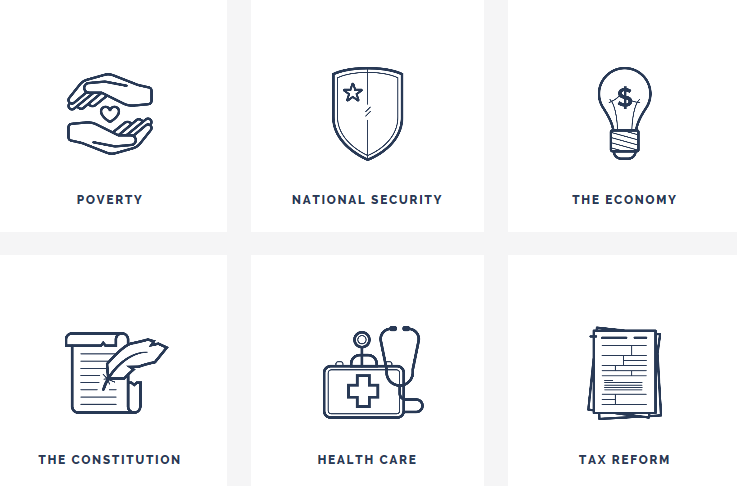
capture66The best hope for our country is to keep the Republicans in control of the House of Representatives.  They have put together an excellent plan, “A Better Way,” for reviving the American economy and boosting the American spirit.  Its main principles are:

  • Poverty. Every capable person is expected to work or prepare for work. Poverty fighting programs will be directed to get people back on their feet. The poor will have more opportunities to succeed at every stage.
  • National Security. It is a top priority to defeat radical Islamic extremism. We must restore American influence, advance free enterprise and expand the community of free nations.
  • The Economy. We need to take a smarter approach that cuts down on needless regulations while making the rules we do need more efficient, especially for our small businesses.
  • The Constitution. Agencies and bureaucracies should be subject to more scrutiny from Congress. Give Congress more say – and the final word – over what is being spent and why it is being spent.
  • Health Care. Individuals should have more control and more choices in order to improve quality and lower costs. No one should have to worry about having coverage taken away regardless of age, income or medical conditions.
  • Tax Reform. The tax code should be simpler, fairer and flatter while remaining progressive. It should be constructed to create jobs, raise wages and expand opportunity for all Americans.

Conclusion. These principles are widely supported by almost all Republicans in Congress and are more important than specific differences on immigration, trade, or entitlement policy.  Their serious consideration depends upon returning a Republican controlled House in 2017.

Follow me on Twitter 
Follow me on Facebook

How Will Hillary Clinton Do on the Economy?


With Donald Trump dropping in the polls, whirling out of control and unwilling to withdraw from the race, my attention now turns to Hillary Clinton and what she is likely to do as President. I divide this discussion into good news and bad news.

capture73
First the good news:

  • A leading democratic economist, Larry Summers, is on record as strongly supporting faster economic growth.  However, he seems to think that public investment (i.e. more public spending) is the best way to achieve this.
  • The House of Representatives is likely to remain in Republican hands after the 2016 election, even if the margin of control is reduced. The Republican House has an excellent plan to boost economic growth and presumably will be able to bargain for pro-growth policies.

Unfortunately, the current Clinton tax plan is anti-growth. As analyzed by the Tax Foundation, her plan would:

  • Give individuals with an AGI over $5 million a 4% tax surcharge. Taxpayers with an AGI of $1 million or more would pay a 30% minimum tax (Buffett Rule). Carried Interest would be taxed at ordinary income rates. Short term capital gains would be taxed at higher rates up to 39.6%. Most itemized deductions would be capped at a tax rate of 28%. Taxes on small businesses and startups would be reduced.
  • Lead to a 2.6% overall lower level of GDP which would lead to lower levels of wages and jobs.
  • Raise $1.4 trillion in new revenue over the next decade on a static basis which would only really produce $663 billion because of slower growth.
  • Devote all of the new revenue to new spending programs and therefore achieve no deficit reduction and more likely an increase in annual deficits.

Conclusion. The Clinton tax plan has some attractive features such as reducing taxes on small business. But overall it would slow economic growth in the name of reducing income inequality.  A Republican House in the new Congress would likely be able to bargain for a much better plan.

Follow me on Twitter
Follow me on Facebook

Fiscal Irresponsibility: Our Country’s Most Fundamental Problem


As a fiscal conservative, I am worried about our nation’s future. The public debt (on which we pay interest) is now 75% of GDP, the highest level since right after WWII, and growing steadily.  Furthermore, our economy has just barely recovered from the Great Recession and is expanding too slowly to revive widespread prosperity.  Neither of the two main presidential candidates, Hillary Clinton nor Donald Trump, is talking seriously about our huge debt and neither has a credible plan to boost economic growth.

capture70
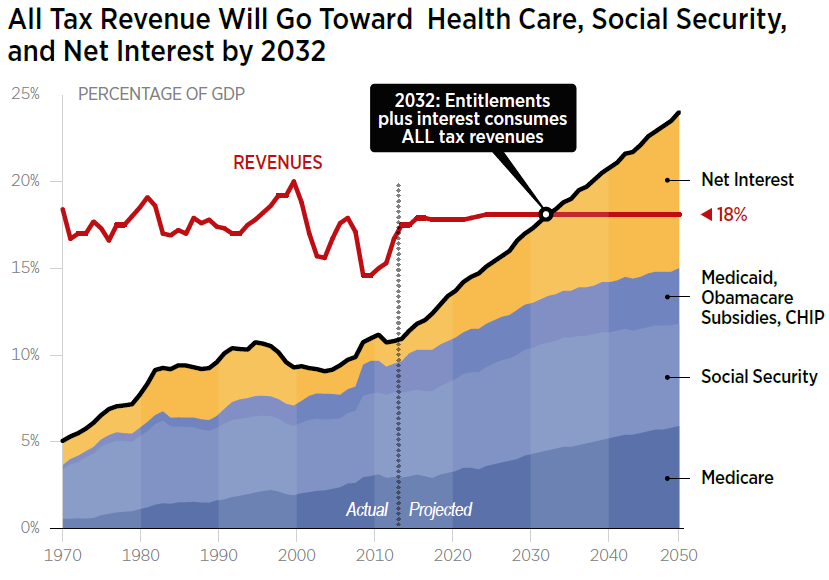
The above chart from the Heritage Foundation is a vivid way of illustrating this problem:

  • Already entitlement spending (Social Security, Medicare and Medicaid), and interest payments on our debt, use up 2/3 of all federal tax revenue. And spending on each of these entitlement programs is growing faster than the economy as a whole. Interest rates will eventually rise from their current rock bottom level. When this happens, interest payments on our growing debt will increase rapidly.
  • In 2032, just 16 years from now, spending on entitlements and interest payments is projected to consume all federal tax revenues, assuming a steady 18% of GDP level for tax revenue.

There are three possible ways to offset this bleak picture:

  • Speed up economic growth. This should, of course, be possible but it will take a major shift in thinking to accomplish.
  • Increase federal tax revenue. Suppose that federal tax revenues were raised by 1% of GDP, or $180 billion per year. This would at least temporarily put our debt on a downward path (as a percentage of GDP). But it would be very hard to accomplish politically. Mrs. Clinton, for example, has proposed raising taxes by $100 billion per year which she wants to spend entirely on new programs rather than reducing our annual deficits.
  • Reform entitlement programs. This is by far the best way to address our debt problem, and the only effective way in the long run.  But, again, it will be very hard to accomplish politically.

Conclusion. If the U.S. cannot get its debt and slow growth problems under control, it risks losing its status as the world’s major superpower. This would be a calamity for both our own national security and the peace and stability of the entire world.

Follow me on Twitter
Follow me on Facebook
Why Is U.S. Economic Growth So Slow?


In a recent post I discussed the issue of slow economic growth in the U.S. and why it is so harmful and dangerous to our nation’s future.  In short, it not only deprives many citizens of a more prosperous life and makes it more difficult to shrink our annual budget deficits, but it also endangers our national security as our chief competitor, China, grows faster than we do.
In the long run, an economy can expand only at a rate sustained by the growth of its labor force and the productivity of its workers.  I have previously pointed out  that there are far too many prime working age men who are unemployed.
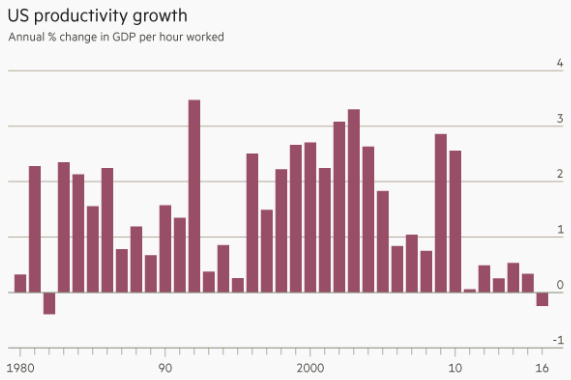
capture67Today let’s talk about the rate of productivity growth (see the above chart).  In particular:

  • From 1994 – 2003, U.S. output per hour worked rose annually by an average of 2.8%.  Since then it has grown at an annual rate of 1.3%, including just 0.4% since 2011.
  • Business capital spending is down as companies are spending their profits to buy back stock rather than making new investments (see second chart).

    capture69As I have previously discussed, the U.S. is now caught in a vicious trap:

  • Slow growth keeps the under-employment level (U6) high and also means minimal raises for employed workers  The resulting economic slack leads to
  • Low Inflation. But low inflation in turn means that the Federal Reserve can maintain
  • Low Interest Rates to try to encourage borrowing. But an unfortunate side effect of low interest rates is that Congress can borrow at will and run up huge deficits without really having to worry about paying interest on this “free” money. This leads to
  • Massive Debt. But what is going to happen when inflation does eventually take off and the Fed is forced to raise interest rates? Then we will be stuck with huge interest payments on our accumulated debt. When this happens, interest payments plus ever growing entitlement spending will eat up most, if not all, of the federal budget. This will inevitably lead to a severe
  • Fiscal Crisis.

    Conclusion.
    It is absolutely imperative to speed up economic growth.
    Follow me on Twitter 
    Follow me on Facebook 
What Should A Fiscal Conservative Do?

From a reader of my blog:

“I personally believe Mr. Trump is grossly unfit to serve as President and if elected, it would be more than a huge problem. Since he lies or changes his mind on most everything, I worry when you say anything such as your comment that he won the debate. He is for the second amendment, he favors tax cuts, etc and there is nothing that sheds light on whether he even understands the complexity of these issues, let alone has any notion of how to create and implement a policy to accomplish these things. I believe many people are making comments that have the effect of normalizing his behavior and candidacy.”

I began writing this blog, It Does Not Add Up, almost four years ago, right after the presidential election of 2012.  By now I have written over 500 posts, mostly on fiscal and economic issues but occasionally branching out into important social issues as well.
As I see it, I have four choices when I vote for president this year.  I can:

  • Vote for Hillary Clinton. She is safe and predictable but the policies she promotes will do very little, if anything, for the faster economic growth which we so badly need. She wants to raise taxes on the wealthy. Fine, but this is only in order to increase spending for new programs, which is likely to lead to even bigger annual deficits and more accumulated debt.
  • Vote for Donald Trump. Like so many others, I assumed initially that his candidacy was a joke and that he would quickly fade away. But now he is a major party nominee and has some good policy ideas as well as some very bad ones! As president he would be constrained by Congress. In particular the Republican House has many excellent ideas on how to get our economy back on track.

    capture66

  • Vote for Gary Johnson. The Libertarian candidate also has good ideas on how to solve our fiscal and economic problems but has essentially no chance of being elected.
  • Refrain from voting for president.  But voting is a citizen’s first duty. 

    Conclusion. I fully agree that Donald Trump is a very risky bet for president. But the alternative is to elect Hillary Clinton and hope for a better choice in four years. What should I do? 

Follow me on Twitter
Follow me on Facebook

Why Slow Economic Growth Is So Dangerous


In my last post I said that Donald Trump won the first presidential debate, in spite of his uneven temperament, because he was more correct on the issues.
One of the biggest problems our country faces is slow economic growth, averaging only 2% per year since the end of the Great Recession in June 2009.  This compares with an average rate of growth of 3.5% from 1950 – 2000.
In fact, even the recent job growth we have seen is now leveling off.
capture65Such slow growth is very dangerous long term for many reasons:

  • Massive Debt. Our public debt, on which we pay interest, is now 75% of GDP, the highest it has been since right after WWII. CBO predicts that this percentage will keep getting steadily worse without major policy changes. Faster growth means more tax revenue and therefore smaller annual deficits. It is imperative to put our accumulating debt on a downward path.
  • The Need for More Jobs and Better Paying Jobs. The best way to achieve broad based prosperity, and minimize populist disruption, is to create a tight job market where employers have to compete for employees. This is accomplished by making the economy grow faster.
  • Keeping Ahead of China. In 2009 China’s economy was 1/3 the size of ours; now it is 60% as big. In other words, China will soon surpass us economically if we are unable to grow faster. This would risk losing our worldwide lead in such crucial areas as new technology and financial depth, as well as our superpower status.
  • Reducing Student Loan Debt. The best way we can help former students pay off their college debt is to have good jobs waiting for them when they leave school. The faster our economic growth, the better we can do this.

Conclusion. Both our own individual success in life as well as the overall status of our nation depends upon the availability of opportunity. This is why economic growth is so important and why it is dangerous to let it lag.

Follow me on Twitter
Follow me on Facebook
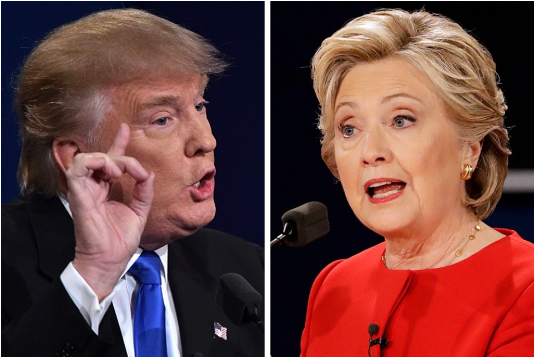
Who Won the First Presidential Debate?


I want to be as clear as possible that I have not yet endorsed either Hillary Clinton or Donald Trump for President and I am not doing so now. Each of them has strengths and weaknesses which I am still weighing:

  • Mrs. Clinton has extensive experience and a steady temperament but her policy prescriptions are unlikely to lead to the faster economic growth needed to boost prosperity.

    capture64

  • Mr. Trump lacks government experience and has a volatile temperament.   However many of his policy proposals make very good sense.

Pre-debate expectations were very low for Mr. Trump, based on his assumed lack of familiarity with many important issues. Nevertheless he showed that he does have a solid understanding of both national and international affairs.  On the three general debate topics:

  • Achieving Prosperity. Mr. Trump was very clear in stating what needs to be done to create more jobs and better paying jobs. He advocates individual tax reform to stimulate more business investment as well as corporate tax reform to encourage multinational companies to bring their foreign earnings back home for reinvestment.
  • America’s Direction. Mr. Trump made several references to our massive national debt of $20 trillion even though he didn’t say what he’ll do about it. He also stated very strongly that he is opposed to the Trans-Pacific Partnership and the North American Free Trade Agreement as well. Let’s hope that Mr. Trump’s bluster is just a ploy to improve his bargaining position with other countries.  Otherwise he could set off a major new recession.
  • Securing America. Mr. Trump is very clear on the need to destroy ISIS and to do so as quickly as possible. He believes that our 27 NATO allies should be contributing more towards our mutual defense. He also supports “stop and frisk” police policy as the best way to cut down on crime and violence in our inner cities.

Conclusion. Mr. Trump’s clearly stated views on these major national issues in last night’s debate were very impressive. By establishing so well his qualifications to be president, he won the debate.

Follow me on Twitter 
Follow me on Facebook 


College Costs and Student Debt


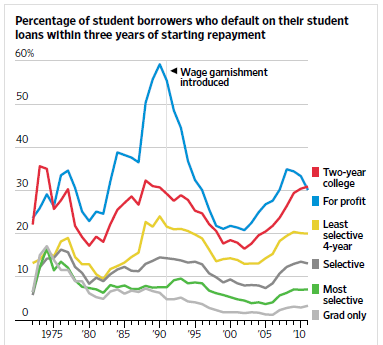
Student debt is a huge problem, see here and here, both for the college students and former students who have accumulated it as well as for the U.S. Government which has to carry the debt. I see this as a three-part problem which American society has to deal with:

  • As illustrated in the first chart, the cost of higher education has been rising very fast in recent years, even faster than the cost of health care, which in turn is increasing faster than the underlying rate of inflation.capture35
  • Since 1996 outstanding student loans have risen from $200 billion to $1.3 trillion.
  • The highest default rates on student loans occur at community colleges (23% in 2012) and for profit colleges (18%). Worst hurt are the low-income and minority students who never graduate but still have unpaid debt (see the second chart).capture36

For the federal government to increase subsidized loan limits or to establish a broad-based free tuition program will only encourage educational institutions to keep raising their prices.
A much better approach is needed as follows:

  • Faster economic growth would help immensely. Our 2% average annual growth rate since the end of the Great Recession in 2009 is simply too slow to create more jobs and higher paying jobs (which makes it easier for students to pay back their debt).
  • At the federal level the emphasis should be on putting more money into Pell grants for the neediest students, paid for by cutting back on non-need based aid.
  • At the state level the emphasis should be on making the two-year associate degree free for all students who pursue it. Tennessee started such a program, Tennessee Promise, in 2014, Oregon in 2016. The goal here is for many more students who try postsecondary education to end up with a degree or certificate of some sort.

Conclusion. There are positive and efficient steps which can be taken to alleviate the student debt problem for the hardest hit low-income students without aggravating the overall problem of rapidly increasing college costs.

Follow me on Twitter
Follow me on Facebook