Trump’s Bark Is Worse than His Bite


The anti-Trump fervor seems to be slowly dying down as his appointees take hold of their agencies and begin to promulgate new policies. I have expected this to happen because of the excellent quality of many of the people he has appointed.
Here are a few recent developments:

  • Interior Secretary Ryan Zinke has said that “the border is complicated as far as building a physical wall” and there are all sorts of problems to be resolved before it can be done.
  • Reality is setting in with regard to Russia policy “given Russia’s continued provocations in terms of weapon’s deployments, overtures to Iran, cyber intrusions and intervention in Ukraine.”
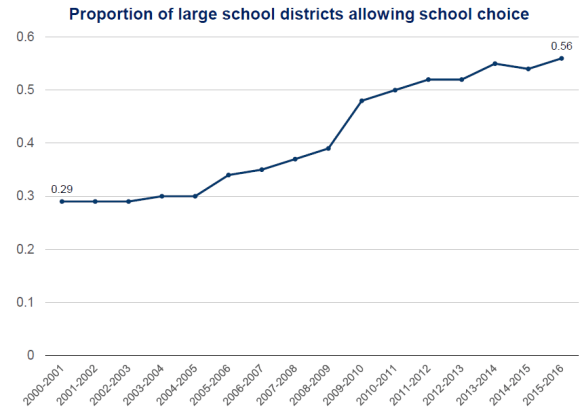
  • The Brookings Institution has just issued a new report showing that school choice options are increasing in the country’s largest school districts. This indicates that Education Secretary Betsy DeVos is in the mainstream by supporting more choice.
  • Coal jobs Trump vows to save no longer exist.  In other words, cancelation of the Obama Clean Power Plan will have little effect on the huge drop in coal use because coal has become so much more expensive than natural gas.
  • Of course, the Trump 2018 Budget Proposal will be heavily modified by Congress but it does contain some good ideas. Agriculture, Foreign Aid and Community Development Block Grants are all ripe for big cuts.
  • The biggest unknown with respect to administrative action concerns trade policy. The question here is what concessions he can get from China and Mexico without starting a disastrous trade war.

What is mainly lacking at this point is any significant action by Congress on the Trump agenda. What will happen with healthcare reform, tax reform and deficit reduction, for example?

Conclusion. Trump is doing fine so far but it is on relatively straightforward issues under his control. Hopefully he will be able to make progress on the bigger issues as well which require working with Congress.

Follow me on Twitter
Follow me on Facebook


Maybe the GOP Really Is the Stupid Party


The Nobel prize-winning economist, Paul Krugman, more recently turned partisan flack for the New York Times, has occasionally referred to Republicans as “the stupid party.” After the debacle with the House’s American Health Care Act, maybe he is right.  This bill is far from perfect but is a step in the right direction.  Its major virtue is a serious attempt to get Medicaid spending under control.
According to an astute analysis by the Wall Street Journal:

  • The AHCA would put Medicaid on a budget for the first time since its creation in 1965.
  • Medicaid insures more than 72 million people, or one in every five Americans.
  • Medicaid is now the third largest, and fastest growing, program in the federal budget. Federal outlays are now $360 billion per year, more than three times as much as in 2000.
  • The federal government matches between 50% and 74% of state costs for Medicaid recipients, which means that the states have little incentive to control spending by allocating resources toward high quality care for the most vulnerable.
  • A 2013 study by the New England Journal of Medicine found that “Medicaid generated no significant health improvements,” compared to the uninsured.
  • The AHCA would transition federal funding to a per-capita block grant that would grow with an index of medical inflation. In exchange, governors would gain reform flexibility over the current rigid rules.

Conclusion. It is completely nonsensical for the House Freedom Caucus to oppose such an attractive reform plan just because it isn’t perfect. The members of the Freedom Caucus claim to be fiscal conservatives and to support balanced budgets.  And yet they refused to take a simple, practical step to work toward that goal.

Follow me on Twitter
Follow me on Facebook

The United States of Insolvency


To some readers, I am sure, I must sound like a one-note Johnny. I have a fixation on our national debt because it is so massive and so many apparently well-informed people are so complacent about it.  Sometimes I feel like I’m beating my brains out by discussing this issue so often.  But I don’t know what else to do.
I recently came across an article from a year ago in Time Magazine by James Grant, the editor of Grant’s Interest Rate Observer.  Elaborating on Mr. Grant:

  • As recently as 2007 our public debt (on which we pay interest) was $5 trillion and, with an average interest rate of 4.8%, net interest expense was $237 billion. In 2016 we owed $14.1 trillion and paid an average interest rate of 1.8% for an interest payment of $240 billion. In other words, although our public debt has almost tripled in ten years, the interest rate is just over 1/3 of what it was in 2007. So our interest payment hasn’t changed.
  • Interest rates are now starting to head back up. If they return to the 2007 level of 4.8%, then today’s public debt ($14.9 trillion in 2017) would require an interest payment of $715 billion. At the rate of 6.7%, prevailing in the 1990s, today’s debt would require an interest payment of $998 billion. That represents almost 1/3 of today’s total federal revenue.

Here’s a related perspective from Jon Hall who writes for the American Thinker:

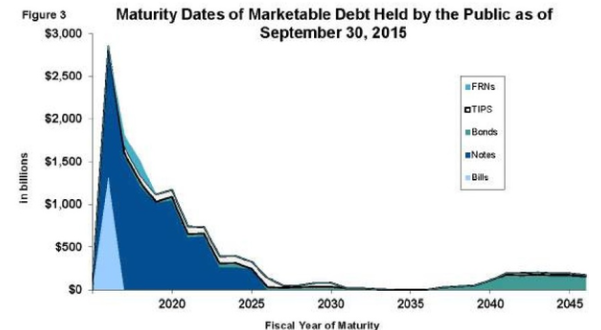
  • Most of our debt is financed with 10 year Treasury Notes. “Of the marketable securities currently held by the public as of 9/30/15, $7.4 trillion or 58% will mature within the next four years.” (see GAO chart) In other words, the huge increase in debt over the past 10 years will soon have to be paid for by Treasury. This will almost surely cause more inflation which will lead to a further increase in interest rates.

Conclusion. Unwinding our current debt will require painful cutbacks over a period of years. But right now we are making the problem even worse with continued deficit spending.  How will our increasingly perilous situation ever be reversed?

Follow me on Twitter
Follow me on Facebook
America’s Biggest Problem is Almost under the Radar


I’ve had several posts recently elaborating on the theme of Tyler Cowen’s new book, “The Complacent Class,” that too many Americans have become complacent about the comfortable life which they now enjoy.


Let’s take a different approach today and consider some of the problems which large numbers of Americans really are concerned about:

  • The election of Donald Trump as President. Granted, he just barely squeaked through in the Electoral College with 46% of the popular vote. He makes outlandish statements which have little, if any, basis in fact. But he has appointed many capable cabinet secretaries and other assistants and he listens to them. He adjusts his policies when struck down by the courts. In my opinion he has suffered no major mistakes so far.
  • Increasing income inequality in American society. This is a problem but, as Nicholas Eberstadt has pointed out, the real problem is income insecurity for millions of blue-collar workers. The best solution here is faster economic growth which the Trump Administration and the Republican Congress hope to achieve through tax reform and deregulation.
  • Global Warming. More and more Americans understand the increasing severity of this problem. There is a fair chance that a revenue neutral carbon tax will be implemented in the near future. This would be a big boost toward controlling carbon emissions in the U.S. and would provide more clout in establishing worldwide emission standards as well.
  • A chaotic world. Terrorism will not go away but at least ISIS will soon be defeated as an independent state. Other worldwide threats such as China, Russia and Iran can be managed with a strong U.S. military force undergirded by a strong U.S. economy.

Conclusion. The above problems are considered by large numbers of people to be serious and are therefore being addressed in one way or another. But our biggest problem of all, massive debtis off the radar for much of the political class, including President Trump. It needs to be taken far more seriously than it is before we have another, and much more severe, financial crisis.

Follow me on Twitter
Follow me on Facebook
Things are Looking Good but Can We Afford to be Complacent?


Everybody should read Tyler Cowen’s compelling new book, “The Complacent Class.”  As I have discussed in two recent posts, here and here, Mr. Cowen lays out the thesis that America has lost much of its dynamism in recent years because life has become so comfortable for so many people, especially the professional elites.


But now things are looking even better yet:

  • A global economic upturn is under way, especially in manufacturing.
  • The Federal Reserve is continuing to raise interest rates, confident that fundamental data on employment and inflation (see chart) is looking more and more positive.

  • Progress is being made on fixing the American healthcare system even if it’s not as good as it could be.
  • The Republican Congress and Trump Administration are united in their desire for corporate and business tax reform which will give the American economy a big boost when it gets done.

These trends auger well for the American economy in the immediate future. However there is one very dark cloud on the horizon:

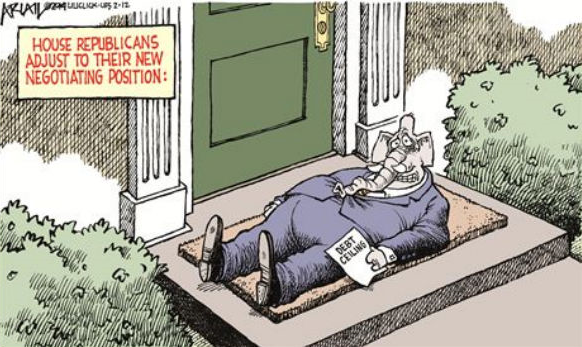
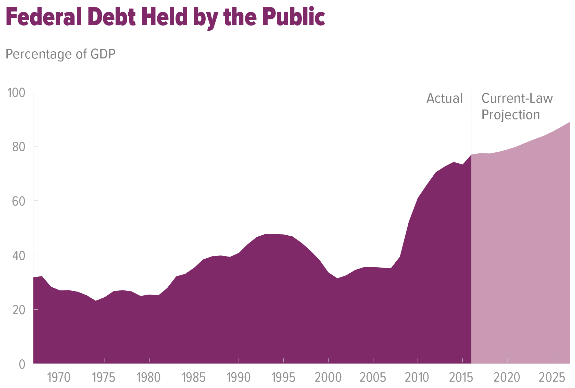
  • Our national debt (the public part on which we pay interest) is now 77% of GDP, the highest since the end of WWII and is predicted by the Congressional Budget Office to keep steadily getting worse without fundamental changes in public policy. In fact, the debt limit, which had been suspended in November 2015, was reinstated by law on March 16. It will have to be raised in the next few months in order to avoid default by the federal government.
  • I fervently hope that the fiscal conservatives in Congress (such as the Republican Study Group and the Freedom Caucus) will insist on real fiscal restraint going forward as their price for voting to raise the debt limit.

Conclusion. We affluent Americans are so wrapped up in enjoying our good fortune that we lose track of a huge problem on the not so distant horizon. Our prosperity is being heavily financed with borrowed money and we will soon have to pay the piper, unless we are willing to bite the bullet.  Do we have the political will to do this?

Follow me on Twitter
Follow me on Facebook

 

The Dangers of Complacency


My last post, “What Ails America? I. Complacency,” lays out the thesis of the economist Tyler Cowen that American society has become much too complacent, i.e. self-satisfied, in recent years.  In particular:

  • Fewer Americans are moving.
  • Segregation (by income, education, social class and race) is increasing.
  • Americans have stopped creating. New business creation is down and monopolies are getting stronger.
  • Matching (i.e. assortative mating) is on the upswing.
  • Calm and safety above all is the predominant attitude.

These societal trends are normal and even desirable in many respects. But they can lead to stagnation.  Eventually needed social change will boil over in uncontrollable ways and America will undergo a “Great Reset.”


This will likely involve major events such as:

  • A major fiscal and budgetary crisis. Currently our public debt (on which we pay interest) is 77% of GDP, the highest since just after WWII. It will keep rising steadily without a major change in public policy. When interest rates return to more normal higher levels, interest payments on our debt will be a huge drain, without letup, on our tax revenue.
  • The inability of government to adjust to the next global emergency which comes along. When the financial crisis came along in 2008, debt was at the much smaller level of 38% of GDP. This allowed for temporary fiscal stimulus and larger deficits to ride out the resulting recession. With our currently high debt level, we’ll have far less flexibility when the next recession comes along.
  • A rebellion of many less-skilled men. The median male wage (adjusted for inflation) was higher in 1969 than it is today. In fact, the take-home pay for typical American workers has been falling since the end of the Great Recession in June 2009. To a large extent this explains the rise of Donald Trump.
  • A resurgence of crime. A new crime wave will probably be internet related. There are now tens of millions of identity thefts, phishing attacks and successful but fraudulent pleas for cash every year. Internet crime is calmer than traditional crime and less visible. But the next crime wave could badly damage internet commerce.


Conclusion.  Mr. Cowen paints a depressing picture for the future of American society.  Of course, it is possible to turn some or all of these negative developments around.  But will a complacent American populace have the political will to do it?

Follow me on Twitter
Follow me on Facebook

A Tale of Two Trumps


I have mixed feelings about Donald Trump. I didn’t vote for him because of his crude and sleazy behavior.  But I like some of the things he is doing.  Barron’s frames the issue well in its cover story this week, ”A Tale of Two Trumps,” by John Kimelman.

capture103
On the positive side he has:

  • Been a successful real estate developer and serial entrepreneur who favors lower taxes and fewer regulations for many industries, especially energy, financial services and healthcare.
  • Made many good appointments such as Mnuchin for Treasury, Tillerson for State, Pruit for EPA, Price for HHS, Cohn for Chief Economic Advisor, Ross for Commerce, etc.

But on the negative side he has:

  • Issued a badly executed travel ban on immigrants from seven Mideast nations which has now been withdrawn.
  • Belittled the leaders of Mexico and Australia.
  • Torn up the Trans Pacific Partnership negotiated by President Obama
  • Threatened to withdraw from NAFTA which supports hundreds of thousands of jobs in the U.S.

On the other hand he has dialed back some of his extreme rhetoric by

  • Meeting with President Obama after the election.
  • Deferred to Defense Secretary Matson on the undesirability of waterboarding.
  • Accepted the “One China” policy in a telephone conversation with Chinese Premier Xi Jinping.

What remains to be seen is whether or not he can:

  • Make better trade deals with Mexico and China without starting a trade war which would badly hurt our economy.
  • Enact tax rate cuts and a $1 trillion infrastructure program without making deficits worse than they already are.
  • Work with his deficit hawk Budget Director Mulvaney to establish a plan to eventually achieve a balanced budget.

Conclusion. I personally remain optimistic that his good instincts will lead to faster economic growth and that his disruptive instincts will be sufficiently restrained by Congress and the courts so that they will not do major harm.

Follow me on Twitter
Follow me on Facebook
 

Nebraska Senator Deb Fischer Is a Big Spender


Senator Fischer is up for re-election in 2018 and she starts out a recent fund raising letter (see below) as follows: “My goals are clear: stronger national defense, safer roads and bridges, healthcare that is accessible and affordable, protection of our fundamental liberties, less government, and a fairer, simpler tax code.” Here’s the breakdown:

  • First, and most important: national security.
  • Second, our roads and bridges must be repaired and rebuilt.
  • Third, Obamacare must be repealed and replaced.
  • Fourth, our fundamental liberties must be protected.
  • Fifth, government must shrink and the tax code must be simpler and fairer.

I don’t disagree with the specifics of any of these five goals but rather where the emphasis is placed. Her first two goals are to greatly increase spending for both the military and for infrastructure projects.  Her last goal is to shrink the federal government which is a good idea but very hard to accomplish in practice.

capture99
Here is the basic problem our national debt (the public part on which we pay interest) is now at 77% of GDP, the highest it has been since right after WWII, and steadily getting worse.  Right now this approximately $14 trillion debt is essentially “free” money because interest rates are so low.  But when interest rates inevitably rise to more normal levels, interest payments on the debt will soar by hundreds of billions of dollars per year and eat much more deeply into tax revenue.
It should be a very high priority for Congress to establish a plan to bring government spending more closely in line with tax revenue.  I have previously described how this could be accomplished over a ten year period without cutting hardly anything but simply using restraint for spending increases.

Conclusion. If Senator Fisher feels that it is necessary to make big spending increases in areas such as national defense and infrastructure repair, then she should be equally adamant about the need to hold down the growth of government spending overall.

Follow me on Twitter
Follow me on Facebook

capture100

capture101


Why I Am Optimistic about President Trump


I voted for Hillary Clinton last November. Not because I liked her program.  I was voting against Donald Trump.  He is crude, sleazy and a terrible narcissist.  I preferred John Kasich, Governor of Ohio, in the Republican Primary.  But he didn’t make it.  I voted for Mitt Romney in 2012 but he didn’t make it either.
The question now is whether or not the Trump Administration will effectively address our country’s two biggest problems, both of which are very serious and need urgent attention:

  • Slow economic growth, averaging just 2% per year since the end of the Great Recession in June 2009. Faster growth means a tighter labor market which in turn means more workers and higher wages. This in turn means less inequality. Furthermore, it is the United States’ dominant economic strength which assures world peace and stability. The Chinese economy, now half the size of ours, will catch us eventually. But stronger U.S. growth will delay this and enable us to cope with it better when it happens.
  • Massive Debt. The public debt of $14 trillion (on which we pay interest) is now 77% of GDP, (https://itdoesnotaddup.com/2017/01/31/trump-needs-a-wall-of-fiscal-discipline/) the highest since the end of WWII and steadily getting worse. With current low interest rates the debt is now essentially “free” money. But what will happen when interest rates return to normal historical levels? At this point interest payments on the debt will rise precipitously and become a huge drain on the budget. We can’t prevent this from happening but we can lessen the impact by acting now.

Will the Trump Administration take these two problems seriously?

  • For sure on economic growth. His re-election chances in four years depend largely on the fortunes of his base of blue-collar workers. His appointments at Treasury (Mnuchin), HHS (Price), and EPA (Pruitt) all support the tax reform and deregulation needed to get this done. I am confident that Trump will avoid a disastrous trade war.capture99
  • The debt. This is trickier because Trump has said he won’t touch Social Security or Medicare. My optimism is based on the fact that the Debt Ceiling will be re-imposed on March 16 at its level on that date. This will give Congress just a few months to raise the ceiling to a higher level. It is likely that the many fiscal conservatives in the House will insist, in return, for some sort of spending restraint such as a ten-year plan to balance the budget.

Conclusion. We’re not out of the woods yet. But there is a clear path showing the way forward.

Follow me on Twitter
Follow me on Facebook


What, if Anything, Will Restrain Donald Trump?


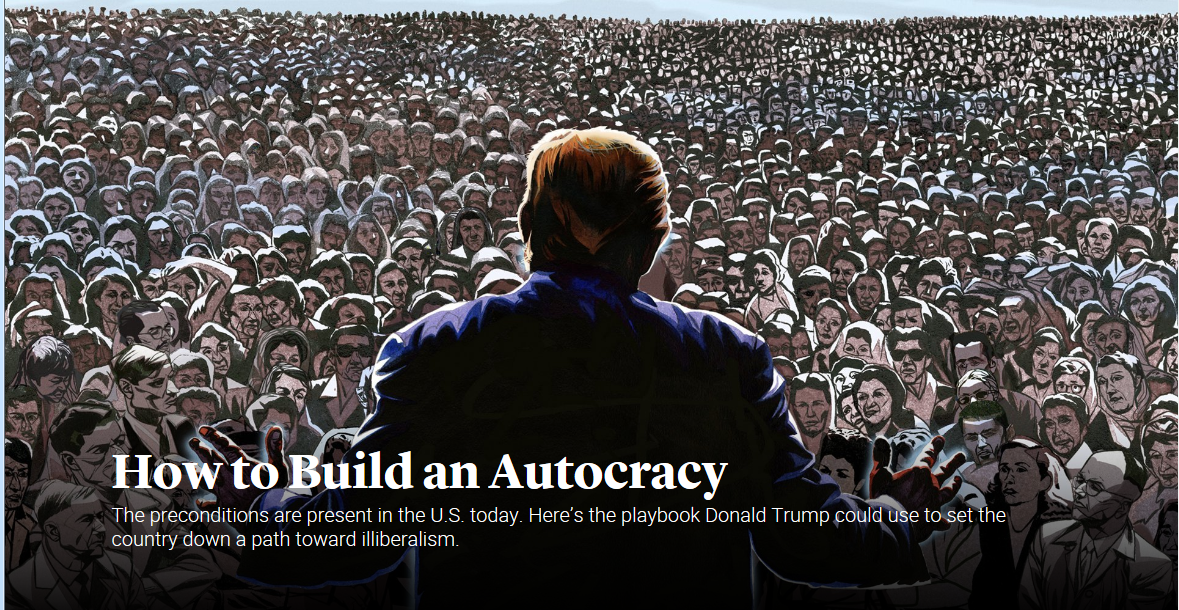
The Atlantic magazine has just released a remarkable essay written by the political commentator, David Frum, entitled, “How to Build an Autocracy.”  Says Mr. Frum, “Donald Trump will not set out to build an authoritarian state.  His immediate priority seems likely to be to use the presidency to enrich himself.  But as he does so, he will need to protect himself from legal risk.  Being Trump, he will also inevitably wish to inflict payback on his critics.  Construction of an apparatus of impunity and revenge will begin haphazardly and opportunistically.  But it will accelerate.  It will have to.”

capture99
Let’s assume that Mr. Frum is correct that Trump’s top priority is to enrich himself.  What will stop him from doing this?  A recent column in the New York Times points out that:

  •  54% of registered voters in congressional districts represented by Republicans view Mr. Trump favorably compared with only 42% who view him unfavorably.
    In these same districts, 87% of registered Republicans view Mr. Trump favorably.
  • In other words, the Republican dominated Congress is unlikely to strongly oppose his sleazy and self-enriching behavior.

But there are other constraints on what he does in office:

  • As I said in a recent post in order for Mr. Trump to be reelected in 2020, he will need to substantially speed up economic growth in order to increase the wages of his key blue-collar supporters. He clearly wants to accomplish this.
  • On the other hand, the conservative Republican base, including its representatives in the House such as the Freedom Caucus, will simply not support huge increases in deficit spending for anything (except an emergency) including infrastructure, the military or unfunded tax cuts.
  • In fact, Rep Mick Mulvaney (R, SC), a deficit hawk, has been nominated to become the Trump Administration’s Budget Director. In March the debt ceiling will have to be raised. I expect the many fiscal conservatives in Congress to insist on significant fiscal restraint (e.g. a ten year plan to balance the budget) as a tradeoff for raising the debt ceiling.

Conclusion. Just because Republicans are tolerant of Mr. Trump’s personal behavior does not mean he can successfully ignore the strong Republican desire for fiscal restraint.

Follow me on Twitter
Follow me on Facebook