A Strong Country Requires a Strong Economy


“Ukraine is a wake-up call for what a post-American world would look like” declares the foreign affairs expert Walter Russell Mead in an article “Putin Did Americans a Favor” (http://online.wsj.com/articles/walter-russell-mead-putin-did-americans-a-favor-1401662270) in yesterday’s Wall Street Journal.
“For those willing to see, the signs of what a post-American world would look like are easy to discern.  We can look at Bashar Assad’s murderous campaign in Syria to see how Iran thinks power should be used.  To see what Saudi Arabia thinks about human rights and liberal values, follow events in Egypt and Pakistan.  China would become more aggressive in a post American world, and the chances of Sino-Japanese conflict would increase. … In Europe, only power keeps or can keep Russia from rebuilding its old empire.”
“Those who think American decline is inevitable must face a tragic truth: The eclipse of American power will be a disaster for our economic interests, for the values we cherish and, in the end, for our security at home.  What stability, peace and legality now exist in the international system are there because the U.S., with important help from allies and partners, made great sacrifices to build and secure them.”
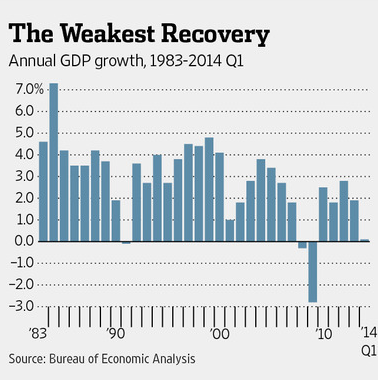
Capture2America’s decline is not inevitable but neither is our continued success.  As much as anything else, it depends on the strength of our economic system.  We need to give much more attention to making our economy grow faster.  This will create more jobs and better jobs and thereby boost national morale.  It will bring in more tax revenue for paying our bills.  In addition, projecting national power is very expensive.  We can and should continue to insist that our defense budget be lean and efficient.  But there is a limit as to how far we can go in this direction.  Ultimately defense spending will have to increase as a percentage of GNP.  This can only be accomplished with a robust economy.
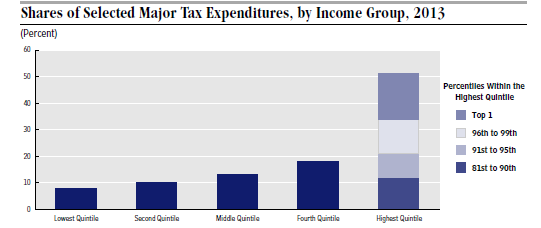
As I have repeated many times in my blog posts, the best strategy for making the economy grow faster is to encourage more consumer spending by lowering individual tax rates and to encourage more entrepreneurial activity by reducing tax rates on small business.  Such tax changes can easily be paid for by closing loopholes and shrinking tax deductions for the wealthy.  But there has to be a political will to do this.
Can this be accomplished?  I don’t know but our future as a free and prosperous nation depends on it!

Immigration Reform Will Benefit Nebraska


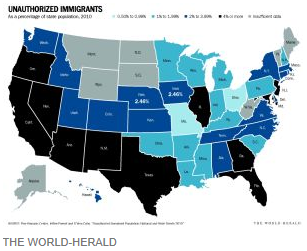
Today’s Omaha World Herald has an excellent article, “A Window on Immigration.”  It points out that 2.46% of Nebraska residents as of the 2010 census were illegal immigrants.  This works out to about 45,000 illegal immigrants in Nebraska today compared to just 3,000 as recently as 1980.  This is really a shocking figure.  It is roughly the same as the population of Nebraska’s fourth largest city (Grand Island) or Nebraska’s fifth largest county (Buffalo).  Nebraska’s unemployment rate of 3.9% is really a labor shortage.  It needs these 45,000 illegal immigrant workers!
CaptureWhy is it so difficult for our national leaders to solve this problem?  It’s crazy to think that we are going to round up 11 million illegals throughout the country and dump them into Mexico unless they are willing to “self-deport.”  Amnesty and citizenship are bogus side issues.  Here is the outline of a simple plan which would solve the problem:

  • Give all businesses a limited time period, perhaps six months or a year, to present a list of their current employees who are illegal. Everyone on this list without a criminal record would receive a guest worker visa along with all necessary legal papers. These papers would belong to the individual worker who could use them to change employment from one business to another.
  • Going forward, businesses would be authorized to hire additional foreign workers as needed who would automatically qualify for guest worker visas. Such visas would be granted in the country of origin thereby avoiding the need for illegal entry into the U.S.
  • As of a certain date in the near future, all businesses would be required to periodically demonstrate the legal status of all workers on their payroll. Penalties for non-compliance would be severe.
  • Guest workers would be eligible to apply for citizenship after a relatively lengthy period of time, perhaps five years or ten years.

Once an adequate guest worker visa program has been set up and is operating efficiently, allowing all businesses to hire as many foreign workers as they need, security on our southern border with Mexico would be no more of a problem than is security on our northern border with Canada.
In other words, illegal immigration is an economic problem, not a law enforcement problem.  The way to solve this problem is to address it correctly!

The Anxieties and Worries of Middle America II. What to do?


Our economy has been stagnant since the end of the Great Recession five years ago.  The median household income has not nearly returned to its pre-recession level.  And now a new report has just appeared, “Room to Grow: conservative reforms for a limited government and a thriving middle class”, suggesting new approaches to address this major problem.
CaptureThe lead author, Peter Wehner, declares that “Americans do not have a sense that conservatives offer them a better shot at success and security than liberals.  … Rather than speak about the economy in broad abstractions, conservatives need to explain how to put government on the side of people working to better their conditions.”
How can we raise median household income and put millions of unemployed people back to work, at the same time?  Deficit spending is no longer a viable option because our national debt is way too high already.  Quantitative easing by the Federal Reserve has been tried, hasn’t helped very much, and is now being unwound.
Consumer spending makes up 70% of GDP and so the most direct way to boost the economy is for people to spend more money.  Can this be accomplished effectively and efficiently with government policy?  The answer is yes!
Broad based tax reform is the way to do it.  Lower tax rates across the board for everyone, paid for by closing the loopholes and deductions which primarily benefit the wealthy.  Two thirds of the American people do not itemize deductions on their tax returns.  This means that lower tax rates for all of these middle income people will put more money in their pockets, most of which they will spend, thereby massively boosting the economy.
Of course there will be pushback to this course of action from the millions of affluent Americans who benefit from all of the loopholes and deductions in our tax code.  But our first priority by far is to help the many more millions of middle income Americans who are suffering from stagnant incomes at best or may still even be unemployed as a result of the recession.

“The Anxieties and Worries of Middle America”


According to Peter Wehner, a senior fellow at the Ethics and Policy Center, the middle class consists of Americans “who do not consider themselves poor or rich, and can imagine their fortunes turning either way.”
Capture“We’ve moved towards an economy that more significantly favors skilled over unskilled labor.  In addition, jobs, including even higher skilled jobs, are being outsourced to countries like China and India as the economy grows more globalized.”
“While President Obama has shown that he is able to effectively describe these trends, he has proved singularly unable to improve the economy in light of them.  Indeed, a slew of economic indicators have worsened during his presidency.”
“Among the public there is a very deep sense of unease and apprehension.  Ground that people once believed was stable is seen as crumbling, and many Americans seem unsure what to make of it.  But one thing they do believe: right now politics is out of touch with what they’re experiencing.  We’ve witnessed a collapse of trust in the federal government, and when it comes to Republicans and Democrats, the public’s attitude is: a pox on both your parties.”
“Most Americans have lost confidence in President Obama; they are deeply unhappy with both his policies and their consequences. …Yet Americans have not so much turned to the Republicans as they have turned against the Democrats.”
“Americans do not have a sense that conservatives offer them a better shot at success and security than liberals. … Rather than speak about the economy in broad abstractions, conservatives need to explain how to put government on the side of people working to better their conditions.”
I consider these excerpts from Mr. Wehner’s introductory essay in the document “Room to Grow: conservative reforms for a limited government and a thriving middle class” to be an excellent summary of the mood of the American Middle Class.  Some of the accompanying policy prescriptions are good ideas and some are not.  Stay tuned!

Privatize Veteran’s Health Care

The current Veterans Administration waitlist scandal is an unfortunate symptom of a much bigger problem, namely the very high and rapidly increasing cost of providing healthcare to our nation’s veterans.  Especially at a time of huge budget deficits and exploding national debt, all branches of government, including our VA system, must operate more efficiently.
CaptureAs we celebrate Memorial Day and the 70th anniversary of the Normandy Invasion in WWII, this is a good time to contemplate a major restructuring of the VA.  As pointed out two days ago in the Wall Street Journal, “VA’s Budget, and Rolls, Have Boomed”, not only has the number of VA healthcare patient visits increased dramatically from 3.4 million in 2000 to 5.6 million in 2012, but the average annual expenditure per patient has also risen by 62% over the same time period.
The purpose of having a separate healthcare system for veterans is to give them better care than they would otherwise receive.  But the scarcity of resources means that their healthcare is being effectively rationed with longer waiting times.
The situation for veteran’s healthcare is a harbinger of what awaits us for our big government entitlement problems: Social Security, Medicare and Medicaid.  For the sake of all recipients, present and future, the rapidly growing costs of these programs must be contained.  There are lots of possible ways to do this.  Our national leaders simply need to take the problem seriously and insist on action.
At the same time it makes no sense to maintain a separate health care system for our nation’s 22 million veterans, only 7% of our total population.  The VA has lots of other responsibilities to take care of anyway: providing life-insurance, mortgage, and housing programs, managing cemeteries, and providing job training, for example.  Veteran’s healthcare could and should be privatized with a voucher system administered by the VA.  It will save billions of dollars for taxpayers and provide better, and timelier, healthcare for our nation’s veterans.

Redistribution, Inequality and Growth


Most people agree that income inequality and wealth inequality are increasing in the U.S. Likewise anyone who’s paying attention is aware of our slow rate of GDP growth, averaging 2.2% per year, since the end of the recession five years ago.  Is there a connection between inequality and slow growth?  Maybe!
CaptureFirst of all, it is important to note that income inequality in the past 30 years has been greatly offset by federal taxes and transfer programs as shown in the October 2011 chart (above) from the Congressional Budget Office.
Capture1Secondly, the Economist discusses this situation in the article “Inequality v growth”.  The economists Jonathan Ostry, Andrew Berg and Charalambos Tasangarides have shown (see above chart) that a large amount of redistribution affects growth more negatively than a smaller amount of redistribution.
Economists generally agree that the recovery has been slowed down by a lack of demand by consumers for more goods.  So the recovery should speed up as less affluent consumers feel secure enough to spend more money.  Two things, to start with, can make this happen.  One is a restoration of the housing market so that homeowners have more equity (which can be borrowed and spent).  Another way to accomplish this is with government redistribution programs, such as food stamps and Medicaid, for low income people.
But there is an even better way to put money in the hands of people who will spend it, and at no cost to the government.  I am talking about broad based tax reform, whereby tax rates are lowered for everyone, offset by closing tax loopholes and shrinking deductions, which primarily benefit the wealthy.  For the two-thirds of taxpayers who do not itemize deductions, and who tend to be the less affluent, such a tax rate cut will put money in their pockets, most of which they will spend.
Such a tax program as this would be a direct shift of resources from the wealthy to everyone else, thereby lessening inequality.  It would stimulate the economy, creating millions of new and higher paying jobs, and thereby increasing tax revenue and lowering the deficit.  Win, win, win, win!

What Is the Best Way to Boost the Economy and Create More Jobs?


The publication of two new books is causing a reevaluation of the financial rescue and its aftermath, e.g. “The Case Against the Bernanke-Obama Financial Rescue”.  The two books are “Stress Test” by Timothy Geithner, former Treasury Secretary, and “House of Debt” by the economists Atif Mian and Amir Sufi.
CaptureMr. Mian and Mr. Sufi maintain that the government’s response to the financial crisis should have focused less on saving the banking system and more on the problem of excessive household debt.  They discovered in their research that, during the housing bubble, less affluent people were spending as much as 25 – 30 cents for every dollar of increase in housing equity.  When the bubble burst, and housing prices started to fall, these borrowers cut way back on spending which caused many businesses to lay off employees.  The authors propose setting up a government program to help borrowers decrease what they owe in underwater mortgages.
Five years after the end of the Great Recession it would still be very helpful to speed up our lagging economy.  Here are three different possible ways to do this:

  • The Keynesians say the best way to stimulate the economy is with more government (deficit) spending. For example, spending several hundred billion dollars a year on infra-structure would create hundreds of thousands, if not millions, of new construction jobs. I think this is a good idea, but only if it’s paid for with a new tax (e.g. a carbon tax or a wealth tax).
  • The Mian/Sufi plan, as described above, would alleviate mortgage debt problems for millions of middle class homeowners who are still under water, encouraging them to spend more money which would in turn boost the economy. The problem is that the M/S plan creates a moral hazard for mortgage holders unless it’s paid for by mortgage insurance which would raise costs for borrowers.
  • Broad-based tax reform, with lower tax rates for everyone, paid for by closing loopholes and limiting tax deductions for the wealthy, would automatically put more income in the hands of the two-thirds of tax payers who do not itemize deductions. These middle class wage earners would tend to spend this extra money thereby boosting the economy.

The point is that there very definitely are ways to boost the economy, some better than others, and it should be a top priority of Congress and the President to get this done.

The Government We Deserve II. How Do We Make It Better?


“When the Athenians finally wanted not to give to society but for society to give to them, when the freedom they wished for most was freedom from responsibility, then Athens ceased to be free.”
Edward Gibbon, 1737 – 1794, The Decline and Fall of the Roman Empire

In my last blog, “The Government We Deserve,” I reported on a new book “Dead Men Ruling” by Eugene Steuerle, which shows how “Dead and retired policymakers have put America on a budget path in which spending will grow faster than any conceivable growth in revenues.”
CaptureOur country is clearly in a huge predicament.  We can get out of this jam by:

  • Restoring Balance: our legislators should only appropriate spending for one year at a time.
  • Investing in our future: i) opportunity is a more optimistic goal than adequacy ii) policies to assure adequacy often reduce opportunity by creating negative incentives    (e.g. food stamps, disability programs, housing vouchers) iii) means-tested programs are often anti-family (i.e. discourage marriage)
  • Building a Better Government: our main goal today should be to restore fiscal freedom by allowing future generations to create the government they need and want. i)   constrain the automatic growth in big federal tax subsidy, health and retirement      programs ii) reorient government towards investment, children, opportunity and leanness

“Both parties talk the talk about deficit reduction but fail to see that the deficit is but a symptom of a much broader disease – the extent to which both have tried to legislate far too much of what future government should look like.”
Here are the kinds of fixes which are needed:

  • Eschew Constitutional Fixes (i.e. a balanced budget amendment, term limits).
  • Require Presidents to propose budgets which balance over a business cycle.
  • A True Grand Compromise (end automatic growth of entitlements, generate revenues needed to pay current bills).

As Mr. Steuerle says, “If the obstacles to progress are considerable, the payoffs are enormous.”

The Government We Deserve


“As for the future, your task is not to foresee it, but to enable it.”
Antoine de Saint-Exupery, 1900 – 1944

An important new book, “Dead Men Ruling,” by the Urban Institute’s C. Eugene Steuerle, has just been published.  Here is the flavor of its message:
Capture“Dead and retired policymakers have put America on a budget path in which spending will grow faster than any conceivable growth in revenues. … The same policy makers also cut taxes so much below spending that they created huge deficits, which have now compounded the problem with additional debt.”
“Both sides have largely achieved their central policy goals – liberals have expanded social welfare programs, conservatives have delivered lower taxes.  Both now cling tenaciously to their victories.”
In short, “our central problem is the loss of fiscal freedom.” There are “four deadly economic consequences of this disease:

  • rising and unsustainable levels of debt,
  • shrinking ability of policymakers to fight recession or address other emergencies,
  • a budget that invests ever less in our future and is now a blueprint for a declining nation, and
  • a broken government, as reflected in antiquated tax and social welfare systems.”

In addition there are “three deadly political consequences:

  • a decline of ‘fiscal democracy’ depriving current and future voters of the right to control their own budget,
  • a classic ‘prisoner’s dilemma’ where both left and right leaning elected officials conclude that they will suffer politically if they lead efforts to impose either spending cuts or tax hikes, and
  • rising hurdles to changing our fiscal course because, to do anything new, requires reneging on past promises of rising benefits and low taxes, that voters have come to expect.”

In other words the U.S. is in a very difficult predicament.  Mr. Steuerle thinks it will take a major “fiscal turning point” to escape from the present danger.  Both sides will have to make big concessions in order for us to get out of this jam.  But how is this possibly ever going to happen?  More next time!

A Rescue That Worked But Left a Troubled Economy


The occasion of the publication of Timothy Geithner’s book “Stress Test,” giving his version of the financial crisis, has led to a number of newspaper articles looking back at the Great Recession and its aftermath.  The New York Times’ economics reporter David Leonhardt has such an analysis “A Rescue That Worked, But Left a Troubled Economy” in today’s NYT.
Capture“The Great Depression created much of modern American government and reversed decades of rising inequality.  Today, by contrast, incomes are rising at the top again, while still stagnant for most Americans.  Wall Street is flourishing again.”
“The financial crisis offered an opportunity to change this dynamic.  But the (Dodd-Frank) law seems unlikely to transform Wall Street, and the debate over finance’s huge role in today’s economy will now fall to others.  Should the banks be broken up?  Should the government tax wealth?  Should the banks face higher taxes?”
In my opinion, the real problem is not our financial system but the strong headwinds which are slowing down the economy.


  • Globalization of markets which creates huge pressure for low operating costs.
  • Labor saving technology which also puts downward pressure on wages.
  • Women and immigrants having entered the labor market in huge numbers, and therefore greatly increasing the labor supply.

The loss of wealth in the Great Recession also means that even people with good jobs have less money to spend.  What we sorely need is faster economic growth to create more jobs and higher paying jobs.  How do we accomplish this?

  • The best way to boost the economy is with broad-based tax reform to achieve the lowest possible tax rates to put more money in the hands of the working people who are the most likely to spend it. Such lower rates can be offset by closing the myriad tax loopholes and at least shrinking, if not completely eliminating, tax deductions which primarily benefit the wealthy.
  • Lowering corporate tax rates, again offset by eliminating deductions, providing a huge incentive for American multinational companies to bring their profits back home for reinvestment or redistribution.

With millions of unemployed and underemployed workers, reviving our economy with a faster rate of growth should be one of the very top priorities of Congress and the President.  Survey after survey show that this is what voters want.  Why isn’t it happening?