Republican Congress Approves Irresponsible Budget


Congress has adjourned for Christmas having passed a final budget for the 2016 Fiscal Year extending through next September. It puts into place for this year the two year spending agreement reached between Congress and the President in October.  However Congress started out the year by passing a ten year budget plan resolution leading to a balanced budget by 2025.  The budget just passed leads instead to a deficit of $1.1 trillion in 2025.
CaptureHere are the details as described by the nonpartisan Committee for a Responsible Federal Budget:

  • Revenue: decreased under new budget by a $650 billion (over ten years) by making various temporary tax deductions permanent.
  • Discretionary Spending: increased by $50 billion for the current budget year (by breaking the sequester cap).
  • Medicare: instead of saving $430 billion over ten years, Medicare spending is increased by $95 billion over ten years.
  • 2025 Deficit: instead of shrinking to zero in ten years, it is now projected to be more than $1 trillion in 2025.
  • 2025 Debt: currently the (public, on which we pay interest) debt is 74% of GDP. The ten year balanced budget plan would reduce the debt to 56% of GDP. Instead, the debt is now on track to reach 80% of GDP by 2025.

Granted the Republican Congress hopes to develop a tax reform plan in 2016 which would lower tax rates for everyone, paid for by closing many of the loopholes and deductions just approved last week. One very good way to do this has recently been proposed by the Tax Foundation. The TF plan would boost economic growth and thereby increase tax revenue substantially over ten years.
The problem is that real tax reform is unlikely to happen without a Republican president in office.  If a Democratic president is elected in 2016, then the dire predictions made by the CRFB (above) are likely to remain valid for the foreseeable future. Our fiscal and economic future remains quite precarious at the present time!

Follow me on Twitter: https://twitter.com/jack_heidel
Follow me on Facebook: https://www.facebook.com/jack.heidel.3
Stopping Donald Trump II. Less Inequality or More Growth?


In my last post I presented the argument that voters are often more reasonable than the populist leaders who are trying to appeal to them.  They would rather hear something more optimistic than rage against a dangerous world.
Capture0But there is a difference of opinion on how to reach these voters:

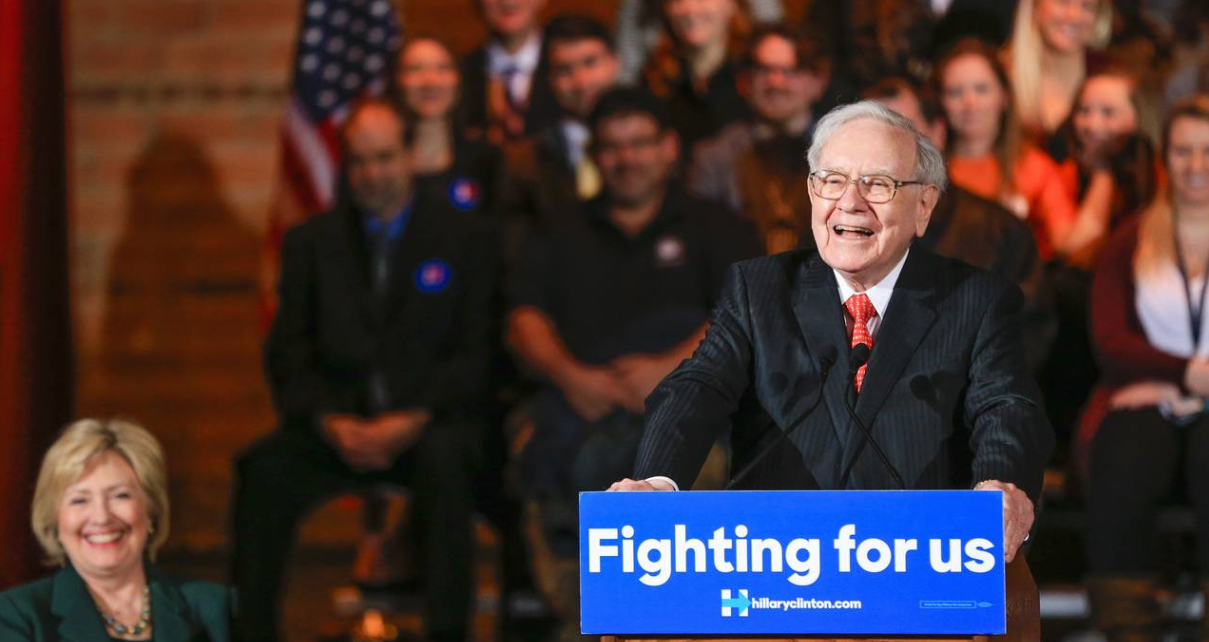
  • Leading Democratic presidential candidate Hillary Clinton endorses the Buffett Rule which calls for millionaires to pay a minimum tax of 30% on their income. Says Clinton, “I want to go even further because Warren is right. I want to be the president for the struggling, for the striving and the successful.”
  • All of the Republican presidential candidates, including Donald Trump, have tax reform plans which will grow the economy but none of which are revenue neutral. In other words, they will all add to annual deficits and therefore make our debt problem much worse than it already is.
  • The nonpartisan Tax Foundation has issued a new report, “Options for Broadening the U.S. Tax Base,” which proposes capping itemized deductions at $25,000 per individual combined with
    i)   cutting the corporate tax rate to 27%
    ii) cutting the top three ordinary income brackets by 5%, and
    iii) implementing a top capital gains tax rate of 20%.
    Such a plan would be revenue neutral and would lead to a long term GDP gain of 2.7%, a long term wage gain of 2.2% and a ten year dynamic revenue gain of $759 billion.

The Clinton plan would bring in up to $50 billion per year in new tax revenue but would do little to boost the economy. The Republican presidential tax plans are fiscally irresponsible. The Tax Foundation plan would boost the economy and reduce deficits rather than increase them.  Other specific reforms would boost the economy even more.
In other words there are clear cut ways to create more jobs and raise wages.  This is a message which should appeal to the angry and disaffected voters who are attracted to Donald Trump.

Follow me on Twitter: https://twitter.com/jack_heidel
Follow me on Facebook: https://www.facebook.com/jack.heidel.3
 

The Best Way to Stop Donald Trump


The main sources of background information for my posts are The New York Times and the Wall Street Journal. I read the Economist but most of the time it is either too esoteric or else too far  removed from the specifics of U.S. fiscal and economic policy which I am interested in.  But this week they have hit the nail on the head regarding Donald Trump and his fellow right-wing populists around the world.
Capture0
Says the Economist:

  • Populists differ but the bedrock for them all is economic and cultural insecurity. Stagnant wages hurt a cohort of older working-class white men whose jobs are threatened by globalization and technology. Jihadist terrorism pours petrol on this resentment and extends populism’s appeal.
  • Nobody should underestimate how hard it is to take the populists on. It is a huge mistake to dismiss their arguments by calling them fascist or extremist. Such disdain risks suggesting that political leaders are uninterested in the real grievances the populists play on.
  • The best way to overcome resentment is economic growth – not putting up walls. The best way to defeat Islamist terrorism is to enlist the help of Muslims – not to treat them as hostile.
  • Voters are often more reasonable than the populist leaders who are trying to appeal to them. Most of them would sooner hear something more optimistic than rage against a dangerous world.
  • Politicians also need to deal with the populists’ complaint that government often fails them. Reluctance to deploy more troops against the ISIS caliphate in Syria and Iraq does not appear to be a serious strategy to defeat it.

Conclusion: There is a clear path forward for candidates with a positive message of openness and tolerance and realistic plans to make the economy grow faster. Who is best situated to deliver such a message?  Stay tuned!

Follow me on Twitter: https://twitter.com/jack_heidel
Follow me on Facebook: https://www.facebook.com/jack.heidel.3
Lowering the Cost of American Healthcare III. Single Payer?


My last two posts, here and here, argue that the high costs of American healthcare, almost double what other developed countries pay per-capita, has two fundamental causes which must be addressed:

  • Very low out-of-pocket costs as a result of the tax exclusion for employer provided care.
  • The very expensive, and rapidly growing, government entitlement programs of Medicare and Medicaid.
    Capture4

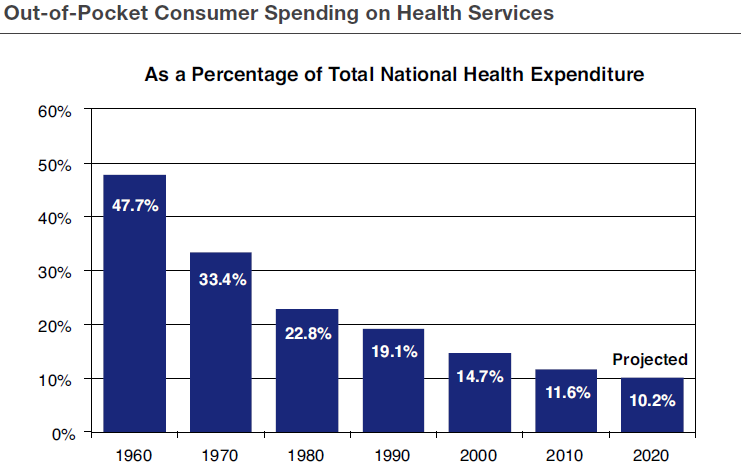
It is often suggested that the best way to get these high costs under control is for the U.S. to adopt a single-payer, government run, healthcare system, like many other developed nations have done. Writing in yesterday’s Wall Street Journal, the policy analyst, Nathan Nascimento, makes a persuasive, and well referenced, counter argument to this suggestion:

  • The State of Vermont recently backed away from implementing a single payer system because of the very high tax increase which would have been required, more than doubling Vermont’s annual budget.
  • The State of Colorado will vote a year from now on a petition-supported single payer proposal, ColoradoCare, which would be paid for by a $26 billion annual state tax increase and is therefore unlikely to pass.
  • In Canada, which has a single payer system, the average wait between a general practitioner’s referral and delivery of treatment was more than four months in 2013.
  • Our own Veterans Affairs hospital system, a single payer system on an annual budget, is failing thousands of veterans who often die while waiting for treatment.
  • Medicare, an open ended single payer entitlement system, now costing almost $600 billion per year, is one of the main causes of our burgeoning, out of control, national debt.

Conclusion: For the U.S. to move to a national single payer system would be very risky and very costly. It is far better to wait and see if Colorado or some other state is willing to take such a leap of faith and then see how it works out in that context.

Follow me on Twitter: https://twitter.com/jack_heidel
Follow me on Facebook: https://www.facebook.com/jack.heidel.3

Lowering the Cost of American Healthcare II. Entitlements


My last post emphsizes that any solution to our nation’s long term debt problem must include reining in the cost of American healthcare.  There are two major drivers to this problem as is made clear by a new report from the American Enterprise Institute, “Improving Health and Health Care: An Agenda for Reform.”
Capture1First of all, out-of-pocket consumer spending on healthcare has been steadily declining for many years. The less we pay directly for our own healthcare, the less incentive we have to control costs.
Capture2Secondly, the cost of healthcare entitlement spending, for Medicare and Medicaid , is growing rapidly as a percentage of GDP.  Such a rapid increase is unsustainable and must be curtailed. Here is what the AEI report recommends for doing this.

  • Medicaid. It serves two groups of people: 1) able bodied adults and their children and 2) the disabled and elderly. The federal government should make fixed, per-capita payments to the states based on historical spending patterns for these two groups. The able-bodied adults and children would get the same (refundable) federal tax credits as everyone else supplemented by Medicaid payments. The states would be totally responsible for the second group.
  • Medicare. The current system would be gradually migrated to a premium support system which would provide enough to pay for a choice of competing insurance options. The eligibility age would gradually rise to 67, consistent with Social Security.
    Capture3
  • Health Savings Accounts. HSAs are tax-preferred vehicles for saving for medical expenses until the (perhaps high) deductible amount is reached. Their use is growing rapidly. A one-time $1000 federal tax credit for establishing an HSA would increase their number even more. Their use should be expanded into Medicaid and Medicare as well.

Such reforms as these can significantly lower the cost of providing healthcare to the poor, the elderly and everyone else as well. If we don’t do something along these lines, we will eventually end up with a government run single payer system much to our detriment.


Follow me on Twitter: https://twitter.com/jack_heidel
Follow me on Facebook: https://www.facebook.com/jack.heidel.3


Lowering the Cost of American Healthcare


It is well understood that entitlement spending (Social Security, Medicare and Medicaid) is the biggest driver of our very serious long term debt problem.  Furthermore the high costs of Medicare and Medicaid can’t be separated from the high cost of American healthcare in general.  In other words, getting the cost of national health spending  under control is a fundamental fiscal and economic issue.
Capture1A major reason for this high cost is the tax exclusion of employer provided healthcare.  American out-of-pocket spending on healthcare is only 11% of the total as compared to 26% in Switzerland or 52% in Singapore, two examples of countries with efficient free-market systems.  Americans have little incentive to hold down the cost of their own care because it is mostly paid for by third party insurance companies.
The Affordable Care Act (aka Obamacare) expands access to healthcare but does nothing to control overall costs.  This means that any changes made to the ACA should be aimed at preserving access but making healthcare much more cost efficient.  This can be accomplished by

  • Keeping the Exchanges. The exchanges were set up to expand access for the uninsured and provide subsidies for those who couldn’t otherwise afford health insurance. This is the best feature of the ACA and should be retained.
  • Repealing the mandates for both individuals and employers. Mandates mean that benefits have to be strictly defined, uniform for all, and therefore more expensive. Employers are burdened by extra regulations which affect hiring and growth decisions.
  • Replacing the employer tax exclusion with a uniform tax credit for all. The credit would be about $2500 per person, the cost of high deductible catastrophic care. Employers could still provide insurance to employees but the tax deduction would be limited to the amount of the tax credit. The self-employed would get the same tax credit and it would also be refundable for those with low-incomes.

The American Enterprise Institute’s James Capretta describes how a transition could be made from the current ACA to such a new system.

Follow me on Twitter: https://twitter.com/jack_heidel
Follow me on Facebook: https://www.facebook.com/jack.heidel.3

Tax Reform and Economic Growth


In a recent post I pointed out that both Republican and Democratic presidential candidates are being unrealistic with their tax reform proposals:

  • The Republican plans would stimulate the economy but at the cost of huge increases in the national debt, even taking into account the growth effects of these plans.
  • Raising the top tax rate to 50%, a Democratic idea, would bring in an additional $100 billion per year in tax revenue, but this is neither enough to make a big dent on budget deficits or appreciably lower income inequality by redistribution.
    Capture

The nonpartisan Tax Foundation has just released a new report, “Options for Broadening the U.S. Tax Base,” describing three different ways to do this:

  • Ending the exclusion of employer-sponsored health insurance
  • Removing the cap on the social security payroll tax
  • Capping itemized deductions at a fixed dollar level

Combined with marginal tax rate cuts, each of these options would lead to substantial economic growth.  However, the first option, ending the exclusion of employer-sponsored health insurance, is unlikely but rather this exclusion could be turned into tax credits as part of further healthcare reform.  Likewise, removing the cap on the social security payroll tax is more likely to be used to raise additional revenue to make social security financially sound for the long run.
However, the single measure of capping itemized deductions at $25,000 per individual could be combined with

  • Lowering the corporate tax rate to 27%
  • Cutting the top three ordinary income brackets by 5%
  • Implementing a top capital gains tax rate of 20%

Such changes would be revenue neutral and would lead to a long term GDP gain of 2.7%, a long term wage rate gain of 2.2% and a ten year dynamic revenue gain of $759 billion.
Conclusion:  it is possible to cut tax rates, broaden the tax base and grow the economy all at the same time and without increasing the deficit.  This is what we should be doing!

Follow me on Twitter: https://twitter.com/jack_heidel
Follow me on Facebook: https://www.facebook.com/jack.heidel.3

The Close Connection between Fossil Fuels and Economic Growth


One of my favorite economics journalists, Eduardo Porter, has a column which appears each Wednesday in The New York Times.  His column this week, “Imagining a World Without Growth,” shows that economic growth took off consistently around the world only about 200 years ago and that two things powered it: innovation and lots of carbon-based energy from fossil fuels.
Capture0The United Nations climate conference, meeting this week in Paris, is asking all countries to greatly cut back on their use of fossil fuels.  Mr. Porter, in an earlier column, described what severe cutbacks in fossil-fuel energy could look like:

  • In order to meet the consensus goal of keeping the earth’s atmospheric temperature from rising more than 2 degrees C from preindustrial times (and we’re half way there already), CO2 emissions will have to fall to at most 1.6 tons per year for every person on earth by 2050. This is less than 1/10 of the present U.S. average and less than 1/3 of the present world average.
  • Within about 15 years every car sold in the U.S. will have to be electric. By midcentury more than half of the U.S. economy will run on electricity. Up to 60% of power will have to come from nuclear sources.
  • To meet these ambitious goals the U.S. will have to decarbonize its energy supply at an average pace of 4% per year for the next 40 years. This is 10 times faster than the Energy Information Administration’s current plan.
  • This is not achievable by going after low-hanging fruit such as replacing coal with natural gas in power plants. Rather, for example, carbon capture and storage will have to become widely available starting within about 10 years.

Meeting the goal of limiting the average world-wide temperature increase to 2 degrees C will thus require a severe regimen of regulatory actions which will have negative economic consequences.  In fact it is difficult to image how such a strict regimen could ever be put in place or enforced without much public dissatisfaction.
We thus have two options for dealing with global warming.  We can ignore it at our peril or we can introduce a market mechanism to change people’s fundamental behavior and attitude about energy use.  What market mechanism?  A (revenue neutral) carbon tax, of course!  How else?

Follow me on Twitter: https://twitter.com/jack_heidel
Follow me on Facebook: https://www.facebook.com/jack.heidel.3

A Path for Climate Change beyond Paris


The United Nations climate conference has just opened in Paris.  The pledges that countries are making fall way short of what many say is needed to solve the problem of climate change.  The Deep Decarbonization Pathways Project based in Paris and New York describes what will be needed to get the job done:
Capture

  • The 2 degree C temperature increase benchmark is used even though it is an arbitrary threshold. “Hell is not going to break loose at two degrees – it will take hundreds of years to unfold.” The world has so far warmed .9 degree C since 1880, halfway to the threshold.
  • The technologies available today, such as solar power and wind turbines, while good enough to get a running start on the transition, are not good enough to finish it.
  • Many countries will need to keep burning coal or natural gas to generate power while capturing the carbon dioxide emerging from smoke stacks, compressing it and injecting it deep underground. In fact most fossil fuel energy producers do not appear to be putting much effort into this approach.
  • Governments could easily flub the energy transition by failing to plan far enough ahead. Most countries are setting 10 and 15 year targets that can be met with incremental changes.
  • To achieve emissions goals, entire economies, including transportation, needs to be electrified as much as possible. Spending a lot of effort, as the U.S. is doing, trying to make gasoline cars more efficient, may be going down a blind alley.
  • Another potential dead end would be an overreliance on natural gas, which emits only half as much carbon as coal. This helps in the short run but gas has to go away within a few decades. Thus heavy investment in natural gas pipelines and power plants now could undermine long term goals.

The point is that the DDPP, designed to hold a global temperature increase to just 2 degrees C from preindustrial times, is extremely demanding.  It will require massive governmental interference in the energy economies of both developed and developing countries all over the world.    A far, far better approach is for leading world economies such as the U.S., Western Europe, China and Japan to provide leadership by implementing a tax on carbon emissions and thereby create an economic incentive for the fossil fuel industry to decarbonize itself.

Follow me on Twitter: https://twitter.com/jack_heidel
Follow me on Facebook: https://www.facebook.com/jack.heidel.3


Creating a Carbon-Free World


Tomorrow the United Nations climate conference opens in Paris.  According to Peter Thiel, the venture capitalist, “We can talk about a carbon-free world, or we can create one.” Continues Mr. Thiel, “The single most important action we can take is thawing a nuclear energy policy that keeps our technology frozen in time.”
CaptureConsider:

  • Wind and solar together provide less than 2% of the world’s energy and they aren’t growing anywhere near fast enough to replace fossil fuels.
  • China’s coal consumption is growing at 2.6% per year and India’s at 5%. In India there are 300 million people without access to electricity. The Paris plan wants India to be satisfied with a .6 metric ton of oil equivalent per person, when a minimum of at least four tons per person is needed for the development of an advanced nation.
  • Safety fears about nuclear power are overblown. The 1979 accident at Three Mile Island caused no significant amount of radiation to be released. The 1986 Chernobyl disaster was caused by a faulty design and operator incompetence. Fewer than 50 people were killed by released radiation compared with 13,000 killed every year by smoke from coal-fired power plants. The 2011 Fukushima disaster resulted in no deaths from radiation.
  • A new generation of American nuclear scientists has produced designs for better reactors which have the potential to overcome the biggest obstacle to the success of nuclear power: high cost.

I hear many people say that the U.S. needs to provide leadership in getting the world to stop using fossil fuels.  A carbon tax would provide an economic incentive to either move away from fossil fuels or clean them up.  But even a revenue neutral carbon tax would face strong political resistance. Climate change activists should consider supporting nuclear energy development as perhaps the most viable alternative to fossil fuels.

Follow me on Twitter: https://twitter.com/jack_heidel
Follow me on Facebook: https://www.facebook.com/jack.heidel.3